
| [theme] : the ‘barley vs wheat’ as ‘leaven & unleavened’ in the Scroll [and indeed barley is equated with ‘leaven’ !] and the important ‘baking bread’ and ‘brewing beer’ in Mesopotamia also as religious activity [-through the ‘wheat & barley’ in the other reality] [2026-03mar.31] |
| a bit unusual page for us , but we’re prone to miss much of the significance of the ‘barley vs wheat’ as it appears in the Scroll [and hence this same theme in the other reality] since we tend to forget the important role “bread” [and ‘beer’ in Mesopotamia] had in ancient times as the absolute main nutrient for the people so that their whole world revolved around it ; and , if you ever smelled and tasted new baked bread [not the junk they sell us these days] you would agree it indeed is a special treat ; ) |
|
ofcourse our goal is to further confirm the idea
in the Scroll that the mimick of “(eden-) wheat”
is the more impure ‘barley’ — by which also the
rather negative ‘beer’ is made — so that certain
lines suddenly can read differently :
after the example in Ex.9 about one of the first plagues in (matrix !) Egypt ,
where both (eden-) wheat were fine but the (matrix-) barley was damaged ,
this theme is transferred ‘to earth’ in Exodus 12 ,
(15)
“[from Passover] , seven days shall ye eat unleavened bread; even the first day
ye shall put away leaven out of your houses: for whosoever eats leavened bread
from the first day until the seventh day, that soul shall be cut off from Israel “
as
seven-of days unleavened-breads (mtstsa) you-shall-eat
yea in·the·day the·first you-shall-eradicate yeast (shar) from·houses-of·you
that any-of one-eating leaven (chmts) and·she-is-cut-off the·soul the·she from·Israel
from·day he·first day the·seventh
now,
the line shows tampered and next (19) has about the same so that the command to
not eat leavened-bread must have been connected ‘to the situation in the other reality’
but the point here is the root (shar) translated as ‘yeast’ — yet ‘barley’ is (shora) ,
and because they are in the same word-cluster ‘barley’ virtually IS ‘yeast’ ! [sic]
so that the reading is ,
a “no barley in your house for you will not eat leavened (-bread) made by it” ,
and though not just ‘barley’ was used as a starter , it is one of the ideal candidates ,
yet in context of the importance in the Scroll it must have been ‘barley’ ,
because why temporary prohibit something if that was not common use already ? —
and hence this page please
theme
leaven and yeast
… in order to not eat a baked lump of dough that would be heavy for the stomach
usually the dough is ‘leavened’ to make it bubbly — by which the dough expands ,
so that “leaven” is a general term for added agents making the dough to rise ;
if we stay with the Scroll ,
the dough itself consisted of ‘wheaten flour’ — said as base of Unleavened wafers
so that we can assume old-Ishral used wheat as base for their daily bread also —
but during Unleavened the added agents were prohibited ;
ofcourse the question is “what agents did they use” as several possibilities :
– sourdough :
as the easiest and common method : a small piece of dough from the previous
day’s baking (known as ‘retained dough’) was added to the new batch of flour
and water ; where this starter culture would ferment over time and so develop
a “sour” taste resulting in a tangy loaf —
[sub : this taste ranged from mildly yoghurt to a sharp vinegary taste and was
notable not sweet , a chewy inside and a thick caramelized crust ;
though both ‘wheat’ and ‘barley’ could be used ,
the question is “would (God’s) old-Ishral eat this type sour bread”
or would they adapt the sweet-type as was common in Mesopotamia ?
– spontaneous fermentation :
flour and water were mixed and allowed to sit for a couple of days , therewith
allowing ‘natural wild yeast’ as bacteria present in the environment and also
on the grain to colonize the sitting mixture , creating a spontaneous starter
while this likely also was the common type starter of the sour bread , above ,
in which any type of milled cereal could be used for this process ;
[the Klondike gold-diggers used to carry a small flask of this starter on them
so that the evenings they more easy could bake pancakes for themselves] ;
also ,
it sounds credible when posed that by this method the bread would not have
the same place everywhere in the world , depending on the type bacteria in
the local environment (-and even the personal !) ;
– sweeteners :
in both examples above either wheat , barley or emmer could be used
and sweeteners like dates or date-syrup can have been added that neutralized
the soury taste but also to speed up the fermentation process for the starter ;
using ‘dates’ since they were one of the few sources of concentrated sugar ;
– beer byproducts (barm) [barley :]
per context this is more interesting for us —
since a massive scale of beer production existed in Mesopotamia , brewers
often shared by-products with bakers ; and the bubbly foam (called ‘barm’ or
now ‘krausen’) skimmed from fermenting beer was likely used as a powerful
agent for the for the leavening of bread ,
where that foam as yeasty, frothy byproduct and acting as a natural leavener
often creates a lighter and sweeter bread then sourdough <<<
[this is the theme we were looking for] ;
the relation between ‘brewers’ and ‘bakers’ also appears valid ,
for even in our world up until some decades ago , in a similar manner small
local bakeries received this sediment from nearby breweries ;
while ‘their cooperation’ in Mesopotamia also is very probable but based on
the close relation of ‘beer and bread’ like in the Gilgamesh epos – even that
narrative addressed the ‘beer and bread theme in the other (matrix-) reality
that however was transponded ‘into literal cereals growing on this earth’
[-which we opted already in one of the first ‘barley & wheat’ pages] ;
– bappir (beer bread) :
as a beer bread through fermenting a mixture of barley and water sometimes
incorporating a starter , and often used to create the ‘wort’ for brewing but it
could also be a starter for active leaven ;
one scholar adds “the interpretations of bappir as something like a dried-out
cake of sourdough starter is more compelling, something like cakes of nuruk,
a fermentation starter used in the Korean brewing tradition.
There is one key ingredient that doesn’t appear on this list: yeast, for his is a
big question mark. We don’t know how Mesopotamian brewers were starting
fermentation – whether they were just relying on naturally occurring airborne
yeast dregs from a previous batch of beer, or something else. But there’s a
great possibility that bappir, the other key ingredient alongside malted barley,
was actually the yeast source.”
.. the range of breads in Mesopotamia was huge ; in one so-called lexical list ,
a set of phrases all revolving around a common theme lists 300 different types
of bread and many of these would have been leavened breads that could get
pretty fancy : sweet breads, spiced breads, fruit-filled breads, and even breads
molded into the shape of hearts, hands, ears, and heads
so – what did we establish ?
we have a rather strong case — first by the prohibition in the Scroll combined
with both roots (-shr) , and by the ‘sweetness’ through a barley agent since
we just don’t think that God would let His own people eat ‘sour tasting bread’
[though this doesn’t mean that the concept ‘barley’ is a positive one] ;
also ,
there is no word for ‘beer’ in OT while old-Ishral certainly most have known it
but only ‘wine’ and ‘strong drink’ shows : though the latter could be distilled
from grapes as well as from cereals , it feels like Esau may have deleted any
notion of ‘beer’ in the Scroll – perhaps to cover up the obvious link to ‘barley’ ,
even though he used ‘intoxicant’ to cover up a range of themes
part II
ritual ‘beer’ in Mesopotamia
… though we saw that their Akîtu-festival actually meant ‘barley’ and hence we
come to the Egyptian counterpart NEPER , we were occupied with their rituals
about ‘making their base-12’ from Eden base-10 using ‘sacred drums’ which in
fact represented real “purifying vats” in the other reality to achieve this ;
yet although in those rituals álso “offered grain and flour” showed , we missed
the connection with the wheat vs barley theme — that we found just after this ,
and now similar ‘vats’ show in their lore related to ‘cereals’ ;
immediately linked to the Gilgamesh one wherein their created human has to
learn to both drink beer and eat bread : once again suggesting that the entire
cereal theme did not originate from the matrix itself
the beer-goddess Ninkasi (aka NEPER in Spells)
a short section —
though another early goddess Nisaba probably represented ‘the barley sheaf’
itself and in context “as a copied eden-concept” — similar to how in the Amduat
two sheaves are imported that will feed-off the eden wheat sheaves ,
| this Ninkasi as ‘beer-goddess’ is the same attribute as that of NEPER : as light bubbly light-particles in the atmosphere (-of their matrix land) that need be ingested – as beer – to go create with them ; because not much is known about ‘her’ and to not bore you what is helpful for us is ‘the hymn to her’ revealing several aspects we’re familiar with : |

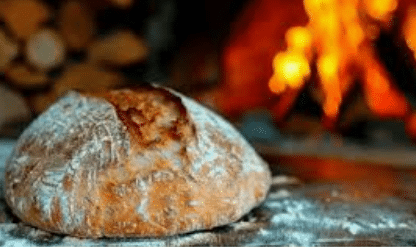
but pic is only for visual |
Borne of the flowing water,
Tenderly cared for by the Ninhursag,
[but she ‘is’ that water – as ‘a flow of light-particles’]
Having founded your town by the sacred lake,
She finished its great walls for you,
[the ‘great walls’ of their Torus-construct wherein she dwells ,
and the ‘finishing’ can refer to the ÁTEN concept , see recent CT-spells]
You are the one who handles the dough with a big shovel,
Mixing in a pit, the bappir (‘see above’) with sweet aromatics.
[the ‘mixing’ and ‘pit’ are a red Flag to us !]
You are the one who bakes the bappir in the big oven,
Puts in order the piles of hulled grains
[the ‘oven’ reminds of ‘the wheat sheaves set on fire’
causing the exposed (‘hulled’) grain — let’s say ‘wheat’]
You are the one who soaks the malt in a jar,
The waves rise, the waves fall.
[another ‘preparation vat’ with a ‘leaven’ theme]
You are the one who spreads the cooked mash on large reed mats,
Coolness overcomes,
[after shortly mixing barley with water the heated mash needs to cool again]
You are the one who holds with both hands the great sweet wort,
Brewing [it] with honey [and] wine
[the ‘sweetener’ theme ,
but remember the “matrix-light-particles enveloping the eden-ones” and see next :]
The filtering vat, which makes a pleasant sound,
You place appropriately on a large collector vat.
[again ‘vats’ —
the ‘sound’ is suspicious for also said of “the purified 7-fold powerful (eden-) flame”]
When you pour out the filtered beer of the collector vat,
It is [like] the onrush of Tigris and Euphrates.
[compare previous]
the fermenting vat in Mesopotamian temple rituals
below is taken from link in annex ,
and though not our custom interesting enough to present it entirely ,
with some notes between brackets :
“Within the precincts of shrines, the whole load of the sacred focuses inside the
fermentation vat. This vessel hosts the essential phase of the brewing operations :
the conversion of the wort into one alcoholic beverage by a mysterious process
that displays the powers of gods.
Hosting so powerful forces, the fermenting vat becomes a luxurious object.
A text speaks of “four silver fermentation vats (for the ceremony) between the
curtains” (Chicago Assyrian Dictionary N /1 257a) to prepare the beer and food
offered to the gods whose daily meals are protected from human view. Likewise,
the kakkullu vat (a collecting vat for beer) is adorned with greenish Lapis lazuli for
the Ninkasi goddess. It even talks of a golden bowl namzîtu, so a fermenting vat .
[here,
the “four vats” are interesting for they also appear in the Spells as NEMEST
vessels that being ‘4’ appéar to link to the ‘wheat & barley theme ; in fact we
have this same problem right now in Rev.6 — not about ‘four horses’ — where
one of the four events has “barley and grain” : so what was going on here ..?
b)
also link [1] mentions these (?) ‘four vessels’ :
“There’s also another really intriguing set of vessels, the so-called four part set,
found in a series of burials dating to the third millennium BCE. The typical set
includes a flat-bottomed cup, a strainer or bowl with pierced base, a cylindrical
colander, and a large open vat. It’s possible that these vessels were used in
either the brewing or consumption of beer, but this remains an open question.” ;
[in spite of searching no other sources show] ;
while also she mentions ,
“For example, in cuneiform documents, brewing vessels regularly appear
together in pairs– the gakkul with the lam-sa-re, the nig-dur-bur with the lahtan,
the namzitu with the namharu.” ,
looking to make Sense of those names ;
c)
even “the (light-particles of?) lapis lazuli” theme showed in the Spells
though we haven’t found out yet how these relate to their barley-stalks ;
while the ‘gold’ links to “the golden (but now ‘purified’) wheaten oil” ?]
The Sacred Marriage Hymn of Iddin-Daggan gives significant details about the
rituals in the honor of the goddess Inanna. This Sacred Marriage prepares the
symbolic union of the deity of fertility with Iddin-Daggan, 3rd king of the dynasty
of Isin (1974-1954 BC). The quoted text is taken from the eighth song (as hymn
totalizing 10 songs). At dawn is prepared the ritual of the sacred union between
Inanna and the god Ama-ushumgal-anna, both represented on earth by queen
and king. Offerings to Inanna accumulate :
[here,
we had the ‘sacred marriage’ earlier in “the matrix making their base-12”
where in this long hymn (online) also the ‘Ala and Lilissu drums’ appear
as part of the same ‘implemented base-12’ theme — see previous pages ;
yet ,
here indeed “the cereals theme” seems included as well : not only because
of the below shown lines but also since “a variety of creations” show like all
the maidens and young-men and oxen and sheep and even the land with
all her various types of food : as ‘the palette caused by the cereal theme’ ! :
« …
Ghee, dates, cheese, seven kinds of fruits,
they fill, as breakfast, onto the country’s table for her,
Dark beer they pour for her,
light beer [they pour] for her,
With dark beer, and [emmer] beer …
for Milady with (barley) beer and [emmer] beer
šà-gub-pot and the fermenting vat (namzîtu) bubble, one as the other.
Of paste, liberally enriched with honey and ghee,
and of honey and dates, on cakes, they make loaves for her,
wine at dawn, finely ground flour, honeyed flour,
honey and wine at sunrise they libate for her. »
This symbolic annual marriage between a king and Inanna the goddess of
fertility renews each year the abundance and strength for the kingdom of Isin.
It is a pact tied between humans and gods. The effectiveness of the pact is now
manifested, among other things, by the bubbling of the two beer vats (šà-gub-pot
and namzîtu vat). The ritual is waiting for this bubbling of fermenting vat (namzîtu)
as a proof of the gods agreement and the transfer of power. Without the consent
of Inanna, the beer could not ferment. Without the powers of Inanna, the earth
could no longer bear fruits.
[here,
it’s okay that he misunderstood for indeed ‘the variety of creations’ is caused
by the mixing-vats while also “the transfer of power” is true ;
note the ‘seven (-kind of fruits)’ above – as the stolen base-7 of God ;
next :
again a reference to “the roaring light-particles” but only because their barley
light-particles are powered by the eden-ones within them ;
remembering this , there’s no need to adapt the closing-section , below ,
because though it’s not our wording the ‘gist of it’ is close enough :]
The gakkul-vat is symbol of secrecy and mystery because it is usually covered
during fermentation. Inside the covered vat, the “word” pronounced within, namely
the bubbling of the fermenting beer, is not readable by humans. Mesopotamians
have called the opening of this vessel the “mouth”. An excerpt from the Lamentation
“It Touches the Earth Like a Storm” confirms that the “noise” of beer fermentation is
the word of omnipotent gods :
« As his word proceeds lightly, it destroys the land.
As his word proceeds grandly, it destroys habitations (var. it kills people).
His word is a covered fermentation vat (gakkul-àm-ma) .
Who knows what is inside ? (var. Inside it is whirling).
His word, whose interior is unknown, its exterior tramples down(everything ). »
These four verses have captured a subtle conceptual play which has the fermentation
vat for center. The deity’s word has one inner, indecipherable, and one outer, as its
devastating effects on the world and humans in the example of this extract of the hymn.
The beer fermentation is a murmur of unknown words inside the gakkul vat. That is the
inner of a kind of divine speech. Once the conversion effected (bubbling and whirling of
the fermentation = words of a powerful speech by gods), the wort has became beer.
The alcoholic beverage is an outdoor expected effect of the powerful speech by gods.
Drunkenness is the effect of a divine power transferred to the beer through the magical
receptacle of the fermenting vat. […………….]
for you Majesty
annex :
[1]
fermentology.pubpub.org/pub/ae89zkf2/release/1
[2]
beer-studies.com/en/world-history/First-villages-first-brews/Magic-fermentation/Fermentation-vat-temple