
| [theme] : in old-Babylon several large ritual drums linked to eachother , the Sem-drum (with the floor inside) > the Alu-drum (the ‘purifying vat’) > the Ilissu-drum (‘the winged disk’) > to make their Torus (as ‘drum’) + lyre and sistrum theme [2025-02feb.19-22] |
[the texts do require a short intro please
about the background of the ‘drums’ theme ;
this exercise is not in vain ,
linking to the ritual-pit (the imprisoned floor)
& Dan.4 “the iron band on the tree-stump”]
| … after ‘the drum with the bull skin’ before as their ‘winged-disk’ (copy of the Eden star) there were two additional drums supporting the winged disk construct — as one drum containing the crystal-floor being ‘the gloomy cave’ that imprisoned him to steal the light-particles emitted by the floor and one drum as ‘a purifying vat’ to ‘clean’ those and mix them with their own type light ; as a sequence of drum-constructs : |
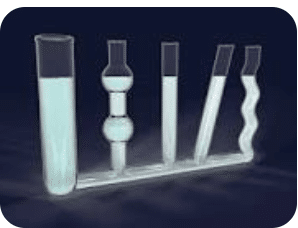
idea of ‘communicating vessels’ |
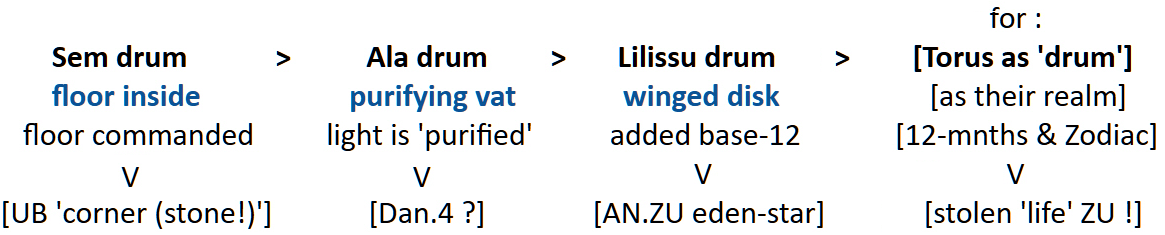
theme
… the problem is “how to present you this theme in a logical and readable way” because
it requires a lot of reading to get into this matter larded with names representing concepts
that also gradually changed over Time now with óther names and attributes ,
| yet this may be a useful example of the symbology they used to link to the situation in the other reality : to right , the Ala-drum is played >> representing “the vat for purifying the ligh-particles” that were forcefully ‘mixed with matrix light’ so that constant drumming accompanied ‘wrestling fights’ symbolizing the battle between the eden-light by the floor and the matrix-light wanting to cling unto her — it all sounds over the top , but also Rgveda & Spells hint at this ‘making new light-particles through force and it’s the only way to grasp what this is about … |

[origin of the Olympics] |
light-particles and ‘tones’ (sound / frequency)
we saw the close relation of ‘light-particles and sound’ where the particles form anything
that is created by ‘sound commanding them’ to converge in a certain position (cymatics) ,
wherefore it is very likely that the matrix disturbs the harmonious Eden tones through [sic]
changing the “the frequency of the crystal-floor itself” and then ‘with his light-particles’ ,
and in both cases with their brute ‘boom-box’ as “drum” ;
hence the texts have how the drum “speaks” (read : frequency) and even ‘have a voice’ ,
not only to disturb the (eden-) tones but also to bring forth the transformed matrix-ones !
the drums are also called ‘counsellors of their (respective-) gods”,
which in context must be an euphemism of “transforming into the desired tones” as the
nature óf that particular matrix-concept (‘the god’) – etcetera
moreover, the drum representing ‘the purifying vat’ is linked to ‘roaring’ :
that there was ‘a special temple-room for this drum’ insinuates that there is ‘a house’ in
the matrix-reality AS the purifying-vat “into which the roaring enemy entered” where [sic]
the enemy here is ‘the UN-filtered light-particles by the crystal-floor’ while we saw similar
type phrases about ‘the roaring and thundering’ “when Soma is made” in Rgveda …
and because these drums represented “a sequence of (stolen-) aspects” it was important
for them that at sacred festivities the drums “sounded in perfect concert” since the series
would result in “the now purified light-particles by which their Torus-realm could be made”
[this is the origin in the Spells of the often shown phrase “(matrix-) existence to make”] ;
and though individual drums were used at every festival ,
the “unison of drums” was important especially during the ‘bull skin placed upon the drum’
ritual in the 8th month (-see previous page) that now represented their ‘winged-disk’ copy
because he was “fed” by “the purifying vat” — as the Ala drum discussed here —
that purified the light-particles coming fróm the Sem drum (as the pit with the crystal floor)
[where the floor was stolen on the previous 7th month Tishri during the Fall Akîtu festival] ,
so that each feast ‘they added another communicating vessel’ resulting in their New Year <<<
| the Ala-drum [‘purifying vat’] also as ‘bull lyre’ … scholars hotly debate (see below) as to why the [double-] Alu drum in older times seemed to be represented by “the lyre with bull head” yet there is no mystery here : they represented two aspects of the same theme : per the above as “first the disturbing of sound” (by the drum) then “the resúlt as the matrix-tones” (the lyre) ; |

|
| the ‘bovine head’ connected to the lyre >> was a sound-box représenting ‘the drum’ but in fact “the purifying vat” itself as bringing forth the new tones of the transformed light-particles ; where the bovine head as ‘bull’ may have been their own ‘strong concept’ here as opposed to the imprisoned floor as slaughtered (eden) bull where as ‘cow’ it linked to egyptian Hathor — the latter link is valid , since the lyre was of the goddess Ninigizibara as a form of (the goddess-) Gula representing the “now purified light-particles ready for use” ; |

|
Ninigizibara was called “the goddess of healing” (new light-particles) as being second
only after Inanna / Ishtar that represented ‘the rule of the matrix-realm inside the Torus’ ,
where her attribute ‘Ninmeurur’ “lady collecting all the ME” means that the matrix-light
now contained (the stolen-) base-7 and -10 to go create with :
you see that , even though in a bizarre way , it does all make contextual Sense ;
[side step : this theme in Egypt]
… we need to make this short jump because it is difficult to extract the type information
that we need from the often flowery , repetitive & symbolic language of Mesopotamian
texts that — even knowing now what subjects to look for — remain “inconclusive” ;
in for example ‘the Hendursaga hymn’ ,
where in a section about ‘creation’ it has ,
“… So that the pot will be standing by, and so that beer will be filtered, the oldest
brother of the seven stands by at your behest. He pays you your due from the pot
standing by and from the jug with the filtered beer. So that the bitter taste (?) will
…… out of the river water and out of the water of orchards and fields, next of them
the second stands by at your behest. He pays you your due when the bitter taste
is ……out of the river water and the out of the water of orchards and fields. So that
the little fish may eat ……, and so that the big fish can be brought up onto the fields”
here ,
the ‘pot’ can be “the purifying vat” making “filtered (!) beer” (‘purified light-particles’) ,
so that the UN-filtered (eden-) particles will not “be making bitter the realm of their Torus”
[and remember the Scroll about ‘bitter’ , as ‘Wormwood’ we linked to the cave at Orion !] ;
where “the orchard as the fields” must be “the Field of Reeds mystery-Babylon paradise”
so that the ‘ little fish’ must be their own serpent-race beings —
but you see that the origins of all these concepts are difficult to establish here
[drums in Egypt]
we can be short about this — the “drum theme” with these specific connotations did not
exist in Egypt and neither is showing in Spells ; where the latter more directly talks about
their other reality with their crocodile Sebek (as ‘millstone’ like mesopotamian ‘Ninurta’ !)
that connects to ‘the stone’ and ‘the prison vat’ (-as ‘drum’) ;
[the lyre / sistrum]
ofcourse many depictions show just ‘innocent musical scenes’ so that the glyphs next
to them must decide whether another component is involved —
| in this example the “row of spikes” in top means “furnishing (-their matrix realm)” , where the staccato , unclear and sloppy texts show an unnatural link to “light” as ‘(matrix-) light / of beauty’ and at the harp ‘the ones for the dimensional-foreground (of the matrix) / (for) (matrix-) existence / (of) the Ba-bird (‘stolen spirit-body’) / , (as) (matrix-) existence / (by) the (matrix) lights / rising up (-to their Torus)’ wherefore this location is south of that , and this is not about “ordinary music” ; |

|
| where in the depiction below this one , importantly the recipient shows as the red winged-disk of Horus while the tones by the lyre show as ‘food offerings’ unto it , as “solid (purified) light-particles” that the disk can project in order to create ; the text is tricky because sloppy but it has the phrases “(matrix) essences (by eden) / to rise-up and be crowned” [see previous] , ‘manifesting / for / Ôn (mystery-Babylon) / [as] your / protection’ […….] ‘[as] the words (‘purified’light-particles !) / of eden-within / to manifest (-in the matrix)’ ; |

|
[sub :
it also has “the festival / of beauty” but since no indication is given on ‘which one’ the
reading must be “the festival (-of completion of the solar plane) / of beauty” which in
turn cóuld refer to ‘the (matrix-) new year in the Spring — but this is conjecture —
since this is followed by [-and likely said about the winged disk] ,
“[by] the praised / speech (‘matrix-frequency’) / [for] the (matrix-) dimension of the
dome (‘their Torus’) / the words (‘purified light-particles’) / to manifest” ;
b) location :
though “the imprisoned floor & stolen sceptre” being ‘at Orion’ is rather sure ,
we don’t know ‘where the purifying vat is’ — perhaps at Orion as well , and are not
sure about ‘the place of the imprisoned eden-star’ [even though it’s in the BENBEN
pyramidion : but is that (top of the pyramid-mount) ‘at Orion’ or ‘at the gate of Horus
just below mystery-Babylon in the center of the Torus’ ?
Horus holds the UAS-sceptre [óur sceptre – as stolen axis at Orion] whose seven
flames originally fed the eden-star upon him , but who now is crushed by the matrix
millstone in order to extract those flames — which are then ‘purified’ in the matrix-vat
to feed the winged-disk (of Horus) as the copy of the eden-star ;
here it shows ‘the location of (the ones of) the UAS-sceptre’ so this is ‘at Orion’
and ‘the ones’ are “the [7] purified flames” through which something “is acquired” :
the purified light-particles as the tones by the harp ?
suggesting that the harp — the purifying vat — could be ‘at Orion’ as well
| [the sistrum (lyre) and ‘Hathor’] so that ‘the bull headed (or ‘cow headed’) mesopotamian lyre could very well be equated with “the sistrum with Hathor face” where we must assume that in spite of the harps above Egypt dropped the lyre in favour of the rattling ‘sistrum’ ; Hathor is the same as the previous goddess Ninigizibara and she as “house of Horus” H’ET-H’ER has ‘several rooms’ (BD) perhaps as “several purifying rooms (vats)” so that possibly she is located ‘at Orion’ (per the place of the UAS , above) ; tracing the origin of the sistrum , |

|
| in the 2nd hour of Amduat “the sistrum is brought in” , >> and the depicted ‘beetle’ means that it’s intent is ‘to transform’ some stolen eden-aspect ; where the sistrum itself looks like a vat (‘drum’) with an unclear sistrum (‘lyre’) on top ; some text is missing but near the boat it has , ‘to be (matrix-) Sekhem-power (‘to command light-particles’) / [in order] (matrix-) existences to make (‘as concept’) / within (-the matrix)’ , where the “to command light-particles” fits the theme here ! ; |

|
problem :
yet then again shows the difficult ‘barley / grain’ aspect, as :
‘[by?] the grain-god NEPER / (for) this / great / god (‘Torus’)’
which brings us into trouble ,
for we can’t decide whether ‘barley’ was “of Eden — or not” ,
yet this theme seems to be immediately linked to “the light-particles and drums” subject
[and compare the “beer” (as ‘purified light-particles’) in the previous Hendursaga hymn
as well as the constant “flour & barley offerings” during the Akîtu and Bull Skin festivals] ;
however , in order to not complicate things (even more) this will be for a next page
the Mesopotamian drums
it was a bit long take-off but you will understand better what you read , below ;
the first discussed theme is about the drum we know is representing the purifying vat ,
in the papers below as
‘why the (bull) lyre turned into the Ala (aka Balag) drum’
[but we know “since they were two aspects of the same theme”]
and it was worth to show the selected paragraphs because of the additional information :
[from 1]
“In fact, there is a long-standing tradition of the divine balaĝ instrument used also by the kalû
[-priests] in their musical performances of prayers. In the Ur III period, balaĝ was probably a
kind of stringed instrument, possibly a lyre or a harp. Since there are deities designated as
GU.BALAG in god lists, literally a “bull-balaĝ”, it is not hard to make the connection with the
harps decorated with bulls’ heads which are well known from the royal tombs of Ur.
Bovines always had a close relation to the Mesopotamian ideas of the divine, as representing
strength and vigor and appearing also as the visual mark of divine status in iconography in the
form of bovine horns or horned crowns, as well. In the case of musical instruments, the idea
was probably to let the bull roar through that instrument although this is hard to imagine with a
harp. This idea does not have to be necessarily connected to the sound itself,
just to the might which comes to expression through the music produced.”
“Especially in the early periods of Mesopotamian culture, bull-balaĝs in the form of particular
musical instruments were dedicated to temples obtained individual names written with a divine
determinative and were receiving offerings. Eventually, balaĝ became a term for a whole genre
of prayers sung to this instrument by the kalû. It is still being disputed if it therefore became a
general designation for any musical instruments used in singing lamentations, or if the meaning
of the term has shifted to a kind of drum at some point. The bovine symbolism of both the
stringed instruments (with bull-headed sound boxes) and drums (covered with bovine leather)
tally well and cannot therefore serve as a distinction point. It is possible that a certain kind of
overlapping of the term balaĝ with the designation for the kettledrum lilissu eventually took place
in the second millenium B.C.E. Most probably, balaĝ further designated a kind of musical instru-
ment, the identification of which is uncertain, as is the general concept of singing lamentations.
In the god lists, bull-balaĝs were equated with the Akkadian term mundalku, “counsellor”,
referring to the function of an intercessory deity, mediating between men and the great gods.”
[here,
the “counsellor” theme – expanded upon in another section , below —
represented ‘the (matrix-) commanding of the light-particles’ ;
“The balaĝ stood for the whole idea of appeasing divine anger, pacifying the gods’ hearts and
contacting the gods by means of singing lamentations accompanied by musical instruments.
There was also a deity called Lumḫa, written either with the logogram BALAG or sylabically
Lum-ḫa and therefore closely connected to the balaĝ instrument, which was described as a
deity of the kalû [-priest] . In the Ritual for covering a kettledrum [see previous page] the deity
Lumḫa appears as a patron of the bull. In one incantation on the Neo-Assyrian incantation
tablet the bull is explicitly said to be entrusted to this deity [….] :
May this [bull] be entrusted to Lumḫa.
[here,
ofcourse there was no ‘divine anger’ nor ‘lamentation for that’
but it was all ‘mock-lamentation’ (like in the 7th month Akîtu) as crocodile-tears for the
stealing of the light-particles as the victory over Eden making them drunk (pun) of joy !
several texts have ‘may the drumming (‘of the purifying vat’) never stop !’ ;
next :
the ‘kettledrum’ (the winged-disk) compared with the Balag (purifying-vat) :
“The same tablet also tells us that Lumḫa (BALAG) and the bronze kettledrum (LILIZ ZABAR)
receive offerings during that ritual. They are therefore clearly differentiated. The same seems
clear from KAR 60; after the kalû whispers prayers into the bull’s ears, the extraordinary scene
follows in which he is supposed to cut the bull open and, literally, scatter its heart with juniper.
It is stressed twice in the text that both occurs in front of Lumḫa (BALAG). According to both
Hellenistic ritual texts the same scene is supposed to take place before the kettledrum .
However, in another place one of them mentions offerings brought to both the kettledrum with
a divine determinative (LILIZ) [‘because the drum becáme their divine winged-disk , by now’] .
This raises the question if we are dealing with an actual development of the ritual actions
or with a development of designations.”
[/end]
[from 2]
[p.139]
The year (in which) Ibbi-Sin, king of Ur, fashioned the balaĝ,
(the divine) Ninigizibara [‘Hathor’] , for the goddess Inana
“The main theological purpose of the musical instruments used in the performance of the Balaĝ
prayers was to soothe the angry heart of the deity, corresponding to the purpose of the prayers
themselves. Besides the natural soothing quality of music, the Balaĝ instrument had the ability
to calm the heart of the god, since it served in the role of an “advisor” deity in the deliberations
of the gods, as mentioned above. This purpose is also mirrored in the term ad-gi4-gi4 , which,
like GU.BALAG, is also paired with Akkadian mundalku (and māliku) ‘counselor, advisor” in the
mesopotamian lexical tradition.
[in note: the name of a GU .BALAG deity of Ninĝirsu: “He appeases his master with speech”]
“In fact, some of the gods known as GU.BALAG [‘bull lyre / drum’] in the god lists are entitled
ad-gi4-gi4 [‘counselor’] in other contexts; for example, [..] the GU .BALAG of Marduk [..] is said
to dwell in [..] ‘the ad-gi4-gi4 temple’ [‘so “the lyre / drum sits in a counseling temple”] […….] ;
“(The enemy) entered the ad-gi4-gi4 temple and ripped out the portal, the enemy approached
En-nun-daĝal-la with evil intent” [………] .”
[here,
these lines make no sense – except for “the un-purified particles rushing in”
[and Rgveda hints at this ‘thundering moving’]
namely ‘to the purifying vat’ (that temple) that “will change them” eufemistic as ‘counsel’ ;
“Finally, a connection between the term ad-gi4-gi4 , the actual Balaĝ instrument and the deities
Sur-gal and Ninigizibara [….] , is found in a Balaĝ prayer: “My small Balaĝ, my roaring wild bull !
My holy balaĝ, my spouse, my lapis-lazuli (instrument)! My ad-gi4-gi4 , my sur-gal instrument!
My ad-gi4-gi4 , Gašanibizibara !”
[here,
the final name is the same as the one for Hathor , and SUR.GAL is most likely
the aspect of “dimensional-wideness (-by the light-particles they stole) , also showing
as glyph in the Egyptian mural above with the harp-player and Horus [as glyph USEKHT] ;
“Adgigi is also the name of a deity, written with the divine determinative DINGIR (dAd-gi4-gi4)
[..] [as] one of the GU4 .BALAG deities of the mother goddess Diĝirmaḫ [=Ninhursag] . In an
Old Babylonian Balaĝ prayer to the mother goddess Aruru (who is identified with Diĝirmaḫ in
the Mesopotamian tradition), Adgigi is mentioned as the actual balaĝ instrument [……..] .”
“The theological image manifested by these references is of the main deities sharing their
deliberations with their beloved counselors , the ad-gi4-gi4 deities, [=the purifying vats] ,
also known as GU.BALAG ; as counselors (mundalku) they are asked for their opinion on
different matters, and they answer (Sum. gi4-gi4 ) with their voice (Sum. ad).
[here,
translated : the matrix tells the purifying-vat what to make , which it does by
counselling (‘change the particles in a certain way’) through ‘voice’ (‘sound’)
[and through ‘speech’ (‘frequency’) , see the [note] some lines ago] ,
but that all “to máke that specific god” – like goddess Gula ‘the matrix-dawn’
or the mentioned “dimensional-wideness” – so not ‘the gods command them’ ;
“However, these counselors, with their voices, exist not only in the mythological realm, but are
also manifested in a concrete image: the balaĝ lyre, or more specifically, the bull of the balaĝ
(GU.BALAG). In my opinion, this refers to the bull-shaped sound box [=OF] the lyre , found
in many third-millennium iconographical representations, which resounds (Sum. gi4-gi4 )
with the voice (Sum. ad) produced by the Balaĝ [‘purifying vat’] .
“The use of the same verb for the resounding of the balaĝ lyre and the divine counseling of the
Balaĝ lyre-gods can be explained by the original meaning of the verb […..] ‘to return a sound’,
that is, ‘to echo’ [let’s say “to return a counseled (‘changed’) sound’] .
This fits the concept of musical resounding, but can also be used as a metaphor for counseling,
where the advisor echoes the god’s speech through his counseling, subsequently calming him.”
[/end]
[at the point when ‘the lyre’ connection got lost and only the Alu-drum (Balag) remained :]
[from 3]
“In the following, it is argued that, at least originally, Sumerian á-lá or Akkadian alû referred to a
giant, double-membraned, cylindrical, struck drum (as opposed to a friction drum) as depicted on
several third-millennium-bce iconographic sources. The giant drum that is depicted on the Gudea and Urnamma Stelae has been identified as the ala-drum by Galpin.
“Lieberman treats á-lá as a Sumerian loanword in Akkadian, resulting in alû [..] . It is also possible
that the Akkadian or Semitic form is a loan word in Sumerian, as there are Semitic loanwords in
Sumerian […..] [and] a possible etymology of á-lá is “stretched on the side,” which might describe
the membrane stretched across the side of the drum.
Besides a musical instrument, á-lá can signify at least four other objects, including a type of vessel (maybe a cauldron) [but sic !] , perhaps a leather strap or part of a door, a part of the donkey or ox harness or a part of the arm of the scales. Also a general meaning of “sin” has been tentatively put forward [..] : In Akkadian, the meaning of alû as “demon” further complicates the semantic field,especially if we consider the Akkadian form as a loanword in Sumerian. The Sumerian form of this word “demon,” is usually written a-lá, although it is occasionally written á-lá. It is likely that there is an association between the two meanings of alû as “drum” and “demon,” [‘FOR the demon’……] , at least in the first millennium. An Akkadian hymn to Ninurta suggests the alû was performed in a festival for Ninurta [‘the matrix-millstone’] . An epithet of Ninurta is dud-u18-lu “thunder” [sic] […..] . The association between the alû-drum and thunder or storms is confirmed below. The same is true for the a-lá “device for hoisting [pulling up by ropes] water”, [and] in Akkadian there are further meanings including a mythological bull and other uncertain realia, which from their context are
unlikely to be musical instruments.”
[too bad that we don’t have access to the proper lexicons]
“The ala, [aka-] balag and Balag-di, feature a “hoop”. For this reason, all three of these instruments are, in my opinion, types of drums. A hoop is visible on the depictions of large cylindrical drums on the Gudea and Urnamma Stelae and the Tello vase fragment. On the same iconographic sources, ridges are visible on the drum’s circumference. Stauder interprets these ridges as “Pflöcke” (pegs) [and] Schmidt-Colinet sees ca. 60 nails, making a “jangling” noise. That type of effect is not improbable. For example, the rebana-frame-drum from Sumatra features a nailed membrane, and a single “bell-plate,” which produces such a jangling sound. The rebana drum’s side profile looks strikingly similar to the large drums on the Gudea and Urnamma Stelae.”
[here,
remembering Daniel 4 “the iron band around the tree stem” (and see below !)
but , even though that theme is corrupt , would God have addressed this theme ?
[even He did with ‘the cup of dregs’ as ‘the clay cave in which the floor now sits’ ;
next :
there were ‘two’ Alu-drums (and see further below) as “a double-vat for purifying”
if we keep Rgveda’s CAMU wooden vat with dual-word description ;
“There is an Ur III text that supports this conclusion […] : Two ala-instruments ,
their sound box (consists of) four ox skins [and] here, I follow [..] ‘hole, well, pit’ as “sound box”.
If this translation is accepted, two ox skins are used for each Ala-instrument, as one for each of the instrument’s two membranes. The skin of an ox would be more likely than goatskin for such a large drum as an ox skin would be significantly larger.”
“The following two passages specify two minas of uli-gi wool for fastening the membranes of the
Ala-instruments : “2 minas of ‘uli-gi wool’ to make an ala-instrument complete.” [and] ”
2 /120 cords, (made of) goat wool, to be “stretched” over an Ala-instrument; their weight is 31 minas [ca.16.5 kilos] ”
[here,
not that we’re infatuated with it but Rgveda has “the woolen strainer” for the light-particles
though we cannot see if that is ‘in’ the purifying vat , or some other filtering place ;
likewise a connection with ‘wood’ , next ,
where for unknown reasons their CAMU vat is made ‘of wood’ :
The body of the ala was made from a wood called ḫalub = ḫa/uluppu [and] an inventory list of objects belonging to the temple includes 1 á-lá gišḫalub. This type wood has tentatively been identified as an eastern species of oak. It was normally used for furniture and vessels.”
[here,
in the myth ‘Inanna and the huluppu-tree’ also shows “a tree trunk” of it (Dan.4 ?) ,
and – perhaps – it is about the time ‘that their Torus construct came into being’
during the time of Noah (where álso some unknown ‘wood’ features at the not-his-ark) ;
the myth suggests that ‘the huluppu is their world-tree’ ,
does that start at the purifying-vat ? [-and hence ‘made of that wood’ ?]
so — was “the large cedar” theme in Dan.4 a correct aspect ? ;
next : “the sinew” :
we had this concept with ‘the bull skin by it’s sinew fastened upon the drum’
but in the case of this Alu-drum as ‘harp’ — the purifying vat “making new tones” —
it can be valid as well ;
In the text which deals with the delivery of tendon, sinew or gut of an ox for making an á-lá [-drum] , Grégoire has interpreted the á-lá as “courroies” (straps) :
2 1/3 minas of ox sinew…for (making) an ala-instrument
The mina averages at 1/2 a kilo, making this about 1 1/6 kilos of tendon/gut/ sinew. Although it is
theoretically possible to make a strap with this amount of sinew, it would not seem worth the effort.
Animal skin would be much more effi cient. Tendon/gut/sinew is commonly used in the construction of drums, for the purpose of securing the membrane. Such a material may also be used as snares, suspended on the back of the membrane, to create a rattling effect (e.g., the North African bendir) [this already links to ‘sistrum’ !] This type of material may also be used for the strings of a harp or lyre which has led to confusion regarding the identity of the ala-instrument as a drum or harp/lyre.”
“The sound of the ala is described in various contexts and periods as formidable and comparable to storms and thunder. In [..] the sound of the ala is compared to a storm:
and the ala-instruments sounded for him like a storm
The ala “roars”, [….] [and] the šem and ala “roar” [so , also the vat imprisoning the floor ‘roars’] .
The šem and ala “resound”, [……….] [and] the following passage from the Gudea Cylinders is of
particular interest for our understanding of the role of the ala within an ensemble of instruments:
together with the Sim, the Ala vat[s] and Balag might sound in perfect concert”
Thus, this line could either be an indication of “sounding together” or “musical perfection.”
“In the following bilingual incantation, […] in the Akkadian translation, ka is interpreted as “voice”; […….] Although this passage evidently displays mistranslation, it displays the fact that the “voice”
of the alû-instrument was not insignificant:
the oath (stands) before it [the river] as (before) an incantation priest (Sumerian) //
the oath before it [the river] , its cry like (that of) an alû-instrument (Akkadian)
“This impression is confirmed by the following:
the beating of the alû-drum is my (the dog’s) sound
”The verb raṣānu “to roar, thunder” […] is probably used to describe the sound of the alû-drum in
the SB Gilgameš epic [‘type creation-epic’] :
where alû-drums resound ,
where the alû-drums are perpetually beaten [sic]
[next :
so “and the purifying-vat ánd the vat-with-the-floor ánd the-winged-disk are ‘thundering’
[where ‘Adad’ is a Semitic storm-god (which we now finally identified !) :
as ,
“In an astrological context, the sound of the alû-drum is compared to thunder, with the ḫalḫallatu
and the lilissu :
(if) Adad thunders like an alû-drum” (parallel: ḫalḫal latu/lilissu)
[next : the relation with ‘brick’ (‘floor’!) :]
“The evidence for performance of the ala-instrument during building rituals comes from the Gudea Cylinders that […] form an unusually complementary picture. The following example demonstrates such a performance during the libations which accompanied the initial preparation of the brick-mold from which the bricks of the Eninnu temple would be made:
He libated propitious water in the shed of the brick-mould
while the Sim and Ala [-drums] accompanied an adab song for the ruler
Following the construction of the Eninnu, animal sacrifice and libation accompany the Ala amongst other instruments [where] sim and ala with the balag sound in the courtyard of the Eninnu [-temple] ”
[next : the “boxing theme” , see page intro in top :]
“The use of šem- and ala-instruments which accompanied the wrestling or boxing, and sometimes animal sacrifice, is clear from both textual and visual evidence. [……..] The following passage from The Marriage of Martu describes such a perfor mance during a festival in the city of Inab:
In the city, bronze šem-instruments were clanging, and ala-instruments were resounding,
as strong men, girdled champions, entered the wrestling house.
The association between wrestling and music in the third millennium is shown by the following [..] :
Šulgigalzu, the son of Ala the nar-musician,
received a 10 shekel silver ring as payment for wrestling
The Bedre Stele is the principal iconographic evidence for the large drum, which is performed
during wrestling. The upper register shows a bearded man in a skirt striking a drum with his bare left hand. A figure plays clappers in the background. A diminutive figure stands on top of the drum. The direct continuation of the upper register, on the stele’s broad side, represents what is clearly a wrestling match. The upper register is continued on the thin side, which shows two men, one of which holds a long stick. I follow Rashid’s interpretation of these men as referees, not musicians. The lower register shows sheep being carried as an offering.
Similarly, in Canby’s recent reconstruction of the Urnamma Stele, figures next to the drum on register 4 of the “poor face” are likely to represent wrestlers. Other depictions of music and fighting include the lowest register of an Early Dynastic wall plaque, depicting a harp player and a fighting match, and the relief depicting a boxing match accompanied by a kettledrum and cymbals [the translation as “wrestling belt/girdle” is based partly on the observance of wrestling belts in iconography ; gešpú may also be translated as “boxing”] ”
[here,
perhaps a valid connection : the “I will strengthen him with [=my] girdle” (Is.22:21)
where the theme is “Christ sending back the floor to Eden when he will gather us”
next :
remember that ‘Ninurta’ is ‘the millstone’ (and the Sem the pit-with-the floor) ,
as ,
“The following passage from a bilingual hymn to Ninurta suggests that the ala and šèm were
performed during boxing/wrestling matches, accompanied by animal sacrifice, during the entrance of Ninurta’s cult statue into the Ešumeša temple in Nippur:
sem and ala […] are performed for you, fat oxen and [fat] sheep are slaughtered for you
as the king’s offering, strong young men box and wrestle for you, the people of Nippur
by families… prosperity, the dark-headed people sing your songs of praise
The relevance of fighting, accompanied by animal sacrifice and instrumental per formance involving the ala-instrument, is also clear in the following passage:
slaughter of the aslu-sheep…the plucked inu-instrument…the galamaḫ shall sing praise
about your greatness […] with the ala…the wrestlers/ boxers…[with acrobatic feats?] …
[PDF closing]
“Iddin-Dagan A implies that the place in which the tigi, šem and ala were performed during a ritual which has been interpreted as a “sacred marriage”, during libations of blood. Temple hymns imply that the šem and ala were performed in the place where food offerings were made:
your great, holy place of food offerings with šem and ala instruments
[here,
the ‘sacred marriage’ was in both Akîtu festivals in spring and fall ;
“The following inscription of Nebuchadnezzar I describes the return of Marduk’s statue from Elam, and the subsequent celebrations. Offerings were made and animal sacrifice took place, accompanied by alû- and lilissu-drums:
[praise of Marduk] makes brilliant the alû-drum and the lilissu-drum
[as ‘purifying vat’ & ‘winged-disk’]
“In a Late Babylonian ritual, playing of the alû-instruments seems to take place at the gate of a cella in the Esagil temple at Babylon. The alû-instruments are “arranged” there. This implies the drums are large objects which are difficult to move. It seems certain that these drums had fixed physical positions, as the text describes activities which take place “between” or “behind” the alû-instruments
[here,
probably as “two alu drums” (as ‘a purifying double-vat’)
and compare the other earlier text “a gold vat between the alû-objects” ;
[continued :]
and that they are not instruments which can be held. However, in lines 102 and 103 of the same text, [the] translation implies that the alû-instrument is portable:
And seated…she [the nadītu-priestess] will put the alû-drum by the barley beer ,
she will write seven inscriptions, she will hold the inscriptions in her left hand
and the alû-drum by (?) the barley beer in her right hand
[here,
the “beer from barley” are “purified light-particles by the (alu) purifying vat” ,
perhaps “by a 7-fold purifying” .. ? ;
cont.:]
“[…..] In this ritual, there is no explicit indication that singing takes place at the same time as the
alû-instrument is played. However, both nāru and kalû singers take part in the ritual [….] .[It] also
suggests that the kalû performs before, after or during sounding of the alû-drum. The association between the alû-instrument and the kalû is apparently a phenomenon of the first millennium, although there is an attestation in the Old Babylonian “forerunner” to the following lamentation as the Balag, which seems to refer to the absence of the ala-instrument and absence of joy:
was, oh weh, führt sie mit sich? Die ala-Trommel führt sie mit sich.
Mit der ala-Trommel sitzen sie [die gala-Priester(schaft)] bei ihr.
[here,
this is about the change in later times from the alu-drum (‘purifying vat’) to ‘the bull lyre’
Balag [as ‘Hathor’] and the Balag-lamentation — but as ‘a mock-lamentation’ that has
nothing to do with ‘absence of joy’ but the inverse !
the German reads “who is it that she takes with her ? the ala-drum takes her with her”
which CAN refer to ‘the to-be purified light-particles by the floor’ ;
“By the Neo-Babylonian period, the associations of the alû-drum have changed. For example,
the inscription of Marduk-apla-iddina II demonstrates an association with the sammû, and the inu:
they glorify, praise and extol the lord of lords (i.e., Ea)
with songs of joy and homage to the accompaniment of the [in] u, sammû and alû
Generally, the ala-instrument is associated with the balag and balag-di, as all three instruments
feature a hoop; hoops which are fitted around the drum’s circumference are common means of
securing the membrane, often together with other means, such as lacing and/or pegs or nails.
Furthermore, the close association of these instruments is confirmed by the following line of a
bilingual incantation:
the ‘oath’ of alû, b/palangu and timbutu instruments
In Sumerian literary texts, the ala is usually associated with the šèm/sim = ḫalḫallatu
[so , “the purifying vat (ala)” and “the vat in which is the floor (sem / halhalattu)”]
This association is not entirely lost later on. The alû appears next to the ḫalḫallatu in a further
Neo-Babylonian royal inscription. The cymbals pictured next to the giant drum in the Gudea
and Urnamma Stelae may be šem-instruments by association with the ala-drum,
due to the common pairing of these instrument-terms.”
[/end]