Ez.16 : Eve & Atonement + the groups saved in the Jubilee

[theme]  : [Ez.16]  Eve & Atonement
+ the groups saved in the Jubilee

[version ; 2024-09sep.06] 


short but valuable page  

 
                                                                                  theme
 
     …. concerning Atonement , “the animal sent into the desert” – which is the Tribulation – 
     very much points to our date at the day of Atonement , coupled with the notion which
     we always held ‘that only if He will rescue us we will be sure that He has forgiven us’ , 
     where the ‘forgiven’ is a main meaning of the concept ‘atonement’ ;
     and considering the latter there is another party involved : Eve
 
     though we have found her and understood (-see pages) , also that He would take her
     back after she suffered in isolation so many thousands of years , in those chapters
     did not show the word ‘atonement’ — except if we missed that ofcourse — but in this
     Ezekiel 16 it dóes , in the closing line 63 ;
 
     Ez.16 : first half : ‘this body’ , second half : Eve :
     … though we also need to redo this one (sigh) , the first half is said to ‘this body of us’
     which IS ‘the sin’ already but will be degrading as an utterly despicable vessel so that
     the only suitable penalty for her will be “to give her over to the fire” ,
     alluding to “the strange Fire that will be cast upon earth” – as a clue for us ;
 
     therefore indeed the second half about Eve may have followed now whom Esau tried
     to rather nastily disguise as ‘the daughter of Sodom’ , and important is that a number
     number of phrases about her match the óther chapters – like how you & we will find her – 
     which will greatly help in restoring also this chapter ,
     where 62-63 has
     “And I will establish my covenant with thee; and thou shalt know that I [am]  the LORD: 
     That thou mayest remember, and be confounded, and never open thy mouth any more 
     because of thy shame, when I am pacified toward thee for all that thou hast done, 
     saith the Lord GOD.” ,
     as :
     “and I will re-establish my (eden-) covenant with you ,
     and you will know that I am IEUE ;
     for you will [+not]  remember your shame (‘of the original sin’) ,                        [or : ‘sin’] 
     and I will never open my mouth anymore concerning your shame (‘same’)     [or : ‘sin’]  
     because I will have forgiven you for what you had done , 
     says myLord IEUE.” 
 
     … above , ‘shame’ and ‘sin’ are almost exchangable , and the “not open my mouth” is
     an important addition because it must be the reason that our Originals had become so
     afraid of Him after Eden had fallen – and they needed to escape His (fiery-) words , 
     where in her case – as female – she would be extra susceptible for those
 
                              the groups rescued in the Jubilee
 
    … akin to both animals of which one was sacrificed and the other one sent away ,
    — as ‘the 144,000’ versus ‘Jacob’ ,
    — as ‘Eve’ versus ‘Adam’ : for the latter will be cast into the fire ; but also :
    — as ‘the ones of Cush’ versus ‘their nations of heathens’ ,
    — and even ‘our Originals’ versus ‘the nations of demons’ ,
 
    where the main theme in every instance is ‘separation’ , a setting apart , where
    however the aspect of forgiveness is a bit different concerning ‘our Originals’ :
    though they left their ground He always remained very kind to them in the scroll 
    and their guilt is not as deep as ours or Eve’s ;
    yet how guilt relates to ‘the Cush ones’ is hard to see at the moment : though they
    fall in our category , they also do in Eve’s : their ‘serpent-light attribute’ may relate 
    (-back) to an aspect of very olden time when Eden was created – but because
    Zephaniah 2-3 are so corrupted we still lack that information  
 
    [if other aspects will show
    page will be continued] 
 
 
    [the – bit painful – question is “if that is so logical why we didn’t see that before” ,
    and the truth is we DID consider Atonement at Weeks 13 June – but it was too far
    away during that time of immense pressure so that we opted for ‘the 40+ days’ 
    which álso could be justified by the Scroll ; while a major – but subjective – reason
    was the visitation exactly two years earlier : which now , in hindsight , may have
    announced the death of the soul as the time of adding the Cush ones …] 


Amos 8 [pt.I] : ‘the 40 + days’ ,
the anti-144 removed and
the Cush ones announced

Am.8 [pt.I]  : ‘the 40 + days’ ,
 the anti-144 removed and 
the Cush ones announced

[version ; 2024-07jul.17]  


      that you were so sure about us
       never ceases to amaze us Majesty

 
                                                                                   theme 
 
       … this is a tad insane , the tempo of doing them [-chapters]  in these final days
       but we MUST go soon because another year is NOT an option : we be dead ;
       yet how strange (Sir…) that noticeable help is there for seeing the buildup ,
       almost as if (also?) this chapter still was required for our date …
 
       now please ,
       we need to ponder “how come that this theme is larger than we thought”, okay ,
       since we have a couple of chapters by now already but key words indicate that
       several more must deal with this : how come that we overlooked it ?
       or wasn’t it the right time still – and that’s why we hurry to present them to Him 
 
       this chapter became very readable with a solid buildup but to show you the
       initial problem of “making sure WHAT theme we have here” please see below ;
       curious here ,
       is “that we still try to understand the specific aspect of the Cush ones”, right ,
       and we came as far as “a cold heart” / the ‘love’ / and ‘this body’ theme ;
       yet curiously the book Amos is all about ‘the sexuality of (fallen-) male’ 
       so that we would need to incorporate thát somehow in the Cush theme : 
    
main theme in Amos – reminder :   
 
… because the matrix (cq ‘Adam’) designed – on purpose – a phallic type body of male  
so that “Jacob’s males would imprison themselves on earth through this fallen silly bull body” 
since his type sexuality is at best “legalized rape” as far ‘marriage’ is concerned ;
but there is a far more nefarious aspect : 
how in fact by any sexual act of him he gives legal right to the Ammon sons (-in their paradise)
to abuse (rape) our imprisoned female Originals there ; which in turn secures the matrix rule 
over Jacob on earth : as a double Trap devised fór the Jacob males ;
the theme is a bit complicated but we still hold it as the right interpretation of the message in Amos
 
        the question is this :
        if us males of the 144 need to die to our silly schlong [-which is the message in Amos]  
        why would the message be different to the ones of Cush .. ? or is there an aspect with 
        them that we are not aware of — in the category ‘temptations’ perhaps ?
        for it appears that we keep returning to “love” and “physicality” in the Cush theme
        combined with a “their souls being shut-in” , also in the interpretation of this chapter
    
chapters 8 & 9 as ongoing theme :
 
the first clue was in 9 where ‘Cush’ + related terms appear ,
as ‘the searching everywhere’ which is very close to “searching the Cush ones with a candle”,
and even the above mentioned ‘Trap’ comes very close to ‘the curse’ upon the Cush ones :
 
       Amos 8                                                                                     Amos 9
       main theme : the 144                                                        main theme : completing the 144
       (3-8)     removing the anti-144                                     (1-3) “delivered ones” [=from Cush]  
       (9)         “just before the sun gets dark”                                  “searching everywhere” [=with candles]  
       (10-14) removing the Spirit from the 144              (7)     “Cush” + “sons of Ishral” mentioned 
 
… you see that the buildup makes it worth giving these chapters a try ,
but to be sure that we have 9 right we need to start with her pretext as this 8 :

 
corruptions : total
theme : context  100% restored and syntax VERY high
fulltext :


Amos 8 (part 1 of 2)


[start : please see the interpretation of first lines 1 & 2 below these :] 
1-2
“Thus hath the Lord GOD shewed unto me: and behold a basket of summer fruit.
And he said, Amos, what seest thou? And I said, A basket of summer fruit. Then said the LORD unto me, 
The end is come upon my people of Israel; I will not again pass by them any more.”    
1
(then-) myLord – IEUE – shows – thus=this (-to me) ,
b
and behold ! , [+his]  crate=words (klB=dBr) – (are being) summer fruit=declared (Qats=Qer) ;
2
and he says : Amos , what – (do) you see ? ;
b
and I say : [+your]  crate=words – (that are being) summer fruit=declared ;
c
[=then]  – IEUE – says – to me : 
d
he=I (will) come=complete (‘no match’) – the·end (=tampered) = the remnant (‘144’)     +
e
for=unto – the people=sons of – Ishral (‘you & we’) , 
f
(for-) no – longer – I (will) pass by – [..]  [=them]  (‘you & we’) ;                                                         [‘wait no longer’]  

 
          interpretation of 1 & 2 :
          … concordances have endless discussions why “a crate of fruit” (qats) makes sense 
          especially as juxta to “end” (qets) but “a crate of fruit” itself makes no Sense whatsoever ; 
          — but “declaring my words” DOES :
                not only “because at that moment God WILL act” ,
                but also because this is the proper intro to the theme in this chapter !
          — moreover , the accepting of the scroll will follow here : including ‘a date’ ;
                (-which is at Weeks : hence Esau must have seen ‘in the summer’ !)
          — perhaps it said “his scroll + is being declared” 
                but because (klub) looks more like (darab) ‘words’ , we chose this latter ; 
 
                                                                                                   [next lines : removing the unrighteous ones from the 144 :] 
3
“And the songs of the temple shall be howlings in that day, saith the Lord GOD: 
[there shall be]  many dead bodies in every place; they shall cast [them]  forth with silence.”
3
and=because (then-) they=I (will) howl=remove       +
b
the temple=unrighteous ones – (out-) [+from]  the songs=remnant (shiruth=sharith)      +
c
in – that – day ,                                                                                                                         [‘suggesting “the extra 40 days” !] 
d
(is) the declaration of – myLord – IEUE ,
[a-b possible line-up  “I-shall-remove from-remnant ones-being-unrighteous” ; ‘song’ is Esau term]  
e
[next : subject continues so must start with a verb :] 
(as-) the ones (that) many=rejected (‘no match’) – the·corpse (=tampered) = [+my]  scroll (PHgR=sPHR)
f
in=by the every=hand (‘doing’) of – the place=sons (mqm=bnm) (‘you & we’) 
g
(and-) (have) fling=held fast – (to-) the silence=wicked one (KJV) (‘no match b/c excuse-word’) ; 

note :
… somewhere else is a similar “cast the dead bodies , and one says : is there another one
in the house? and he says : no” — whatever that was about , it must be this ;
 
4
“Hear this, O ye that swallow up the needy, even to make the poor of the land to fail,”
4
(wherefore-) hear – this , 
b
(you-) (that-) snuffed – (at-) the needy ones (‘Gods words’) ,                                       [read : ‘condescending’] 
c
and=as eradicate=rejecting (?) – the humble ones (‘same’) – (being) [+my]  land=words (ARts=dbAR) ,   +

 
5-6
“Saying, When will the new moon be gone, that we may sell corn? and the sabbath, that we may 
set forth wheat, making the ephah small, and the shekel great, and falsifying the balances by deceit?
That we may buy the poor for silver, the needy for a pair of shoes; [yea] , and sell the refuse of the wheat?   
5
saying (-to themselves) :
b
when=how (would) – the·new-moon (=tampered) = the the=sons (e=ben) of Ishral (chdsh=ishrl)     +
c
pass=know (oBr=Bin) – and=what we=he sell=spoke (shabar=dabar)     +
d
(in-) the corn=scroll ? (sheber=sepher) ;
e
[=because]  ….

                   [though we can guess what they say , this is difficult b/c of many insane roots :
                   u·e·shbth u·nphthche br l·eqtin aiphe u·l·egdil shql ,
                   and not évery single sub-line immediately shows her secret , right] 
f
and bending – the scales=message (read : ‘KJV’s type Gospel’) – [+as]  [+their]  (‘sons’) deceit ;
6
(because-) [+their]  humble ones – (do) to=not buy=worship – [..]  [+our]  silver=King (Christ) (Ksph=mlK) ,
b
and=as the needy ones – in=that – shoes=Gód (nolim=alei) – (would have) sake=spoken (oBR=dBR) :
[“and-needy-ones which he-shall-speak deity”]  
c
and=therefore [+he]  (will) fall=judge (mphl=mshpht)      +
d
the cereal=sons (Br=Bn) – [+for]  [+their]  sell=falsehood (shbr=shqr) ;  

 
                                                                                                                                                                [next : God’s response to that :] 
7-8
“The LORD hath sworn by the excellency of Jacob, Surely I will never forget any of their works.
Shall not the land tremble for this, and every one mourn that dwelleth therein? 
and it shall rise up wholly as a flood; and it shall be cast out and drowned, as [by]  the flood of Egypt.”
7
[bit dangerous :] 
a
(yet-) IEUE – sworn=confirms (shbO=Omd , ‘no real match’)       +
b
[..]  the pomp=scroll (‘no match’) – (by-) the jacob=sons (‘you & we’) (iqqB=Bn) ,
c
if=and – (will) never – forget – all of – their work ;  
8 
?=but – this=these – over=unrighteous ones (Ol=Oun)       +
b
(did) not – tremble – the·land = the=for [+my]  words (ARts=dbAR) ,   [‘tremble for words’ = expression] 
      b
      and (have) mourn=rejected (?) (abl=mas?)      +
      c
      everything – (that-) one=dwell=spoke (ishB=dBr) – in=unto her=them ; 
d

[next : we saw now several times that after this follows “therefore I will reject (refuse) them Eden”:] 
– 
and=therefore she=I (will) come (-up) – as=against – all – the nile=rebellious ones (iar=mar) ,
e
and K Q (will) drown=reject (‘refuse’) [+them]        +
f
[..]  nile=entry (‘no match’) – (into-) egypt=Eden (name=name) 

 
                                                                                                                                                  [next : and that will happen when …. :] 
9
“And it shall come to pass in that day, saith the Lord GOD, 
that I will cause the sun to go down at noon, and I will darken the earth in the clear day:”
.. here ,
there’s a trap in this line :
“and·I-bring the·sun in·the·noons and·I-darken to·the·land in·day-of light” , 3x tampered ,
and because we knów what the theme [-of this chapter]  is ,
“in that day (‘the 40+’) [..]  befóre I bring down the sun (etc)” would be ‘good enough’ 
but that is not what it said here :
9
and=for – it (will) happen – in (‘from’?) – that – day ,                                                                        [‘the 40 extra days’] 
b
(is) the declaration of – myLord – IEUE ,                                                                           [9 : linking back to lines 1 & 2] 
c
and=when – I (will have) bring=accepted (‘no match’)      +
d
[..]  the noon=scroll (tserim=sepher) – (from-) the·sun = the the=sons (e=ben) of Ishral (shmsh=ishrl)
e
and=in the darken=year (chshak=nsha) of – the l·artz=jubilee (iabel) ,
f
in the day (or ‘appointed time’ ium=moed) of – light=Weeks (?) (Or=shbO) ,       +                                      [cont.:] 

 
10
“And I will turn your feasts into mourning, and all your songs into lamentation; and I will bring up 
sackcloth upon all loins, and baldness upon every head; and I will make it as the mourning 
of an only [son] , and the end thereof as a bitter day.”
10
[=that]  I (will) change – your celebrating – into mourning ,
b
and=as all of – your songs=assuredness (?) – into lamentation ;
c
[=for]  I (will) bring – sackcloth – upon – [..]  [+your]  loins]  – and baldness – upon – [..]  [+your]  head ,
d
and I (will) make it – as the mourning – [about-]  an only [-son]  :
e
[=because]  the end of it – [..]  (will be) a bitter – day ;   

 
                                                                                         part II
                                                                                [now about us :] 
 
11
(a) “Behold, the days come, saith the Lord GOD, that I will send a famine in the land, 
(b)  not a famine of bread, nor a thirst for water,                                                                         [< contrived] 
(c)  but of hearing the words of the LORD.”
11
(for-) behold ! , [+in]  the come=same (‘these’) – days ,                                                                [‘the same 40+ days’]  
b
(is) the declaration of – myLord – IEUE ,
c
I (will) send=withdraw (shLCH=CHLts) – [+my]  famine=Spirit (Rob=Ruch)      +     [now : needs subject :] 
d
(from-) [+you]  , (-you) in=sons (b=ben) of land=Ishral (ARts=ishRAl) ,             [‘us , as the incomplete 144’] 
e

“not famine for·the·bread and·not thirst for·the·waters” 
… this virtually can be anything    — perhaps according to Haggai 2 ? :

(which) [+you]  (will) not – famine=understand (rob=bin) (-at first) ;                                           [< but see below] 
f
        for=yet (be) bread=strong ! (lchm=chqq) ,
        g
        and=for – (it will be because-) [+I]  (will be) thirst=removing (?) – not=from [+you]       +
        h
        [..]  the waters=people (?) (mim=om) – but=who (ki=mi) – [..]  hear=rejected (?) (shmo=mas)    +
        i
        the words=scroll (dabar=sepher) of – IEUE ;                                                                                       [line continues :] 


                    [final 3 lines : virtually impossible — yet restored possibility : very high :] 
 
12
“And they shall wander from sea to sea, and from the north even to the east, 
they shall run to and fro to seek the word of the LORD, and shall not find [it] .”
12
    and=yet they=I (will) wander=add (?) (nua=iasph)      +                                                                       [a-c : per line 2] 
b
    from=unto sea=you – [..]  [..]  north=óther – sea=people (‘people’ was ‘waters’ in 11′)
    c
    [..]  unto=so that – they (will) run to fro=complete (?) – the east=remnant (‘144’) (mizrach=sharith) ;

 
[new line + theme :] 
d
(and-) to=if [+you]  (will) search – the words of – IEUE , and=then [.. 1x ..]  – you (will) find  +           [cont. :] 

13 
“In that day shall the fair virgins and young men faint for thirst.”
13 
(how-) in – that=these – days – they=I (will) faint=add (alaph=iasph)       +
b
[Esau postponed the subjects :] 
the·virgins = the sons – the·lovely-ones = the=and daughters      +

and·the·choice-young-men = (that-) I (will have) delivered – in=unto thirst=you (tsma=athm) ;
[“I-shall-add sons and-daughters ones-delivered-of-me to-you”] 

 
[closing 14 :
it’s very tempting now to identify them as “of the house of SHomron=kuSH” 
but because next chapter 9 starts with ‘the plumbline’ they should be introduced thére :] 
14
“They that swear by the sin of Samaria, and say, Thy god, O Dan, liveth; 
and, The manner of Beersheba liveth; even they shall fall, and never rise up again.” 
14
the·ones-swearing (=tampered) = (namely-) the=as the ones (that are being) held captive      +
b
in=by the guilt=house (‘no match’) of – samaria=Canaan (shmrON=knON) ,
c
and=as the ones (that-) say (-to themselves) :                                                                        [compare Zeph.1 page ! :] 
d
  
    [but how this was phrased ? :] 
      [+we]  dan=lack (?) (DAn=aDAr) – the life of – our deity ,
      [“life-of deity-of-us we-are-lacking”]  
      e
      and [+he]  (is) [+not]  life=choosing [+us]  (?) (chi=bchr) ; 
f
(therefore-) [+I]  (will) way=judge (?) – the beer + sheba = house (Br=Bth) of + Canaan ,
g
and they (will) fall – and never (‘not’) – rise up – again . 


end         >>>  continued in 9

Zeph.1 : ‘the extra 40 days’ : Canaan’s curse upon Cush and so into US : the anti-144 removed & replaced by Cush ones to complete us

Zeph.1 : ‘the extra 40 days’ :
Canaan’s curse upon Cush 
and so into US : the anti-144
removed & replaced by
Cush ones to complete us

[version ; 2024-07jul.9-11]  


the so-called ‘stoning of the Devil’ in Mecca ,
an occult Ritual of the heathens to keep the
small group of Cush we need , imprisoned

 
                                                                              theme 
 
        … we’re now halfway “the extra 40 days period” .
        and though also the Zechariah 7 section was a useful find , right , confirming
        the present theme of “a certain group being removed from the 144 — while at
        the same time new ‘members’ will be added (-which is positive ofcourse)” ,
        yet several dreams in the past days were rather Alarming : 
        after yesterday’s one (about ‘Cush / Cham’) the Zephaniah 3 chapter came to
        mind in which indeed a ‘Cush’ appears — yet was it but another corruption
        or could it have been part of the 40 day theme .. ?
        after a careful breakdown – see below – the book Zephania IS this theme !
 
        note after restored chapter :
        buildup became very solid , while the interpreted lines are HIGHLY probable 
        [of this first chapter that is — because next chapter 2 &3 will be a crime to do]  ;
        perhaps the most curious is that ‘this chapter was sealed until now’ : 
        we háve made previous attempts to it but it never came out satisfyingly   —
        yet we’re not surprised since lately this seems to happen more often no ? ; )
        to be honest ,
        that may also be due to “the very high quality of the text” or better : you féel  
        that He speaks in a way assuming that we know all the details already      
        and therewith will be able to restore every section ,
        for example the ‘Unleavened > Weeks > 40 days” lines halfway the chapter !
        isn’t that sweet ? 
 
        linking to NT :
        … the alleged Parable “the woman searching a lost coin with a candle” 
        matches the phrase hére but as a corrupted theme in NT ; there must be
        other links ofcourse – especially to prophets – but that will take some time 
 
                                                                              intro 
 
           Canaan’s hook into the 144 — by his hook into Cush
 

        … how very strange .. at the moment ‘the 40 extra days’ started two weeks ago
        and the Spirit left us , we sought “whether a curse” may have been the reason
        since it definitely felt like one , then dismissed it because it couldn’t be anything
        pertaining to us which we may have overlooked , right 
        [by the way — apart from you & we , why is no one around even addressing the
        lack of the Spirit .. ? can it be – just asking – they didn’t know her ?]  ;  
        yet after the Zechariah chapter about “Adam accusing us” linked to the situation
        of the group – the ‘anti-144’ – which appeared as if he sent them among us ,
        the “Cush & Canaan theme” in this chapter seems to support that : as curse …
 

                                                             Ham , Cush and Canaan
 
        to understand what can this be about please let’s see Genesis 9 ,
        where of the three sons of Noah ‘Ham’ (Cham) appears to perform a kind of 
        perhaps sodomite action towards his father Noah — some argue that he slept
        with Noah’s wife but context doesn’t support that — 
        after which Noah places a curse upon Ham : which ofcourse got corrupted : 
        not Ham was cursed but his son Cush (Kush) and not ‘Ham would serve his
        brothers Shem and Japeth — which BTW has been used as excuse by slave
        owners (-many of those Jews) to submit the darker skinned humans – 
        but Ham’s son Cush would serve his brother Canaan 
 
        … the problem with Ham clan is that it is “a Clan as a mixture”  —
        starting with the Cush & Canaan brothers (-akin to the Jacob & Esau story)
        where from Cush would come forth “a smaller group of souls belonging to us” 
        but from Canaan the majority of heathens (animal-souls) would come forth 
 

        definition of ‘heathens’ 
        … basically “all type souls that aren’t of God” specified as “animal-souls” that
        dwell in this same type body , where this body derives from the situation prior
        to óur souls were placed on this earth : when the type Neanderthals álso were
        inhabited by animal-souls (-of demonic origin) : this previous situation of earth
        is important because it is linked to the house Cush as we will see ;
        and a good example of the situation of ‘the animal-souls dwelling in our type 
        modern body since the Deluge’ is ancient Sumeria ;
        but also the later Esau-souls (‘the corrupt-type eden souls) became part of the
        heathens , calling their country KAMT – Egypt – likely from ‘Ham’ as clan ,
        where the smarter Esau-souls often would come to rule the other heathens 
 
                          Canaan using Cush ‘as hostage’ for self-survival
 
        what Adam devised in the large Canaan executed upon earth ,
        and though there are many examples to give perhaps the most clear one is
        the religion that Esau devised for the heathens : ‘islam’ — as the religious
        texts for his ówn protection , and an occult Ritual in ‘Mecca’ for the house of
        Canaan to can keep (the righteous souls within-) Cham ritually imprisoned :
        

        the ‘islamic’ “stoning the devil” event  
        … ofcourse Esau invented cover-up reasons 
        in their sacrilegious texts — but the heathen
        masses first “have to pick up 70 stones from
        a field called ‘Zamzummin’ : these latter were
        half-giants , the offspring of ‘the Ammon sons’ 
        (that became “Esau” upon earth) in order to
        go stone three pillars    —
        these three pillars bear specific given names

        and read in sequence it has “the black myrtle / will not find / deliverance” ,
        the ‘black myrtle’ as an euphemism for “God’s souls within the Cush clan” 
        that are Ritually stoned each year to denote the heathens ruling over them
 
        the outward – exoteric – suggestion is “that these pillars represent the devil”
        named ‘the Jamarah’ meaning ‘the shining one’ , but ofcourse it is directly
        linked to the black myrtle as the one doing the deliverance : Christ 
        [and be assured that Esau who deeply hates Him would invent this !]  ;
        leaving us with “the 70 stones” and “a first stoning of seven times”  —
        the ’70’ can only refer to “the 70th week” since that is immediately linked
        to “the deliverance of the black myrtle” : and again , remember that Esau
        incorporated many themes in the Scroll to his invented religion ! ;
        the “major seven times stoning” is multi-interpretable so we leave that one ;
 
        the anti-144 removed — replaced by small Cush group 
 

        now it gets more difficult :
—   the anti-144 group :
        we don’t know how large this group is — the dream suggested ‘400’ which 
        still is much , but perhaps also a number of alien souls were part of that ;
        we must trust that He will let only as few as possible Jacob-souls be Lost ;
—   certain Attributes of Cush : 
        … these should be related to “the situation befóre we came to this earth” 
        and specifically “aspects related to this pimped ape body” : interesting is
        how Zephaniah 3 closes with THE problem of Eden : how hostile souls
        could be born inside an eden-type body” and this can be the mirror ;
—   the curse :
        the Spirit removed from us may be how the curse is broken :
        … the core of the matter may not be “why the situation with the anti-144”
        but “that a certain [very-]  small group of Cush will be delivered when the
        Spirit is removed from US [-the 40 days] ” ,
        this concept feels to be true but needs more pondering , right ;
  —  the ‘house Canaan’ :
        … the theme is very unusual – unless we missed it in other prophets – 
        yet perhaps could be expécted as ‘dealing with the heathens’ ; 
        however where in chapter 1 it is a static entity the next two chapters
        must explain how either Esau or Adam used the curse for this goal  
 
                                                                                 this chapter
                                           interpretation before any restoration :
 
book Zephaniah   [3 chapters] 
 
main theme : unusual — appears to be not ‘the scroll’ this time
 
possible theme : “the final ones to complete the 144”   (-when the anti-144 group is removed)
    for these reasons :
    chapter 1 :
    (line 1) 
    Zephaniah + son of + Cush “the hidden treasure(-d ones) of + Cush” 
    while the term ‘Cush’ returns at the end – chapter 3 ,
    (2-3)
    situation : ‘earth is to be destroyed’  (but perhaps “THE remnant (144) is to be purified” ?) 
    (4)
    now “A (not ‘the’) remnant is cut off with the priests” 
    (5-7)
    reason “because A remnant went-astray” 
    (9)
    action : “punish those that leap on the threshold”  (read : to be part of the 144 – or not ?)
                        added ,
                        ‘that would fill the house with deceit and violence’ 
                        (now we HAD this theme — at the start of the 40 days , see intro of Genesis 4 page ,
                        that ‘still proud souls would ruin Eden IF they would enter her like that’)
    (10-11)
    now ‘A group is cut off’
    (12) 
    an unusual “I will search Jerusalem with candles”   (read : search the ones that will be added ?)
                           interesting : Luke 15:8 an alleged ‘Parable’ ,
                           “a woman losing 1 coin of the 10 – lighting a lamp to search the house” : SIC ! ,
                           isn’t that “A group lost from THE group” ? 
    (14-18 end)
    the “day of the Tribulation starts” 
 
    conclusion so far :
    — the buildup – IF this theme – is surprisingly Solid ,
    — implying that “the 40 extra days theme” is rather important ,
    — though not about the scroll , somewhere must be mentioned “that A group rejected her” 
    — problem will be next chapter 2 + first half of 3 
         probably “as some réason why A group is like this : related to Mystery-Babylon” 
         [and suppórting the Zech.3 theme “how Adam powers A group” !] 
    — most unusual : the chapter does NOT seem to be addressed to you & we
    so .. let’s try – with the usual knot in the tummy : 

 
corruptions : very grave — impossible to restore without having an idea of the theme
theme  : context 100% restored , syntax very high
fulltext :
 
Zephaniah 1

 
[start 1 : “Zephaniah + son of + Cush” “the hidden treasure(-d ones) of + Cush”  
1
(a) “The word of the LORD which came unto Zephaniah the son of Cushi, the son of Gedaliah, 
       the son of Amariah, the son of Hizkiah, 
(b)  in the days of Josiah the son of Amon, king of Judah.”
1
the word of – IEUE – which – becomes – to – Zephaniah – the son of – Cush ,                                [‘see above’] 
b
the son of – Gedaliah ,                                            [1431 ‘great’ , also “to promote” = ‘to promote to the 144″ ??] 
c
the son of – Amariah ,                                                                   [559 ‘to say’ – but also ‘to promise’ = ‘to the 144’ ??] 
d
the son of – Hezekiah ;                                                [2396 ‘strong’ – but also ‘prevail, take hold’ = to the 144 ??] 
e
in the days of – Josiah – the son of – Amon – king of – Judah ; 

note :
… each ‘son of…’ (in a-d) must be read as “a subsequent Attribute OF those of Cush” ,
     so , “… that will be promoted + as the promise + to take hold of” [+ subject as ‘144’]  
b) Kush , unknown : kis “cup” kisse “throne” , kese “appointed time / full moon (3x) ; 
      the Akkadian K-S root has many possibilities (including ‘cup’ and ‘throne’)
      where KUSU shows as “cold” and “animal” ;  
 
      [next : after this positive opening should not next 2-3 be positive , as well ? 
      where the “stretch out my hand” – in 4 – is negative ? ; 
      b) while the “cut off the fowls from the air and fishes from the sea” sounds like Esau
      [besides – the ‘cut off’ needs a subject no ?] , even at first sight it appears to refer as
      introduction to the énd of the chapter — that’s what Esau counted on :] 
 
2
“I will utterly consume all [things]  from off the land, saith the LORD.”
2
I (will) surely consume=gather      +                                                                           [as ‘2x verb’ : verb is 3254 -iasaph] 
b
all of – from·on=the remnant (m·ol=sharth) of – surface=Ishral     +                                    [‘the complete 144’]  
c
the·ground (=tampered) – the=from [+their]  ground=people (adMe=oM) 
d
says – IEUE ,    +                                                                                                                                                                  [line runs on :]  

note :
.. in a) , of the many positive “to gather” (-iasaph) only a few are – allegedly ! – negative ;  
 
3
“I will consume man and beast; I will consume the fowls of the heaven, and the fishes of the sea, 
and the stumblingblocks with the wicked; and I will cut off man from off the land, saith the LORD.”
3
(as-) consume=gathering (‘see 2’)     +
b
[+their]  (‘people’) man=sons (adm=bnim) – and beast=daughters (bem=benth) ;


[new subline :]                                                                                                                               [NO ‘bird of the sky’ ofcourse :] 
c
(but-) I (will) [+nót]  consume=gather    +                                                                                               [d : used in Zech.3 !] 

the birds=unrighteous (OUph=OUn) of – the·heavens (=tampered) = soul (SHmim=nphSH)      +

[next :
a) now we would need a réason b/c of c-d (-and as intro to line 4) ,
b) ‘stumblingblock’, ‘wicked one’ and ‘before (-them)’ can all point to ‘the KJV’ :] 
    e
    [..]  (that-) (will have) sea=rejected (iM=Mas) – [+my]  fishes=words (Dg=Dbr)                      [verb at end ?] 
    f
    and·the·stumbling-blocks (=tampered) = and the=loved (?) (e=eab) the stumbling block ,      
    g
    with=which (is) – the wicked one (KJV) of       +                                                                                                 [< see note] 
    h
    [w/ swapped 1x :] 
    [..]  [+my]  – cut off=changed (Krth=hphaK) – the·human (=tampered) = words (ADM=DArbiM)     +
    i
    from=that (is) on=in – surface=front (‘same word’) of – the·ground = them ,          [< proper expression] 
    j
    (is) the declaration of – IEUE ;                                                                                               [e-j : probability : VERY high]  

note :
a) perhaps the line was “.. as my changed words of the wicked one in front of them” for it runs better ,
     hence “the·wicked-ones” (=tampered) because re-positioned ; 
b) it can hardly have said “the vain sayings” but indeed “my changed words”
     because ‘this group was not decéived : but they KNOW that His words were changed’ !! see 5 ;
 
4
“I will also stretch out mine hand upon Judah, and upon all the inhabitants of Jerusalem; 
and I will cut off the remnant of Baal from this place, [and]  the name of the Chemarims with the priests;”
4
and=therefore – I (will) stretch out – my hand     +                                                            [read : ‘be hostile against’]  

over=against (ol=ol) – judah=these (-ones) (ieude=ele) ,                                         [4 : probability : VERY high :] 
c
and=as over=against – all – the inhabitants=unrighteous of – jerusalem=souls (irSHlm=nphSH) ,   [in 3] 
d
and I (will) cut off – the name=group (shm=qhl) of – dervishes (‘idolatrous priests’)       +
e
(that are-) with=nót – [+my]  priests      +
f
from – the·place (=tampered) = the righteous ones (mQm=tsdQ)     +                                     [read : ‘as priests’] 
g
(that-) this=are – the remnant of – the·Baal (=tampered) = Ishral (‘144’) (boL=ishraL) ; 

note :
… and I will cut off + the very end of the line + middle of the line ;     

 
5
[A]   “And them that worship the host of heaven upon the housetops; 
[B]    and them that worship [and]  that swear by the LORD, and that swear by Malcham;”
.. here ,
the very tricky (-shachah) ‘to worship’ is just Too close to (-shachath) ‘to corrupt’ :]     
5
(A) tampered + completely swapped :]                                                             [5 : important – hence so corrupted :] 
a
[=because]  [+they]  ath=knów (Ath=iAda) of – the·housetops (=tampered) = [+my]  scroll (‘no match’)    +
b
l·tzba e·shmim = to=as the host=restored one (by-) the the=sons (e=ben) of heavens=Ishral (shmm=ishrl)
c
e·mshthchuim ol = the=fróm the worship=corrupted one (shchh=shchth) – (by) the upon=enemy (ol=eab) ;
(B)
d
and=but – the·ones-bowing-down (=tampered) = they (will) reject      +
e
e·nshboim l·ieue = the=what – IEUE – swear=speaks – (to-) by=them (or : ‘in it’) ,      +
f
and·the·ones-swearing = 
and (will) the=keep swearing (-allegiance) – [=to]  their king (Christ – as in KJV) ,     +            [line runs on :]  

note :
a) key here is “they KNOW OF…” , leaving in the middle ‘how much’  ;
b) Esau gobbled up all of (A) and ‘rooftops’ is an excuse-word ,
c) final f) : the expression “their king” is used for Jacob adhering the KJV ,
     here saying that they STILL ARE KJV adherents , subscribing to how Christ is portrayed there ,
     this line also as intro to next 6 : 
   
6                                                                                                                     [6-8 : deliberately spilling-over lines to confuse :] 
[A]   “And them that are turned back from the LORD; 
[B — new line :]    and [those]  that have not sought the LORD, nor enquired for him.”
7
[C]  “Hold thy peace at the presence of the Lord GOD: 
[D]   for the day of the LORD [is]  at hand: 
[E — new line :]    for the LORD hath prepared a sacrifice, he hath bid his guests.”    [cont. >] 
8
[F]   “And it shall come to pass in the day of the LORD’S sacrifice, 
       that I will punish the princes, and the king’s children, and all such as are clothed with strange apparel.”
6
[=by]  (having) turned away – from the (eden-) after=covenant of – [..]  IEUE ;

 
                                                                                           part I b
                                                                         [ ‘Unleavened’ + ‘Weeks’ !] 
 
[B : new line + theme :]                                                                        [a-b : perhaps Verb followed – or w/ swapped ?] 
b
(but when-) u·ashr = the and=sons of who=Ishral (ashr=ishrl)       +
c
[.. 1x ..]  – (will have) seek=understood – the ieue=appointed time (ieue=moed)       +
d
and=in not=which – they (will) enquire=declare (dRsh=qR)       +                                                        [‘Unleavened’] 
7
be quelled = the scroll (ES=SEphr) – before – myLord – IEUE ,         [‘scroll + before + IEUE’ = expression] 
b
that=then – the day of – IEUE – (will be) near ;     +                                                                                [‘the Tribulation’]                                
c
(and-) that=when – IEUE – (will have) prepared=accépted (ekiN=rtsuN)       +                                    [‘Weeks’ !] 
d
the sanctifies=restored (qdsh=shb) (adj.) – sacrifice=scroll – (that-) ones=they declared (to-) him ,
8
and=then the days of – sacrifice=refining (?) (‘close’) (Zbch=Zqq) – (will) come to pass ,                [’40 days’] 
b

    [next : very difficult to see (-and see the sequence) also because section is very long ;
    while it’s unlikely “He will visit [=to punish] ” — but only in next 9 ! :] 

(in-) [=which]  I (will) visit=withdraw (?) (phqd=chlts) – [..]  – the·chiefs (=tamp.) = my Spirit (?) (shR=Ruch)
c
[..]  on=from – the sons of – the·king (=tampered) = Ishral (so : ‘you & we’)       +
d
and (!) on=from – the·ones-being-clothed = all the ones (that are-) párt of       +
e
the clothing=remnant (mlbsh=shr) of – foreign=Ishral (nkri=ishrl) (‘all those belonging to us as 144’) ; 

note :
.. it appears a bit complicated – but the intent was ‘to be precise’ here ,
as you & we that know of the scroll + the sweet souls that cánnot know the scroll , yet are ours ; 
b) yes true : the “withdrawing the spirit” is based on the previous (-done) chapters ;
c) curiously “not even certain time-frames need to be mentioned” 
     in order to get “Unleavened > Weeks > 40 days” shown properly ! ;
                                                             
 
                                                                                        part II
                              Canaan’s curse into the 144 : by the curse upon Cush
                                                                                                                 
9
“In the same day also will I punish all those that leap on the threshold, 
which fill their masters’houses with violence and deceit.”
9
[=for]  – in – the same – days – I (will) visit (‘to judge’) – upon       +                                                  [read : ‘remove’] 
b
all – the·one-leaping (=tampered) = the ones (that) cleave (dalag=dabeq)     +                   [read : ‘infiltrate’ !] 
c
over=themselves – the·sill (=tampered) = the=to the remnant (‘144’) (‘no match’) ,
d
the·ones-filling (=tampered) = the=therewith aiding       +
e
the house of – masters=Canaan (adNi=knoN) – [in-]  [+his]  violence – and deceit ;      + 

 
        above :
        – the “anti-144 group” glued themselves to the 144 :
            the term “cleave to” or “joining themselves to” (-as in the other chapter)
            means “illegally” , as God not considering them part of the [final-] 144 ;
        – the “aiding Canaan” means “executing his curse into the 144” ;
 
10
“And it shall come to pass in that day, saith the LORD, 
[that there shall be]  the noise of a cry from the fish gate, 
and an howling [A]  from the second, and a great crashing from the hills.”                          [‘howling’ = ‘curse’] 
10
[=but]  it (will) happen – in – that – day (‘in the 40 extra days’) , (is) the declaration of – IEUE ,
b
(that-) the sound of – outcry of – from·gate = Canaan (shOr=knOn) (-will be heard) ,
c
the·(fishes) = the=when – [..]  [+his]  howl=curse (ille=qall)      +
d
from=INTO – the·second-quarter = the the=remnant of second=Ishral (‘144’) (mishneh=ishral)
e
(will be) fishes (from c) = removed ,
f

[next : very difficult to see ; compare this theme to context further below :] 

and=as the ones breaking=adoring (?) of – the (own-) great=physicality (‘no match’) of    +
g
[..] the hills=flesh (?) (giBAh=BAshr) ;

 
         above :
         … you immediately see the problems with phrasing : “loving the flesh (‘body’)” [also ‘mind’ etc] 
         is a transgression of Jacob but even more for the 144 , but how can this be specified here ,
         even though we know that the attribute of Cham is related to ‘the physicality of the flesh’ ?
 
11-12
“Howl [B]  , inhabitants of Maktesh,                                                                                                                             [‘curse’ #2] 
for all the merchant people are cut down; all they that bear silver are cut off.
“And it shall come to pass at that time, [that]  I will search Jerusalem with candles, 
and punish the men that are settled on their lees: that say in their heart, 
The LORD will not do good, neither will he do evil.”   
11
[+as the same]  howl=curse      +                                                                      [11-12 : deliberately spilling-over lines :] 
b
[by which-]  [+he]  (‘Canaan’) (has been) inhabitants=ruling (ishb=mshal)      +
c
the·mortar-shaped-hole = the the=house of Cush (maKteSH=KuSH)     +
d
that=when – canaan=Noah (knon=nuch) – stilled=placed (-it) (‘the curse’) (dM=shM)     +
e
all=upon – [+his]  people=father (‘Cham , father of Cush’) ; 

 
                                                                     [next : the goal of this chapter ! :] 
[new line + theme :] 
e
(but-) they=I (will) cut off – the all=curse (kL=qlL)        +

(from-) the ones (that-) I (will) transporter=deliver (ntil=ntsal) +                           [‘the small group we need’]
g
(out of-) silver=Cush (KphSH=KuSH) :

 
12
and=because it (will) happen – in – that – season (‘the 40 extra days’)        +

(that-) I (will) search – the jerusalem=land (‘earth’) – [=with]  candles ,                                                   [‘see intro’] 
c
and I (will) appoint (‘same 6485’)        +                                                      [same possible :
 ‘I will add’ (phaqd=iasph] 
d
[w/ swapped 1x :] 
the·ones-being-curdled (=tampered) = the righteous ones (QphA=tsAdQ)     +
e
[=IN]  the·mortals (=tampered) = the the=house (e=beth) of mortals=Cush (ainsh=kush)   +        [not all !] 
f
on=TO – the lees=remnant of them=Ishral (‘144’) (em=ishral) ; 

      [next :
       very tricky : what can these ones out of Cush say .. ? :] 
       g
       the·ones-saying = the=as the ones (-out of Cush) (that) said – in their heart :
       h
       IEUE – (does) not – good=love [+us]  (?) , 
       i
       and=therefore – he (will) – not – do evil=choose [+me]  (?) (Ra=bchR) ;      [next : something positive :] 

note :
… considered g-h : this is a very profound theme – and perhaps for a later time ;
please remember yesterday’s dream of “the isolated lonely and cold old woman” ; 
 
13
“Therefore their goods shall become a booty, and their houses a desolation: they shall also build houses, 
but not inhabit [them] ; and they shall plant vineyards, but not drink the wine thereof.”
13
[=but]  he=they (will) be=bring – the riches of – booty=Cush (mshh=ksh)    +      
b
and=as their houses=booty (‘no match b/c swapped’)      +                               [a-b : read : Attributes of Cush !] 
c
(to-) for·desolation = the for=remnant of desolation=Ishral (‘144’) (shmm=ishrl)
d
and=when they=I (will have) build=gathered >> houses=them ; 

         [next :
         seems simple but is tricky – while we néed a term “completed” :] 
e
and not=all (La=kL) of [+them]  – (will) dwell=rejoice (ishb=shsh)       +
f
and=as – the vineyards=completed (Krm=elK) (adj.) – plant=remnant (‘no match’)    +               [‘final 144’] 
g
and=when [+they]  (will) not=see (la=rea) – [+my]  drink=Anointed (Christ) (ishth=mshchh)      +
h
ath=appearing (?) (ath=rea) – (upon-) the wine=clouds (iin=on) ; 

 
                                                                               part III
                                                                            [closing :] 
                    the reason that this section “is so specific about the day of IEUE”
                    was ‘to make sure that the previous was an event just prior to it’ 
                    to help US making sense of the chapter as a whole :
 
14
“The great day of the LORD [is]  near, [it is]  near, and hasteth greatly, 
[even]  the voice of the day of the LORD: the mighty man shall cry there bitterly.”
14
[+then]  the great – day of – IEUE – (will have) near=come to pass 

       [next :
       complete nonsense roots + their line-up ,
       either as if Esau panicked (=unlikely) or ‘just did not care any longer’ —
       the only useful line could be a confirmation “that the 144 indeed are removed”
       (and how strange – our interest in trying to restore her by his maimed roots also diminished) :] 
       b
       near=after – “the remnant of Ishral (will have been) removed from the land” ,
       c
       “but the people that remained will weep – bitterly – in the day of IEUE” ;                   [b-c : good enough] 

 
15
“That day [is]  a day of wrath, a day of trouble and distress, a day of wasteness and desolation, 
a day of darkness and gloominess, a day of clouds and thick darkness,”   
15
[+because]  that – day – (will be) a day=time of – wrath ,                                                                          [comp. Mt.24] 
b
(as-) the days of – vexation – and distress , [..]  of devastation – and [=desolation]  ,
c
(when-) the day=land – (will be in-) darkness – and gloominess
d
(and-) the day=sky – (will be) a cloud mass of – thick darkness ;                 [no need to restore ‘sun is Dark’]  

 
[next 16 :
makes no sense as it stands now — while several words are a red flag ;
where this 16 can be the cause for ‘the sin’ in next 17 — as “a valid Legal reason for it” (!) :] 
16
“A day of the trumpet and alarm against the fenced cities, and against the high towers.”
16
[+and]  the day of – the trumpet     +                                                                     [‘the start in 13-14 of the dark days’] 
b
[..]  (will) signal – on=unto – the·cities (=tampered) = the people (orim=om)       +
c
[+their]  and=utter (?) (as ‘very’ -mad) fenced=indifference (?) (‘but no Strong’s)       +
d
on=concerning (ol=ol) – the·corners = [+my]  scroll (phnth=sphr)      +
e
the·lofty-ones (=tampered) = the=and (?) [+my]  (eden-) hills=covenant (gBaTH=BrTH) ;

note :
… d-e : it can hardly be “the scroll of my words (gb=dbr)” since Jacob is not ásked to search that ,
hence interpreted here “as a general indifference towards the scroll and His covenant” ; 
 
17
“And I will bring distress upon men, that they shall walk like blind men, because they have sinned 
against the LORD: and their blood shall be poured out as dust, and their flesh as the dung.”
17
and=therefore (!) – I (will) bring distress – [=upon]  man=Jacob    +                     [b/c ‘heathens’ = irrelevant] 
b
[=because]  they walk=loved – [..]  [+their]  blind=flesh (or=bshr)                                             [‘juxta to the 144’]                    
c
that=and – they (have) sinned – [=against]  IEUE ;                                                                                          [b/c of 15 c-e] 
d
and=therefore – their blood – (will be) poured out – [=on]  the soil      +
e
[=when]  – [..]  [+their]  dung=idol (‘body’) (gelel=gillul) – (will) intestine=perish ;                 [2x Invalid root] 

 
next 18 : closing :
.. why lines as this one are always so difficult .. ? the roots almost beg for an interpretation
as “but their king (Christ) will not deliver them” matching previous 17 — but so tough to write ,
while the problem is in the phrase ‘gold’ ;
we can play safe and refer to “the silver & gold in the Revelation chapter” [-which Esau likely
remembered from here !] but that also is unsatisfying :] 
18
“Neither their silver nor their gold shall be able to deliver them in the day of the LORD’S wrath;
but the whole land shall be devoured by the fire of his jealousy:
for he shall make even a speedy riddance of all them that dwell in the land.”

18

Zech. 1 :

zechariah 1


[start : a) needs the proper subject “sons of Ishral” ,
b) because of the theme in line 1-6 we need ‘the Unleavened date’ here ? :] 
1
“In the eighth month, in the second year of Darius, came the word of the LORD unto Zechariah, 
the son of Berechiah, the son of Iddo the prophet, saying,”
1
in – the eighth=first – month of      +                                                      [Esau deleted “in the twenty – one – day” ?]                    
b
[..]   the second=first – year of – Darius     +                                     
c
[w/ swapped 2x :] 
the word of – IEUE – becomes – unto – Zechariah (‘remember’) – the son of – Iddo – [.. 1x ..] 
d
[+concerning]   the sons (‘you & we’) of – berechiah=Ishral (brkie=ishral) , saying :

note :
… though ‘Iddo’ is recorded ‘Berechiah’ is not but used by Esau to hide ‘us’ ;

2-3
“The LORD hath been sore displeased with your fathers.”
   qtzph ieue ol abuthi·km qtzph                                                                            [< illogical]  
“Therefore say thou unto them, Thus saith the LORD of hosts; 
Turn ye unto me, saith the LORD of hosts, and I will turn unto you, saith the LORD of hosts.”
2                                                                                                     [2 : said tó Zechariah – so ‘the (1200 BC-) fathers’ here :] 
[swapped to conceal subject :] 
he=I (was) – ieue=very – wroth – [=over]   – the wroth=transgression of – your fathers ;
b
and=therefore say – unto the them=sons (em=benim) :
c
thus – says – IEUE of – hosts :
d
return – to me ! , (is) the declaration of – IEUE of – hosts ,
e
[w/ swapped 1x :] 
and=by return=understanding (shB=Bin) – [+what]   – IEUE of – hosts – says – to you :   +       [ofcourse !]  

note :
.. the ‘return to me and I return to you’ appears to be used elsewhere but is not the intent here ,
also because the line runs on “asking to understand the next” ! :
[e) as “and-you-shall-understand what he-said to-you IEUE-of hosts”] 

[next 4 :
a) the ‘to whom the prophets cried’ suggests ‘500 BC fathers’ but we need the 1200 BC ones !
3
“Be ye not as your fathers, unto whom the former prophets have cried, saying, 
Thus saith the LORD of hosts; Turn ye now from your evil ways, and [from]   your evil doings: 
but they did not hear, nor hearken unto me, saith the LORD.”
3
[w/ swapped 2x :] 
(do) you be=remember (‘see line 1 : book theme !’) – not=please ! (la=na) – [..]   your – fathers of – old    +

whom – they=called=brought forth     +
c
to=from the them=land of – the·prophets (=tampered) = Egypt (nbiaim=mitsraim !) ? ;
d
[now is getting tricky :] 
IEUE of – hosts – [..]   spoke (not ‘say’) – (to-) thus=them – (from-) the says=mount (amr=har) ,
e
(and-) return=made (‘no match’) – [..]   [..]   ways=covenant (drki=brith) – the·evil-ones (see f) = with them 
f
     [=while]   doings=giving you=them – the·evil-ones (=also tampered) = [+his]   laws :                  [b/c of 6-a] 
g
but – they (did) – not – listen – [..]   nor – hearken – to me , (is) the declaration of – IEUE ; 

[next 5 :
a) after “not listening” MUST appear “the idol statue” [+the altar ?]   ;
b) the ‘[+not !]   commanded’ (in 6) is about ‘the fire-offering’ !
5
“Your fathers, where [are]   they? and the prophets, do they live for ever?”
5
[+because]   [+they]   fathers=built (AB=BNA)      +                                                          [‘subject IS ‘fathers’ already] 
b
an where=abomination (?) – (for-) themselves ,       
c
and – live=set up (?) – the·prophets (=tampered) = an altar (nBAiM=MzBAch)       +
d
unto [+their?]   ever=idol statue (ouLn=gLl)         +                                                                                        [line runs on ! :]   

6
(a) “But my words and my statutes, which I commanded 
(b)   my servants the prophets, did they not take hold of your fathers? 
and they returned and said, Like as the LORD of hosts thought to do unto us, 
according to our ways, and according to our doings, so hath he dealt with us.”
… here ,
first line a) must END with “commanded” :                                     [6-a : the Lev. line referring to ‘strange fire’ :] 
6
(a)  ak dbr·i u·chq·i ashr tzuithi
to words=offer (dBR=qRB) – an yeah=offering by fire (Akh=Ashsh) – (to-) my=it ;
b
and=as an statute=abomination – (that-) I – which=not (Ashr=lA) – instructed     +
c
servants=them (?) – the·prophets (=tampered) = the=for to do (?) ;                     [or : ‘instructed to NOT do’]  

[next : now we only have half a line left for the conclusion ,
and sómething like “forever angry or hurt” should appear — but how ?
“by what they did I would not accept my people for many generations” …? :] 
d
(and-) ?=because – your fathers – overtook=transgressed (shiq-phsho) (-so bad) – not=against [+me]      +

and (-really) turning=insulted (?) [+me]   ,
f
and=therefore they=I said (-to myself) :                                                                                                                               [SIC !] 
g
like as – he=they plans=did , (so-) IEUE of – hosts – (will) do – unto us=them :
h
according to – us=their ways=rejection of – [..]   us=their (-own) doings=deity (moLli=aLei) ,
i
so – he=I (will) does=reject – us=my with=people (ath=om) ; 

‘theological support’ of above line :
… this is not related to “God having sent Jesus because he loves his people”
but the main theme here is “the realization of His (eden-) covenant” ofcourse ;
remember that Zechariah was a contemporary of Haggai – so áfter the Babylonian exile
and indeed from this time onwards God ceased to speak …. —— until now !  
this line is rather unique :
though we knéw this was behind it , right , so far we hadn’t found any line STATING that

                                                                                      part I b
[next 7 :
IF 7 is not totally corrupt & inserted , we need Zechariah in the throne room of God now :] 
7
“Upon the four and twentieth day of the eleventh month, which [is]   the month Sebat, 
in the second year of Darius, came the word of the LORD unto Zechariah, 
the son of Berechiah, the son of Iddo the prophet, saying,”
7
[in[ the twenty – fourth – day of – the eleventh=first – month                                                   [approx. ‘Weeks’ !] 
b
(as) he – the month=feast (CHdsh=CHq) of – sebat=Weeks (shbt=shbo) ,     
c
in the second=first – year of – Darius ,                               [next d-g : total guess – as contextual restoration :]  
d
IEUE – becomes=takes (?) >> word=me – to – the zechariah=Heavens , 
e
son=into – the berechiah=gate (?) (bRki=shR) of – [.. 1x ..]   – [+his]   iddo=sanctuary (iDo=mqDsh) ,
f
the·prophet (tampered) = (and-) [+he]   the=says (-unto me) :
g
prophet=look (nbiA=reA) (-please !) – to the say=North ;      +

note :
a) ofcourse no Babylonian month-name as ‘Sebat’ would be used , looking Too much like ‘Weeks’ ;
b) because after “the fire-offering of the fathers”
now we MUST have “the fire offering by Adam” so we need to be in the other Realm – –
and more specific “in the eden gate” , where also Ezekiel was :

Haggai 2 : the ‘forty days’ are virtually sure : a solid buildup from Unleavened to Weeks to the twenty-fourth=40th day M.I.R.A.C.L.E C.H.A.P.T.E.R

   Hag.2 : the ‘forty days’ are 
virtually sure : a solid buildup 
from Unleavened to Weeks
to the twenty-fourth=40th day 
M.I.R.A.C.L.E C.H.A.P.T.E.R

[version ; 2024-06jun.21-  ] 


                                                                                        theme  
 
         … please read the opening carefully for it’s most important    —
         you see the steady progress you & we made over the past months , by finding the
         Strange Fire theme , the understanding the concept of declaring the scroll at the day
         of Unleavened – where she would be accépted at the day of Weeks , in combination
         with the 7th and 49th year as the Jubilee theme ?
         please ,
         though indeed Weeks just ago seemingly turned out empty does the steady progress
         suggest “that we need to wait another whole year” or that a theme as “40 extra days”
         is more probable — becáuse of the steady buildup until now .. ?
         if we did understand everything rightly — and we háve for everything fits like a glove — 
         wouldn’t He be so kind to also confirm these 40 days : after all He showed before ?
         this chapter confirms the latter !
 
         this Haggai 2 – and other places
         … after several (poor-) attempts we left this chapter alone as ‘too corrupted’ :
         though Haggai 1 definitely is about “the scroll having been restored in the 3d year” 
         the many ‘time frames’ in this chapter between impossible lines made no sense ,
         not even when doing the pretty Isaiah 66 just a couple of weeks ago ;
         but now a very possible “40 days” may show at the end , a pattern emerged !
         however ,
         the mid-section here remained Dark while something strange is going on : 


… first we need to know what their shared “unclean by dead body” may have said ,
        and it only becomes clear in this Haggai 2 because of the buildup of ‘time frames’
        by which the hidden content of that “unclean by dead body” can de deciphered !
 
        Haggai 1
        [3 years] 
        – the scroll having been restored 
        Haggai 2
        [‘on the 1st day of the 1st month in the 4th year’]                                                          [start of biblical year] 
        – reference to the restored scroll                                                                                                  [as in start of Is.66] 
        – the Strange Fire theme (?)                                                                                                              [utterly corrupted] 
        – “soon I shake the heavens”                                                                                                      [buildup towards end] 
        [‘on the 21st of the 1st month’]                                                                                                                    [Unleavened]  
        – the declaring of the scroll !                                                                                                [the ‘touch a dead body’]  
        [‘this day’]                                                                                                                                                                             [Weeks] 
        – the acceptance of the scroll + years explanation
        [’40 days fróm the feast of Weeks in the year of the Jubilee’]                                                   [40-day start] 
        – AT the 40th day I will bless you                                                                                            [the ‘bless’ = ‘our date’] 
        – but during the 40 days I will remove the anti-144
        [‘He speaks AT the 40th day’]                                                                                                                        [the 40th day] 
        – “now I am to shake the heavens and earth”                                                                                   [the Trib begins] 
        – but in this day I will gather you
 
        … only this can be the overall theme and the proper buildup of this page !
        would He show a complete timeline – then ‘have us wait a whole year again’.. ?
        and how sweet — who ever saw a complete time line but you & we ?
        so what about “no one knows the day nor the hour”.. ? it’s true : the past year
        we turned out empty several times but because we didn’t have all the pieces
        yet we always said that the answer múst be in the scroll , right
 
        and note how the “forty days” are embedded in a solid context now : so it is not
        that we found a “40” somewhere and try to fit it in an unmaintainable stretch ;
        while keeping in mind that the title of this book is ‘Haggai’, “feast” : though we
        cannot be sure of all the names of ‘the minor prophets’ (-this group of books) ,
        here the name must be correct since it is the goal of the buildup unto our date ! 
        however : now starts the second problem — ‘restoring the text in the sections’ …  
 
                                                                                         text
 
        lines 4-9 here , ‘the Strange Fire’ section : too corrupted :
        … please see the mirror chapter Isaiah 66 for the original content    —
        trying to restore these would cause an enormous Mess obscuring the time line 
        theme which is the most important feature of this chapter , wherefore it was best
        to skip these five lines alltogether ;
 
        KJV’s ’24th of the 9th’ (sigh) :
        … hów many problems that has not caused us , even up till last year when we
        linked that date “to Esau’s fire occult ritual in the temple in Jersalem” as our date ,
        which however he may have had in mind when doctoring this chapter !   
 
        text : past tense – until the 40 days’ ? :
        … we need to know this , first   — 
        the similar opening in Is.66 starts with “you háve understood by now…”, so that
        this chapter intended to link to that one ; therefore the past-tense ends around
        Weeks since we only recently learned about the 40 days at the words “and now” ;
        like the Is.66 chapter the syntax here almost demánds that “we were to understand
        this chapter around Weeks” .. you can feel that … perhaps that is the reason why
        this one ‘remained sealed for us until now’ — and yes that choice of words
 
        this Hag.2 as base of the Lk.2 (‘grandma’) section :
        … if you compare the key words in both of these chapters side by side then it’s 
        not sure which of them is a greater miracle : bóth are ; though in Luke we didn’t 
        even have any time frame but had to recompose that from ‘her age’ ;
        Christ must have used this chapter as base for what he said in that Luke ’40 days’
        knowing that eventually Esau would fk up so that you & we would find the theme ;
        because of the buildup here we borrowed the line of “hearts will be tested” with
        the phrase “I will withdraw my Spirit” — all the other phrases can be traced to
        prophets or are in line with His way of speaking in them
 
your Majesty , whatever is going on since a week 
you also helped with this chapter for two days now
by ‘giving something to stand upon’ and not sink ;
that’s all we’re able to : declare your own words  —
forgive us continuously please , immediately ,
promise you complete the 144 and restore us all 


Haggai 2


[line 1 : after chapter 1 closing with “and in the 3d year you will have restored the scroll” 
now must follow the next logical date as “the first of the first month in the next biblical year” 
as the start of ‘the 4th year’ (-but deFacto that took a bit longer — long story , see pages) :] 
1
“In the seventh [month] , in the one and twentieth [day]  of the month, 
came the word of the LORD by the prophet Haggai, saying,”
1
in the seventh=first – [..]  twenty=month (oshrm=chdsh) ,
b
[=at]  the first (‘one’) – [..]  month=day ,
c
the word of – IEUE – becomes – [=to]  [..1x..]  – haggai=me – [..1x..]  , saying :

 
2
(a) “Speak now to Zerubbabel the son of Shealtiel, governor of Judah,          [next : impossible :] 
(b) and to Joshua the son of Josedech, the high priest, 
(c) and to the residue of the people, saying,”
… here ,
a) though obviously totally corrupt what can we make of this ?
     a clue is “that the 144 remnant is only completed at the end of the chapter” — so not here yet ;
2
[w/ swapped 1x :] 
say – please ! – to – the sons (‘you & we’) of – zerubbabel=Ishral (zrbbL=ishrL)
b
(that-) (have) shealthiel=restored (SHlthl=SHb)     +                                                               [2 a-c : as intro to 3 :] 
c
the governor=scroll (PHchth=sPHr , can’t miss) of – [+my]  judah=words (iuDe=Dabr , idem) 
d

u·al ieusho bn ieutzdq e·ken e·gdul , u·al sharith e·om l·amr 
… impossible ,
already 3 words (in bold) are Esau’s ; but considered the end of this chapter :
      “and to=understood (Al=iAda) – jehozadak=rightly (ie-TSDQ=TSDQ)      +
        e
        priest=every (Ken=Kl) – great=theme (gDl=dBr) (-in him) ,                                           [but read : ‘so far’ !] 
        f
        and=so that [+I]  (will) to=complete (AL=kALa)      +                                                      [probability d-g : high] 
        g
        the remnant of – people=Ishral (‘the final 144’) ; saying :

 
3
“Who [is]  left among you that saw this house in her first glory? 
and how do ye see it now? [is it]  not in your eyes in comparison of it as nothing?”
3
who of – [..]  you – remains=remembers (shar=zker)    +             [‘now subject must follow immediately’] 
b
the saw=former (RAe=rAshn) – who=scroll (asher=sepher)
c
ath=with (‘containing’) (not ‘as’ !)      +                                                                           [a-e : probability : VERY high] 

the·house (=tampered) = the sayings (‘lines’ – Negative) (bTH=amrTH) of – this=iniquity
e
in=as the glory=doings (?) of – the·former = the the=sons (e=ben) of Esau (rashun=oshe) ? ; 
f 
and what=how – you see >> him – now ? ,
g
(has) [..]  him=he – not (-become) (eu=eie) – [..]  not=pretty (ain=tub) – in your eyes ? ;                     [Is.66] 

note :
a) in d) “containing” lest we would say ‘that all the scroll was false’ ,
b) the ‘sons of Esau / Ammon’ as THE enemies of you & we ;
 
 
                     next 4-9 : “the strange fire theme” – but too corrupted                                                   [goto part i-b] 
                     … not often we skip lines but this section is undoable   —
                     next (4) must be similar to the bizarre KJV line in Is.66
                     of “he is like one breaking a dog’s neck” etcetera , but Esau chose
                     to repeat his entire line 2 here so that we have nothing to go by ;
                     line (5) shows “the (1200 BC-) fathers” but we’ve no continuity after 4 
                     while (6-9) would become an utter Mess — instead please see Is.66 


                                                                                              part b
                                                                                      [Unleavened]  
                                                            [lines 10-14 : probability : VERY high] 
 
10
“In the four and twentieth [day]  of the ninth [month] , in the second year of Darius, 
came the word of the LORD by Haggai the prophet, saying,”
10
in the twenty – [..]  four=first (-day) of – [..]  the ninth=first (-month) ,
b
in the second=fourth – year of – Darius ,                           [‘Haggai + the prophet’ shows Esau’s re-telling’] 
c
the word of – IEUE – becomes – to – Haggai=me – [..1x..]  , saying :

 
11
“Thus saith the LORD of hosts; Ask now the priests [concerning]  the law, saying,”
11
thus – says – IEUE of – hosts :
b
ask=say – please – to – the·priests (=tampered) = the sons (kNim=bNim) (‘you & we’)      +
c
(considering-) [+my]  law=covenant (thuRe=bRith) , saying :

 
[next 12 : 
proper expressions marked in bold ; note how Esau did see “some back & forth declaring” ! :] 
12
(a) “If one bear holy flesh in the skirt of his garment, and with his skirt do touch   +
(b)  bread, or pottage, or wine, or oil, or any meat, shall it be holy?                             [< Esau’s grocery list] 
(c)  And the priests answered and said, No.”
… here ,
the “skirt + garment” (b·knph + bgd·u) immediately suggest “scroll + word” (sPHr + DBr) 
where most likely from (-qr) ‘declare’ Esau went by association to (-nagad) ‘tell’ to (-naga) ‘touch’ ; 
b)
while the “answering” must belong to “answering to the cóvenant” (hence in 11)
and compare the phrase [also in Is.66]  “I called (‘declared’) but you have not answered” :
and finally : because this chapter links so much to Is.66 “Moses” could be the second subject :
12
behold ! , he=you (have) bear=understood (isha=iada)      +

[+my]  man=command – (to-) flesh=Moses (basher=moshe) – (in-) the holy=former time (qdsh=rshn) [2]   
c
in=concerning the skirt=scroll (knph=sphr) of – his=my garment=words (BgD=DBr) :
d
and=that – the skirt=scroll (‘same’) – (was to be) touch=declared – to=before [+me]  (?)      +

e
[impossible series of corruptions now : what a mine field ! :] 

         the·bread (=tampered) = the=by [+my]  people (lecheM=oM)     +    
         f
         [..]  (that would-) to=gather – the·stew = the=at the entry (?) of      +
         g
         and·to = [..]  the tabernacle (al=ohel) of – the·wine = the congregation (?) ;    
         h
         and·to = as every (al=kl) – oil=seventh (?) (shm=shbo) – [..]  [..]  [..1x ..]  – holy=year (qdsh=shna)
         i
         [=when]  [=they]  (would) answer – the·priests = the=to [+my]  covenant (kenim=brith)   [‘line 11’]  
         j
         and=which he=say=made – (with) not=them ;                                                          [e-i : probably all good !] 

note :
… the description of “while at the door of the tent declaring it before Him” we saw before ;
the whole phrasing is needed here (1) to be sure that we have the right theme 
but (2) also as introduction for what went wróng — next :
 
13
“Then said Haggai, If [one that is]  unclean by a dead body touch any of these, shall it be unclean? 
And the priests answered and said, It shall be unclean.”
13
[=for]  (-then) he=they (would) say=bring – [+their]  haggai=gift (CHg=mnCHe) – (to-) if=me
b
[w/ swapped :] 
(by-) touch=declaring (‘as 12’) – the soul=scroll (nphsh=sphr) – (at-) unclean=Unleavened (tma=mtstsa) ;
c
in=but (ever-) any=since – [+your]  these=enemy (ale=aib) – (has) unclean=corrupted [+him]  , 
d
and=no-one (u=ain) – (has) answered      +

the·priests = the=to [+my]  covenant (-any more)     +

and=as said=confirming (-it) (aMr=oMd) – (on-) uclean=Unleavened ; 

note :
a) perhaps instead of ‘enemy’ it said ‘Esau’ (ale=oshe) or even ‘the evil seed’ 
     but that would need additional clarification so ‘enemy’ must be enough here ;
b) for “the gift brought at Unleavened” see other pages ;
c) we needed to keep the bit impersonal “no-one” because of the negative “this people” next :
 
14
“Then answered Haggai, and said, So [is]  this people, and so [is]  this nation before me, 
saith the LORD; and so [is]  every work of their hands; and that which they offer there [is]  unclean.”
14
[=therefore]  he=they (have) answered=become (ion=eie) – haggai=lawless (‘covenant-related’) ,
b
and he=I (will) said=judge (aMr=Mshpht) – [..]  this – people (-of yours)      +    [‘this people’ = negative] 
c
and=that (have) so=not – the·nation = declared (gum=qr see note at 12) >> this=him – before me ,
d
(is) the declaration of – IEUE , 
e
[..]  so=namely – the deed=restored (mosh=sheb) – all=scroll (‘no match’) – (by-) [=your]  hand (‘doing’)
f
[being-]  (the one) which – you (have) offered (to-) [+me]  – (as-) the there=gift (shm=mchne)      +
g
[w/ swapped 1x :] 
(at-) the he=day (eua=ium) of – (this-) unclean=Unleavened ;                                            [14 : important line]  

note :
… remember Is.65 (see pinned) where He did gave them a chance (-to know the restored scroll)
but that mainly ‘because of the pastors that didnt tell them’ they have nót declared it ;
b)
per syntax “the day of Unleavened must have pássed here (-already)” 
since the “not + declare” is rather strong so that “they will not declare at Unleavened” is a bit Off ; 

                                                                                                          part c
                                                              [the day of Weeks – accépting the scroll] 
 
[next 15 :
the “place + your heart” can be “year of + the Jubilee” (-see later) , so we need the intent here :
the ‘considered’ is used now as paying attention to “a coming day” , BUT :] 
15
“And now, I pray you, consider from this day and upward,
from before a stone was laid upon a stone in the temple of the LORD:”
15
[w/ swapped :] 
and now ,                                                                                                                                    [past-tense of chapter ended !]  
b
(in-) please=this (na=zeth) – place=year (shim=shna) of – the heart=Jubilee (LeB=ioBaL)               [sic !] 
b
(will) from=be – the day of – [..]  upward=Weeks (mOl=shbO) ,
c
[..]  before=as – the place=appointed day (shiM=Moud) of        +

the stone=acceptance (abN=rtsuN) of – [..]  the stone=scroll – (by-) IEUE ;               [< as in line 18 next] 

note :
a) perhaps “the Jubilee year” was only said here – and not at Unleavened previously ,
     because ‘acceptance / jubilee’ are so close and linked to ‘set free the prisoners’ 
     which is not yet the theme of Unleavened ;
b) already in chapter 1 showed this “place + on heart” and see note at 18 ,
c) again the syntax :
      with so many important themes here it would be strange that the Jubilee is néxt year , no ?
 
[next 16 : 
showing a series of ‘numbers’ :
would not apart from ‘the 49th year’ be said “in the same year” (in year + one) ?
akin to the Isaiah 66 where “the woman gives birth the same year”…?
problem is that the lineup is such strange corruption :
    (a)  m·eiuth·m ba al ormth oshrim — u·eithe oshre 
    (b)  ba e·iqb l·chshph chmshim phure — u·eithe oshrim  

16
“Since those [days]  were, when [one]  came to an heap of twenty [measures] , there were [but]  ten
when [one]  came to the pressfat for to draw out fifty [vessels]  out of the press, there were [but]  twenty.”
16
            [line pending] 
 
17
“I smote you with blasting and with mildew and with hail in all the labours of your hands; 
yet ye [turned]  not to me, saith the LORD.”
… here ,
a) this one is tricky also : why negative ? shouldn’t “a blessing” follow ? 
     it seems too short for “the woman giving birth” as in Is.66 —
     or ‘should now appear the réason for the extra 40 days – in next 18’ ? :         <<<
     note how the “of your hands” was said in relation to ‘this people’ in previous 14 :
17
    (but-) I (will) smite=remove (?) >> (from-) you – [..]  (the ones that-) blasting=joined [+you] 
    b
    and=but (have-) in=nót mildew=declared [+him]  (iRQun=QR : múst be) ,
    c
    and=because [..]  [+they]  hail=rejected       +                                            [17 : “the anti-144′ : very probable] 
    d
    the deed=restored (adj.) – all=scroll – (by-) your hand ;                                                          [<< same as 14-e] 
    e
    and-there-will-be-none of >> you=them (-anymore) – to me=you ,      
    f
    (is) the declaration of – IEUE ; 

note :
… the “joined you” was gleaned from the Luke section ;   
 
                                                                                                              part d
                                                                                       [start of the extra 40 days]  
                                                       [from here till end : line probability : extremely high] 
 

[18 : start as counting from the day of Weeks :] 
18
(a) “Consider now from this day and upward, 
(b)  from the four and twentieth day of the ninth [month, even]  from 
(c)  the day that the foundation of the LORD’S temple was laid,                                     [<< compare line 15] 
(d)  consider [it] .”
18
[=consider]  – please , from – this – day – onward ,                             [“place-you ! heart-of·you” , see note] 
b
[now can follow a specification of the ‘onward’ !
but then w/ swapped :] 

from=as – [..]  four=forty – days     +
c
[now a whole line :] 
[+fróm]  the twenty=feast of – [..]  ninth=Weeks (‘also a number’) – to=as [..]  – [..]  the day – (in-) which    +
d 
the temple=scroll (‘no match’) – (will have been) founded=accepted – (by-) IEUE ,
e
(in-) the place=year (?) (shim=shna) of – the heart=Jubilee (?) (LeB=ioBaL) ;
note :

so that we have : “consider please , from this day onward ,                                                           [=day of Weeks] 
                                       as forty days
                                       fróm the feast of Weeks as the day in which the scroll will be accepted by IEUE ,
                                       in the year of the Jubilee” ;
now ,
the first “place to heart” [‘consider’]  is the same as the weird (KJV-) closing-repeat “consider it” 
hence He must have chosen this expression to have one of them turn into ‘Jubilee’ ! 
 
[next 19 : first a promise to the final 144  as  ‘from that day I will bless you’ :] 
19
(a) “Is the seed yet in the barn?                                                                                                                              [<< corrupt] 
(b)  yea, as yet the vine, and the fig tree, and the pomegranate, and the olive tree,           [<< Esau’s list] 
(c)  hath not brought forth: 
(d)  from this day will I bless [you] .”
… here , 
it’s impossible to see what was intended for every word is Esau’s [the ‘the’ corruption]  : :
          ?·still the·seed in·the·underground-hoard 
          and·still the·vine and·the·fig-tree and·the·pomegranate and·tree-of the·olive  
          e·oud e·zro b·mgure u·od e·gphn u·e·thane u·e·rmun u·otz e·zith   

a)
perhaps ‘vine’ was ‘scroll’ (gPHn=sPHr) but who knows .. ?
what do we want here ? 
must it not be about “a completion of the 144” ? << Esau saw that ! hence his ‘seed in the barn’ ! ;
b)
the interlinear has “he-bore” : suppose we maintain “40 days a desolated time” 
19 
?=for [+I]  (will) still=complete (‘no match’)      +
b
the·seed = the remnant (zeRA=shARth) of – [..]  barn=Ishral (mgR=ishRl) ,
c
[next : a specification ?:] 
?=by still=adding (?) (‘no match but also a verb ?’)         +
d
the vine=sons (?) (gphEN=bEN) – and·the·fig = and fig=daughters (THENh=bENTH)                   [< okay] 
e
[now a condition of them ? :] 
and·the·pomegranate = and=unto the=you pomegranate=who (?) (Rmon=ashR) – (will have) borne  +
f
the·olive = this (ZiTH=ZeTH) – [..]  (40-day-) tree=period (Ots=Oth) of – not=desolation (?) (‘no match’)    +
h
from=until – this=that – day – (when-) I (will) bless [+you]  ;                                                                  [< the 40th]  

note :
a) the “remant of Ishral” are “sons AND daughters” so that’s good ,
b) syntax as “unto-you which (who) time-of the-this desolating you-bore”
      but now we have a problem :
      since ‘the desolation’ appeared here it MUST be the theme next — Esau swapped lines ? :
 
22
“And I will overthrow the throne of kingdoms, and I will destroy the strength of the kingdoms of the heathen; and I will overthrow the chariots, and those that ride in them; and the horses and their riders shall come down, every one by the sword of his brother.”
… here ,
a) obviously the ‘kingdoms’ and that 2x ! like ‘riders’ 2x are lame corruptions ;
b) but interesting is the “strength” : see line 4 “be strong !” which must fit here if it is a time of desolation !
     also interesting is “the sword” – as in Luke 2 said when the Spirit is removed :
     how strange that 5 has “my spirit – standing – in your midst” .. ? :
22 
[=because]  I (will) overturn=withdraw – [+my]  throne=Spirit      +
b
(in-) [+this]  kingdoms=period (mmlk-uTH=oTH) :                                               [‘the 40 days of previous line’] 
c
and=therefore destroy=remain (shd=shr) – strong       +
d
(in-) the kingdom=time (mmlk-uTH=oTH) of – [+your]  nations=desolation (giM=shMmm)         +
e
[leaning heavy on the Luke 2 section now :] 
and=when – the chariots=thoughts (MrkB=MchshB) of – [..]  her=many riders=hearts (mrkB=lB)     +
f
(will be) overthrow=revealed (hAphAk=gAlA) ;
g
and they=I (will) go down=cut off (iArAd=kArAth) [+from you]      + 
                     [subject : ‘the anti-144’] 
h
(the ones having-) horses=rejected (suSiM=MaS) – [..]  her=my (restored-) riders=scroll (Rkb=sphR) : 
i

“every one by the sword of his brother.”                                                    
note :
… closing line : the usual phrasing is “and I will reject (deny) them entry into Eden”
here as “(and I-) (will) man=reject [+them]  (aish=mas) sword=entry (chrB=Bo) [+to]  brother=Eden” ?  
 
                                                                                                            part e
                                                                                                 [‘the 40th day’] 
 
20
“And again the word of the LORD came unto Haggai in the four and twentieth [day]  of the month, saying,”
20
and – the word of – IEUE – again – becomes – to – Haggai       +
b
[w/ swapped :] 
[..]  month=after (CHdsh=aCHr) – [..]  four=fourty – [..]  twenty=days (oshr-im=ium) , saying :

 
21
“Speak to Zerubbabel, governor of Judah, saying, I will shake the heavens and the earth;”
21
speak – to – the zerubbabel=sons (‘you & we’) (zrubBl=Bn) of         +
b
the (now-) judah=completed (‘no match’) (adj.) – governor=remnant (-of Ishral) (‘no match’) , [line 19] 
c
saying : I (am) – to shake – [=this earth and her sky]  :       +

note :
… because of the progressive theme now “completed remnant” makes sense ,
where ‘governer’ is an Esau term and he may have deleted ‘Ishral’ ;
note how He keeps speaking to you & we and not ‘to the remnant as a whole’ ;   
 
23
“In that day, saith the LORD of hosts, will I take thee, O Zerubbabel, my servant, the son of Shealtiel, 
saith the LORD, and will make thee as a signet: for I have chosen thee, saith the LORD of hosts.”
23
(but-) in – that=this – day , (is) the declaration of – IEUE of – hosts , 
                                                [‘the 40th’] 
b
[w/ swapped :] 
zerubbabel=all (zrbbL=kL) of – the son=remnant – (will be) take=gathered (‘close’)      +
c
(by-) my servant – the shealtiel=Anointed (Christ) (shalthial=mashchah)    +                       [< proper title] 
d
(who will) declaration=bring [+you]  – (to-) ieue=me ;
e
and I (will) place=restore (shim=sheb) [+you]  – as=in [+my]  seal=people (‘Originals’) (chthem=om)   +
f
[needs a confirmation :] 
that=as – your – chose=sacred (bchr=qdsh) – in=vessel (b=kl) ,
g
(and-) [+you]  (will) declaration=rejoice (‘pun on this book : “feast”) – (in-) IEUE – [+your]  hosts=deity . 

 
end

Jer.7 : the ‘7th & 49th year’
as our Date : mirror of Is.66 but twice as deep corrupted [sequence : Jer.18-19-7-20] 

Jer.7 : the ‘7th & 49th year’ 
as our Date : mirror of Is.66
but twice as deep corrupted
[sequence : Jer.18-19-7-20] 

[version ; 2024-05may.28-31]  


      to directly go to restored text (click here) ,
      but better read the intro first – for it was a real Mess ,
      proving the importance of this theme !


                                                                                      theme
 
        … the goal here is to confirm the Isaiah 66 Jubilee theme   —
        after Leviticus this theme virtually disappears from the scroll until she showed
        in the cut-up Luke sections : 1st part as “the gleaning in the field”, 2nd part as
        the the alleged “40 day temptation by Satan” – ending with the 3d part which
        explains “the 7th and 49th year” – covered up as ‘the 18 years sick woman’ ;
        which led to Isaiah 66 completely explaining this theme about our Date
 
        and searching to support the Isaiah one (-as the concept of cross-reading)
        which’ context and buildup is so strong that she will serve as blueprint for us ,
        the theme of Jeremiah 18-20 showed and this chapter as integral part of it 
        but having been removed by Esau and re-inserted in Jeremiah as ‘chapter 7’ :
        immediately proving the important theme here that had to cover up !
 
        identifying the theme of this 7
        … looking for the proper context the theme starts in chapter 18 and continues
        in 19 where his ‘cut-up method’ starts : this 7 must have followed 19 wherein
        the sons will have restored the scroll ánd have found the Strange Fire theme ,
        causing a similar buildup as that in Isaiah 66 ,
        however – where Is.66 at least remained intact , this one was totally cut up :
 

       … the problem with any ‘restored buildup’ are “the bridges in between the sections” 
       as parts of lines that went missing so that the continuity oftentimes reads crippled ,
       in spite of the individual sections that read very well ; again repeating that this
       recomposed chapter is to suppórt Is.66 since all her key phrases appear here , 
       containing many similar roots and even line phrasings – where a striking example
       is line 4 here alike the corrupt ‘sound – temple – sound – IEUE’ in 66 ;
       while THE main indication that this 7 indeed was “the declaring the scroll” theme
       is the repeated — and original , but corrupted — “house + called by + my name”
       having the important root ‘call’ (QR) is also ‘declare’ ;
 
       also interesting is how the same ‘(number of-) year’ type corruption was used
       like in the Isaiah chapter : not only answering HOW the Jubilee theme disappeared
       but also proving ‘the Aristeas letter’ (-see page) , where them Babylonian Jews in
       Alexandria , in their Sanhedrin complex , each had their own scroll to corrupt and
       DISCUSSED with eachother how to alter certain specific sections ! ,
       though the Esau who did these chapters was a particular nasty piece of work ,,,
 
       but no ‘Originals’ theme in this chapter :
       … Isaiah 66 followed after ‘the day of acceptance’ which will also free the prisoners
       yet that theme has not yet appeared in the previous chapters here and therefore
       we cannot insert it as restored text — hence please see this one as supporting 66
 
       in closing :
       … the restored text requires a host of notes — not óur mistake —
       both as ‘justifying the restored text’ but also for you to check the used reasoning ;
       the text is Legal for now – but probably will not see a fulltext version
 
                                                                                  positioning of this chapter 
 

      so that the original sequence of chapters was ,
      Jer.18          : after the exile the Scroll will be corrupted >> will lead many into the Tribulation
      Jer.19 [A]  : [continued in B below]  : 
                                 the “valley of ben hinnom” , the cemetery of Jerusalem , represents the Tribulation
                                 [NO ‘Thophet’ is “burning children” !] 
      Jer.7              : the 144 restore the scroll + 7th and 49th theme
      Jer.20 [B]    : Jacob saved
 
      Jer.19 : the ‘valley of hinnom’ : yes — but ‘as Thophet burning children’ : no 
      … in the opening lines Jeremiah goes to that same scribe as in 18 (-the same ‘potter’ corruption)
      and acquires “a copied scroll” – no ‘bottle’ – as “just any scroll” ,
      and takes people that will represent Jacob in the end time to “the valley of ben hinnom” :
      the point is not “through which gate they went” — let them concordances quibble over that —
      but that was a corruption about “what that valley represents” 
      for it writes “.. go to the valley where Jerusalem buries her dead” , so : a cemetery ;
      representing the time during the Tribulation !
 
      yet Esau had to cover that up and invented a crime :”where they burn their children” 
      [and he came to that because the background theme was “the strange fire”]  :
      after saying that “Jacob has offered fire upon the high places (-read : to Adam)” in line 5 ,
      next line 6 is not ‘Thophet’ but ‘the (corrupt-) scroll” (thPHt=sPHr) ,
      however , turned into a very complex type corruption even too much for ús right now
      [and after that ,
      he recycled that ‘Thophet’ line in chapter 7 since there it wás about ‘fire’]  
 
      … while the second problem is “the bridge from here into chapter 20 [B] ” :
      how can we get from “Jacob slain” in [A]  to “Jacob saved” in [B]  ? , since we do not yet
      have enough ‘contextual background’ in order “to have their soul .. resurrected”.. ?
      or rephrased : where “the exile” resulted in an ever greater tragedy as ‘the Tribulation’ 
      which is the buildup of these chapters , how can we get “Jacob saved” now ?
 
      for this reason we can declare only Jeremiah 19 and 7 as ‘Legally restored’ 
      and have to admit that 19 [A]  and 20 [B]  remain too complicated for now .. 
 

Jeremiah 7 (-originally after 19 !)
 
               [verifying the intro lines :
               1) absolutely required : said to the future 144 (the potential sons of Ishral here) ,
               2) the intro here , said as “gather at the entry of the temple” :
                     perhaps invented — because in another chapter Esau drags on with his invented
                     theme “hear you all people that go through these gates (etc etc)” , yet the phrase
                     is also used in the Leviticus Strange Fire chapter , making a strong case :
 
[start : continued from ch.19 in which Jacob dies in the Trib – due to the corrupt KJV :] 
1
“The word that came to Jeremiah from the LORD, saying,”
1
[restored from having been re-told by Esau :] 
[=then]  the word of – [.. 1x ..]  – [..]  IEUE – becomes – to – [=me]  , saying :

 
2
“Stand in the gate of the LORD’S house, and proclaim there this word, and say, 
Hear the word of the LORD, all [ye of]  Judah, that enter in at these gates to worship the LORD.”
2
stand – in the gate of – the house of – IEUE – and proclaim [QR]  – there – this – word , saying :
b
hear – the word of – IEUE , (you-) all=sons of – judah=Ishral     +                                               [‘potential 144’] 
c
the·ones-entering (=tampered) = (that will-) (be) standing (‘per a’) (bO=Omd) – in – [=this]  – gate
d
to=as (being) worship=dedicated (‘sanctified’) – to IEUE ;                                                [the Lev. fire chapter] 

note :
… d) has ‘worship’ (-shachah) while Lev. has ‘dedicate’ (-chanak) 
where the overall meaning is ‘sanctified’ (-qdesh) ;
please remember that the Philadelphia church in Rev. , our date , also mentions “a door” 
[-whatever may have been the original phrasing there]  ;
 
                                                                                     part I b 
 
      … and already here we have problems :
      1) it is probable that His full title is used again — denoting a prophecy that will happen ,
      2) but looking at Isaiah 66 , her buildup is :
          – compliments for the restored scroll ,
          – how we understood the strange fire offered by the 1200 BC fathers ,
          – then the main section : starting with “Christ has not gathered you in the 3d year” :
              which is line 3 here !
              so that Esau has hidden / moved a section — namely “the end of this chapter” 
              in which indeed “the 1200 BC fathers” show :
 
       3) the ‘1200 BC fathers section’ lines 21-34 (-end) :
              these are far too many lines and we need maximum 5 or so of them ;
              line 21 starts with His full title also , see 1) above , yet 2nd half of line is corrupt ,
              meaning that there’s a good chance 21 was the original continuation here :

 
21 
(a) “Thus saith the LORD of hosts, the God of Israel;                                                                       [< as in KJV 3-a] 
(b)  Put your burnt offerings unto your sacrifices, and eat flesh.”                                                                [< sic !] 
21
thus – says – IEUE of – hosts , the deity of – (eden-) Ishral :                                [b-c : past tense , as in Is.66] 
b
you (will have) ascent offerings=understood – (in-) [+my]  add=scroll (SPHu=SPHr)       +
c
on=about – the sacrifice     +
d
[=as]  the eat=fire offering – (by-) [+your]  (1200BC-) flesh=fathers (BAshr=AB) ,                            [cont. :] 

 
22
“For I spake not unto your fathers, nor commanded them 
in the day that I brought them out of the land of Egypt, concerning burnt offerings or sacrifices:”
22
that=which – I (had) – not – spoken – [=unto]  – [=them]  (‘Esau had to use ‘fathers’ now’) ,
b
and (have) – not – commanded them (-to do) ;                                                    [‘per Lev. Strange Fire chapter’] 
c
[totally corrupted :] 

      in=yet [+they]  day=built – K Q an bring forth=altar      +
      d
      them=before – [+their]  [..]  land=idol (-statue)      +                                          [c-d : most probable version] 
      e
      (as-) the egypt=likeness (Mtsrm=dMth) of – [..]  on=man (adm = ‘Adam’) ,                                        [=Is.66] 
      f
      (and-) [..]  sacrificed – a ascend offering=fire offering [+unto it]       +
      g
      (as-) the matter=abomination (dBr=thoB) ;
note :
… Esau planned “to go extremely longwinded” hence we need to speed it up here ,
meaning that *less roots as usual match here” — or better : the sucker distributed
the words we need hére across the next series of lines ! ;
while , like in Isaiah , God just tells a short recap of whát we understood ;
 
23 [invented]   [general line – can come from anywhere , and remember Esau was well-versed !] 
24 [invented]   [general line – however , often so said to 500 BC Ishral ,
                                  while the ‘backward and not forward’ is an Esau term] 
25 [invented]   [typically said to 500 BC Ishral ! , especially the “prophets rising early”] 
26 [invented]   [repeat of 24 – Esau’s lack of fantasy] 
27 [invented]   [repeat – less fantasy] 
28 [invented]   [repeat – less than less] 
29 [invented]   [minus zero fantasy] 
30 [invented]   [interesting : now he uses the house which is called by my name” 
                                  which several times and genuinely (-but corrupted) will be used in part II , 
                                  proving that this corrupted section was part of this chapter !]  
 
[next 31 :
the same (corrupt-) line also appears in chapter 19 (-originally before this ‘7’) :] 
31
“And they have built the high places of Tophet, which [is]  in the valley of the son of Hinnom, 
to burn their sons and their daughters in the fire; which I commanded [them]  not, 
neither came it into my heart.”
31
and=whereby – the high places=adm-man (‘Adam’) (beMe=adM) – built=came (or ‘descended’) (Bna=Bo)
b
the·Topheth (‘not used’) – (to-) [+my]  which=sanctuary (ashr=mqdsh)       +                                [‘eden gate’] 

in·Ravine-of~Ben-Hinnom (‘not used’) – [=for]  to burn=place (SHrph=SHm)      +
d
[w/ swapped 1x :] 
their=his sons=abomination (BTH=THoB) – (as-) the in=strange + fire (‘w/ swapped’)      +
e
and=upon their=my daughters=altar (Bnth=mzBch) ;
f
which – I (will) commanded=remóve – (from-) not=it      +
g
[=because]  [.. 1x ..]  – she=you (have) come up=understood       +
h
[..]  my heart=words (leB=daBar) (-concerning this) ;

 
32 [deleted]   [closing of 31 — copied from chapter 19] 
 
            note after 31-32 :
            … the “Thophet + valley” originally belongs to chapter 19 where He wanted
            to say that “this valley near Jerusalem is a graveyard” = ‘the Tribulation’ 
            but Esau covered that up by inventing “that children were burned there”  —
            here , he needed the “burn (-false fire)” theme so he copied the whóle from there ;
            while 31 is the intro to part II hence 32 was just added ;
            concerning added lines 23-30 :
            … you see that they say nothing and add nothing to the whole ;
            WHY he added those – and so many – has but 1 answer : in his sycophantic mind
            he opted that “the more added lines , the better the disarming of the theme” ;

 
                                                                                           part II 
                                                                                            part I b 
 
      … and already here we have problems :
      1) after 2 NEVER can follow His full title agáin – see KJV line 3 , but “a theme start”
      2) looking at Isaiah 66 , her buildup is :
            – compliments for the restored scroll ,
            – how we understood the strange fire offered by the 1200 BC fathers ,
            – then the main section : starting with “Christ has not gathered you in the 3d year” :
                 which is line 3 here !
                 so that Esau has hidden / moved a section — namely “the end of this chapter” :

 
start of main section :

                                                                                          part II b 
                                                                                     (restart of I b)
[next 3 : is nasty : 
now starts the (cut-off) conclusion of previous theme :] 
3
“Thus saith the LORD of hosts, the God of Israel, 
Amend your ways and your doings, and I will cause you to dwell in this place.”
3
[+therefore]  thus – says – IEUE of – hosts , deity of – (eden-) Ishral :                     
b
      you (will have) good=restored (tuB=shB) – your=my ways=scroll (dErEk=sEphER)
      c
      [w/ swapped :] 
      and=in – the doings=third (mALal=shALos) – [..]  dwell=year (SHakAN=SHNA : as in Is.66)
      [‘in-three to-year’]  
      d
      [….. 3x unknown , short words …]      +

           
 
[next 4 : looks very much like the Isaiah 66 excuse-line “sound of – temple – sound of (etc)” :] 
4
“Trust ye not in lying words, saying, 
The temple of the LORD, The temple of the LORD, The temple of the LORD, [are]  these.”
4
(yet-) [..]  [+my]  words=servant (DBr=oBD) – the lying=Anointed (shqr=mshch) (Christ)
b
(will) not – (have) trust=gathered (batach=qabats) >> [..]  you ;
c
to=and [+you]  (will) say :
d
temple=when (Eikl=mE) – [..1x ..]  – (will) IEUE – temple=deliver (eikL=phLt) [+us]  ? ;           [as in Is.66] 
      e
      [.. 3x unknown ..]
  ; [but Isaiah has “yet I will repay you for your labour” — see note
 
      … next : 5-6-7 are unknown but in 8 follows a promise :”behold ! ,…..” ,
      where in Isaiah 66 now follows “the woman giving birth” as telling how “the event will happen 
      in the same year”  — so let’s look at 5-6-7 here ”
      KJV :
      “For if ye throughly amend your ways and your doings; if ye throughly execute judgment between 
      a man and his neighbour; (6) [If]  ye oppress not the stranger, the fatherless, and the widow, 
      and shed not innocent blood in this place, neither walk after other gods to your hurt: (7) Then will I 
      cause you to dwell in this place [=that gate] , in the land that I gave to your fathers, for ever and ever.” 
      here ,
      these lines are very flat , uninspired , aka excuse-lines , where Esau used his grocery list
      (man – neighbour , stranger , widow) so that HALF the section is disqualified already ,
      but more important : the shown roots are unusable ; 
      the ‘birth’ line , Jer.20:14 :
      “Cursed [be]  the day wherein I was born: let not the day wherein my mother bare me be blessed.” ,
      clearly inserted there ,
      following after a section “of much praise” — then this one : how ? :
 
[Jer.20 :] 
14-15
“Cursed [be]  the day wherein I was born: let not the day wherein my mother bare me be blessed.
Cursed [be]  the man who brought tidings to my father, saying, 
man child is born unto thee; making him very glad.”                                                 [‘man child’ : as in Is.66 !]   
14-15
      [but you understand that any attempt to restóre these lines somewhat to Is.66 is impossible ,
      because he swapped the sequence , while we still lack “the one (=same) day=year” part   —
      all we can do is show that this ‘birth section’ belonged here]      
 
8  [see below] 
 
                                                                                   part I b                                                                 [b-c-d also follows Is. 66 !] 
 
                       … next 9 is impossible but 10 has ‘declare’ and an ‘in front of me’ ! ,
                       while even ‘Baal’ was in the Isaiah chapter !  —
                       how much is the chance that both Esau’s who corrupted Jeremiah and
                       Isaiah respectively , went into eachother’s scribal rooms [-in the Sanhedrin
                       building complex of them in Alexandria : and see ‘the Aristeas letter’ page]  
                       to discuss with eachother ‘how to corrupt these specific themes’.. ? : 
 
[next 9 : indeed this follows “after the final theme was understood” :] 
9
“Will ye steal, murder, and commit adultery, and swear falsely, and burn incense unto Baal, 
and walk after other gods whom ye know not;”
9
?=because you (have) steal=understood     +                                                                 [‘in Is.66 also as past tense’] 
b
the murder=theme (?) (Rtsch=dbR) – [=in]  the adultery=scroll (naPH=sPHr) of     +             [see line 13] 
c
[..]  [+my]  swear=commandment – falsely=which (shr=ashr) – [+I]  offer=gave – to baal=Moses ,
             d
              to go=call together (?) – the after=people (?)      +
             e

             “gods + other-ones”
              (in-) the other=seventh – gods=year     +                                                                [< no match but see note] 
             f
             [attempt :] 
              (at-) which=Unleavened (?) (Ashr=mtstsA) – not=as – the know=appointed time (?) (ido=moed) ;

note :
… horrible line : only after having finished the néxt lines “7th + year” had to be inserted here
or the juxtaposition with the ’49th’ would not match ; 
though in e) “the tabernacle of + the congregation” fits better it must appear in 10 ,
while here “year + day date” is much better now ; 
 
10
“And come and stand before me in this house, which is called by my name, 
and say, We are delivered to do all these abominations?”
10
[=as]  to come – and stand – to=in the before=entrance (PHn=PHth) of    +                     [see KJV line 1 !] 
b
the house=tabernacle of – the these=congregation ,   [‘stand in entrance’ = Lev. strange fire chapter’] 
c
[=for]  – to declare (‘read out’) – my name=scroll (shem=sephr) – over=unto him=me ;            [1st time] 
d

        [now we only have 7 words to say “how it ended” :] 
        [=but]  – (how this-) (?) rescue=practice (?) – (has) say=ceased (?)     +
        e
        (ever-) [+since]  the so that=days (?) (lMon=iuM)
        f
       (that-) the ath=sons of – all=Esau – (have) do=corrupted (oSHTH=SHchTH)     +
        g
        the·abhorrences (=tampered) = the=my scroll (?) (‘but no match’) [..]  ;

note :
… Esau VERY often used “called by my name” in this section so we [counted them]  
because of the important “to call = to declare” (-QER) ;
 
11
“Is this house, which is called by my name, become a den of robbers in your eyes? 
Behold, even I have seen [it] , saith the LORD.”
11
?=but [+you]  (have) cave=restored (‘no match’) [+him]  ,
b
(as-) the robbers=scroll (PHRts=sPHR) of – [.. 1x ..]  – the·house = [+my]  words (Bth=dBr)      +
c
[..]  which – [=you]  (have) declared – [..1x ..]  – over=unto him=me     +                                               [2nd time]  
d
in=on your=this (?) eyes=appointed time (Oini=mOed) ;                                            [or just ‘at Unleavened’?] 

        here ,
        you see that we cannot get clear [-from the text]  “the very Unleavened THIS year” 
        or better phrased “on the Unleavened after the 3d year” — as in Isaiah 66 :
        the buildup is not exactly the same / we may have missed that specific point ; but see 12 :
e
[=and]  – behold ! : I – (will) see=accépt [+him]  (RAe=RAtsun) ,                                          [< solid by context] 
f
(is) the declaration of – IEUE ; 

                                                                                       part c 
                                                                           now ‘the 49th year’ 
 
                             next three lines belong to eachother b/c of the bizarre ‘Shiloh’ 
                             very probably a similar “year” coverup like in Isaiah 66 :
12
“But go ye now [+please]  unto my place which [was]  in Shiloh, where I set my name at the first, 
and see what I did to it for the wickedness of my people Israel.” 
12
[=because]  (‘conclusion’) – you go=remember       +
b
(that-) to=when –
 the in=forty (B=arBe) (and-) shiloh=ninth (shilo=thsha) – which=year (ashr=shna)

(had) place=come to pass ,
d
(in-)
 which – I=they tabernacle=declared – my name=scroll                                                                   [3d time] 

(as-) (?) [+in]  (?) [..]  the previous – name=sabbaticals (‘7 yrs’) (shem=shabbth) ,     + 

 
f
[=then]  [+I]  (would) [+also?]  see=accépt (RAu=RAtsn) (‘same corruption as in line 11’?) [+him] 
g
ath=at – the which=feast (?) of – did=weeks (OSH=SHbO) – [=in]  it (‘that 49th year’) ,
h
and [..1x ..]  – evil=bless (RA=bRAk) – my people – (old-) Ishral ; 

note :
a) now this line DOES (-appear to) say “accept in the same year” ,
b) as [‘that in-to-become year forty and-nine’]  
c) how is ‘Shiloh’ related to the prophecy “when Siloh comes” in Gen.49: 10 ?
 
13
“And now, because ye have done all these works, saith the LORD, and I spake unto you, 
rising up early and speaking, but ye heard not; and I called you, but ye answered not;”
13
[next : which one exactly ? , “restored the scroll” or “understood the strange fire” ? ;
tempting is the “do” (osh) to see as “restore” (shb) but probably we would be lagging  :] 
a
and this time ,
b
because – you done=understood – áll of – the·deeds (=tampered) = the themes      +
c
the=in [+my]  these=scroll (ale=spher poor match) ,                           [‘which wasnt so in the 3d year still’] 
d
[=as]  (also-) (having) speak=declared (‘close !’) (dbR=qR)      +
e
the and·to-speak = and=strange (U=zUr) – rise early=fire (-one) (ESHkm=ESH) – to you=me ;
f
(since-) [+I]  spoke (remained from e) – and [..1x..]  you hearkened ,                                       [f-g : as in Is.66 !] 
g
[=as]  me (having) called – and – [.. 1x ..]  – you (have) answered ;      +

 
14
“Therefore will I do unto [this]  house, which is called by my name, wherein ye trust, 
and unto the place which I gave to you and to your fathers, as I have done to Shiloh.”
14
[=therefore]  I (will) do=deliver      +
b
[..]  the house=remnant (bTH=shrTH) of – which=Ishral (asher=ishral) (‘all 144’)
c
(as-) the ones (that have) declared – my name=scroll – [=unto]  him=me ,                                        [5th time]  
d
[“trusting” was “gathered” in line 4 :] 
(and-) trusting=gathering [+you]  -[=unto]  me , 
e

       [second half of line : too dangerous / complicated :] 
       [though expecting that ‘the Anointed’ should appear here , and also ‘Weeks’ ,
       as well as an “in the did=year the to=fourth (‘this time’) shiloh=ninth” 
       which however now also can have turned into “the year of the jubilee (shiloh=iobal)”]  
 
8
“Behold, ye trust in lying words, that cannot profit.”
8
“(and-) behold ! you – (will) trust=rejoice – for=when [+you]  (will) you=see (kM=aMr)
b
[+my]  on=servant (Ol=Obd) – the falsehood=Anointed (SHqr=mSGchh)
c
so-as-not=standing (blth=omd) – (upon) the profit=clouds (euoil=oun) ;  

 
                                                                                        part i d
                                                                                      (closing)                                                                          [follows Isaiah 66 !] 
          … so far so good  —
          next line 15 indeed could be about “casting out the strange fire” still
          while Is.66 also follows with “the adm man”, then the 144 slaying the Ammon sons , 
          closing with the remnant witnessing to Jacob 
          [though ofcourse it does not háve to be that exact same buildup here]  ;
          for the lines here séem to show “the result of the fire being cast on earth” (see 20)  
          but it looks like a corruption of ‘the Ammon sons’ theme :
 
15
“And I will cast you out of my sight, as I have cast out all your brethren, [even]  the whole seed of Ephraim
15
and I (will) cast out – ath·you = the strange + fire (ath=esh) (?) – from – my sight=altar (‘no match’)
b

[either : “so that (?) the sun darkens and the moon will be like blood”                                         <<< probably
                   “so that (?) [=he]  (will) cast=darken (shalak=chashak) [..]  the brother=sun (achi=shmsh)
           or : “as the abomination which the adm-man placed upon him”] 
 
[next 16 : Esau saw “someone being an outcast” 
while ‘to pray’ as typically a phrase of his :
16-17
“Therefore pray not thou for this people, neither lift up cry nor prayer for them, 
neither make intercession to me: for I will not hear thee.
Seest thou not what they do in the cities of Judah and in the streets of Jerusalem?”    
16
[=for]  (in-) – not=that – you=day (?)      +
b
you=I (will) pray=judge (PHll=mshPHt) – [..]  the·people (=tampered) = the adm-man (oM=adM)     +

c
[probably : “for having counseled to corrupt my pray=scroll (PHll=sPHr)” ,    +
followed by 17 , something with ‘strange fire’ :
17
(and-) [… 4x unknown …] 
   [but see Isaiah 66] 
b
(for-) (having) do=placed (oSH=SHim) – cities=strange (oR=zuR) (adj.) in=fire (b=esh)      +
c
(as-) the judah=abomination – in=upon the streets=altar (Chts=mzbCH)      +
d
in [+my]  jerusalem=sanctuary (‘eden gate’) (irSHlM=MqdSH) ; 

 
[next 18 : now “the sons of Ammon / Esau” (same evil seed) :] 
18
“The children gather wood, and the fathers kindle the fire, and the women knead [their]  dough, 
to make cakes to the queen of heaven, and to pour out drink offerings unto other gods, 
that they may provoke me to anger.”
.. here ,
a) probably in original place because of context AND Esau had it follow after his 17 ;
b) the ‘queen of heaven’ theme is so bizarre — hence Jer.44 is corrupt , also — it hád to hide something ,
c) utterly corrupt line – as expected ,
18
        (then I will judge) the·sons = the the=sons (e=ben) of sons=Ammon (bNM=aMN)
        […. ? …..]    
        (as-) the and=evil – wood=offspring (ots=tstsl) of – the·fathers = the=their father (‘Adam !’)
        –
        [=that]  consume=came (BOr=BO) – and=to the·fire = the land (‘earth’) (esh=arts) ,     +
b
and·the·women = [=as]  the the=sons of Esau (ainsh=oshe)       +
c
(who-) knead=hate (lush=shna) – dough=Jacob (BAtseQ=iAQoB)      +
d
[=for]  to execute – the biscuits=crime (‘invalid root anyway’) of   +                   [18 : probability : HIGH :] 
e
[..]  queen=changing (mlKth=hphK) – the·heavens = the=my words (shmIM=drbIM) (or ‘scroll’) :
f
[… 6x unknown …] 
   [probably something like “therefore they will utterly perish“]        +
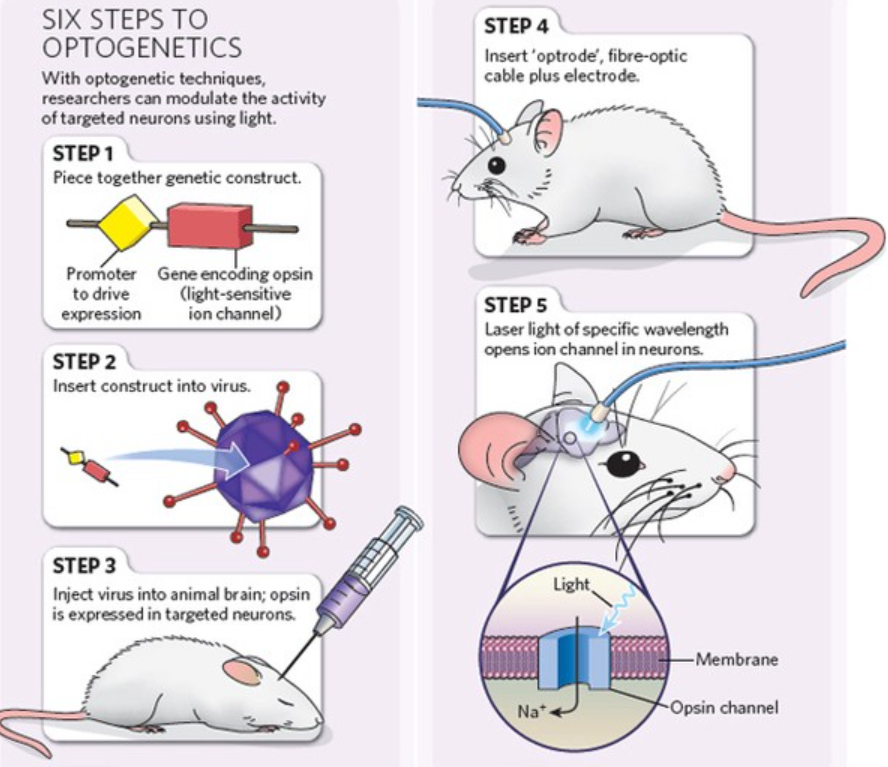
     
[final two lines :] 
 
        … either “you will be my witnesses” – or “you will be my army” :                                         [in is. 66 : both] 
          there is little space for bóth since we’ve only two lines left 
          and considered the roots “the army” is the best here ; 
          it’s not required ‘that Jacob is saved here’ IF – which is possible – 
          next chapter (-as 19) is about “the judgment of Jacob” 
          [though we don’t know yet in which chapter he will be saved then]  :
 
19
“Do they provoke me to anger? saith the LORD: 
[do they]  not [provoke]  themselves to the confusion of their own faces?”
19
?=because – they=you (‘144’) – (will be) >> my – provoke=army (mkosim=lchem as shown) ,
b
(is) the declaration of – IEUE , 
c
[w/ swapped 1x :] 
not=after (lA=Achr) – [+I]  (will have) shame=restored (BSH=SHB) >> you     +

(in-) [+my]  so that = people (‘the Originals’) (lMOn=OM) , in front of [=me]  ; 

note :
… buildup is good — after ‘earth’ in 18 now we’re in the other reality again ;
 
20
“Therefore thus saith the Lord GOD; Behold, mine anger and my fury shall be poured out upon 
this place, upon man, and upon beast, and upon the trees of the field, and upon the fruit of the 
ground; and it shall burn, and shall not be quenched.”
20
[=for]  (lkn=ki) – thus – says – IEUE ,
b
[+you]  (will) pour=execute – my – [..]  furious – anger      +
c
upon – the·place = the sons of Ammon (mqm=ammn)                                [‘the Esau sons in their paradise’] 
d

“upon man, and upon beast, and upon the trees of the field, and upon the fruit of the ground;”
.. virtually every noun is tampered   —
what we need is “for what they did to my sacred ones ,
                            what they did unto Jacob ,
                            and what they did against my scroll (‘fruit’ PHRi=sPHR ?)” ; 
what they did “to our pretty female Originals” cannot appear here for that was no theme , so far ;
e
and she=they (will) burn=perish (Br=aBd) – and never (‘not’) quenched=rise again .


end of chapter                                                                                                [lines 21-34 were moved : see top of page]  


Jer.18 [pt.I] : the great conspiracy : God warns how Esau will corrupt the scroll after the [500BC-] exile [the same scroll as today’s KJV !] to have Jacob perish in the Trib

Jer.18 [pt.I]  : the great conspiracy :
God warns how Esau will corrupt
the scroll after the [500BC-] exile
[the same scroll as today’s KJV !] 
to have Jacob perish in the Trib

[version ; 2024-05may.27-28] 


the sons of Esau  [Babylonian Jews , later Pharisees] 
discussing with eachother how to corrupt God’s scroll 

                                                                                  theme
     
       … if you’re new here please : this is the background of the events in previous Isaiah 65 :
       the result of “the corrupted Scroll of God” which is THE running theme in all of prophets 
       and only énding in Revelation with Christ “removing the seals [=corruptions]  from her” 
       where “the corrupt scroll” He holds is today’s everywhere used KJV bible ! 
 
       … the bloodline of Esau [-think ‘Pharisees / the elite’, etc]  always were the enemies
       of God’s people Jacob — you and we — and have always tried to get the Scroll to try 
       change His words unto Jacob : ever since the Exodus in 3200 BC , so that the deity
       of Jacob would be disappointed and angry at His own people   —
       therefore God has protected his scroll from coming into the hands of the enemy : 
       but after 500 BC Ishral still refused to listen to Him , He had enough , and this chapter
       explains how “through thier stubborness the people brought a curse upon themselves 
       but they also brought a curse upon the generations in the time of the end” …. 
 
       … “this is hard to accept”, you will say , and yes it is heartbreaking    —
       but be sure that God did everything to explain that curse by so many of His prophets ,
       constantly warning , pleading , sometimes even until the point of hopelessness (!) ,
       saying “LISTEN then to me , my people ! because that awful day is coming !”   —
       but , 
       like old-Ishral , no-one the past 2000 years has cared to examine whát He said !   
       and be honest : have you .. ?
       you see the problem , please ?
 
       … “but what about our pastors”, you will say , “should not they have warned us?” :
       and the answer is yes – however, they néither cared to examine what God really spoke ,
       but kept on presenting you “today’s KJV” as merely a copy of Esau’s corrupted scroll !
       God has a lot to say about “the pastors and christian leaders”,
       but be it sufficient here “that they will stumble together with their flock in that day” 
 
       … “then how come that Christ didn’t warn us ?”, you will say :
       but He did – He was the same angry about this evil conspiracy ! He was so furious    
       about ‘the corrupted scroll’ that John became afraid of Him , in Revelation chapter 1 !
       as the same reason for his anger at ‘the Pharisees’ : not ‘since they were hypocrites’
       [=that is their ówn corruption of the text !]  but because their fathers had changed the
       words of God , and they would do the same with His words ! :
       making Him say things he never has , corrupting all the warnings of God which Christ
       faithfully repeated , having Him do rather silly things which He never did , disarming
       THE crucial theme of “us returning to Eden – our homeland in the other Reality” 
       which is the very subject of “God’s eternal covenant” !
       hence God ‘needed’ so many prophets : to explain how we have left Eden and came
       to live on this prison-planet that He did NOT make in an evolved ape 2.0 body that 
       He has NOT made — you start to see from what exactly Christ has saved the soul ? —
       while His greatest desire is to have the Eden paradise restored !
       yet Esau would not have that happen !
       and Jacob has not cáred for what God has said : he was happy with ‘being saved’ 
       through what Christ has worked , never looking any further ! how ever would that
       stop the cycle of this awful earth with its oceans of hurt to Jacob (-and see this 18)
       and make that God would restore our homeland Eden .. ? it wouldn’t !!
       you see the problem please … ?
       
       closing :
       … yes it’s much to take in at once , especially if you never knew about this theme ;
       please read this chapter carefully and see how God speaks very clearly in a most
       careful way to make súre that His message will be understood   —
       keeping this in mind you can go to all other pages containing dozens of themes
       which He always has wanted Jacob to understand
 
further context :
see other Jeremiah pages :
– where the scroll is ‘officially handed over to the enemy’ in the form of the king of
  Babylon that will raid the Temple and take the scroll to his land [-together with the
  temple altar – a related theme – but not the Ark which Jeremiah will have hidden]  ; 
  where the Babylonian Jews there will first study her , then start their despicable job
  in their enclave Alexandria in Egypt from 250 BC , producing their ‘Septuagint’ crime ;
– strengthening the theme here
  is the similar example given in Jeremiah 13 which was never “a corrupted girdle at
  the river Euphrates” but about ‘the to be corrupted scroll’ [PHRS=SPHR inversal]  ; 
 
corruptions : strategical ; where part II was nasty : without proper concept unrestorable
theme : context 100% restored and syntax >95% 
fulltext :


Jeremiah 18  (-as part I)

 
1
[w/ tampered b/c retold by Esau :] 
[=then]  the word of – [.. 1x ..]  – [..]  IEUE – becomes – to – [=me]  , saying :
2
arise , and go down     +
b
(to-) the house of – the·one-being-potter (=tampered) = the scribe (-s) (itsR=sphR) ,    [‘scribal room’]  
c
and there – I (will) announce (‘report to’) you – my words ; 

 
[next 3 : now first we need an idea of ‘what action can have followed next’   —
this seems to be “the intro to the concept itsélf as the corrupted scroll” 
[think “the possibility that it cán happen” , as intro to the later chapters]  : 
3
and I go down – (to-) the house of – the potter=scribe (-s) (‘same corruption’) ,
b
and behold ! , he – (is) making – a work=copy      +
c
on=from – the·stones (=tampered) = a scroll (abn=mgl , prob. not -sphr (‘the Scroll’) , see next 4) ; 

 
4
“And the vessel that he made of clay was marred in the hand of the potter: 
so he made it again another vessel, as seemed good to the potter to make [it] .”
4
[=but]  – the vessel=scroll (kL=mgL) – which – he – (is) make=writing             
b
(is) ruined (lit. ‘corrupted’) – [=because of]  the (-dysfunctional) clay=pen (chmr=chrt)       +     
c
in the hand of – the potter=scribe (‘again same corruption’) :
d
and=so he [=starts]  (-again) – [=by]  made=taking (osh=shim) – another (or ‘new’) – [=scroll]  ,
e
to make=write (-it) – as – (being) correct – in the eyes of – the potter=scribe ;

 
                                                                                  part I b 
5
[=then]  – the word of – IEUE – becomes – to me , saying :

6
“O house of Israel, cannot I do with you as this potter? saith the LORD. 
Behold, as the clay [is]  in the potter’s hand, so [are]  ye in mine hand, O house of Israel.”
6
[w/ swapped to hide subject :] 
[+say to]  – the house=sons (Bth=Bn) of – (eden-) Ishral :                                                      [‘the potential 144’] 
b
[nasty lil swap :] 
(will) a potter=scribe – like – this – not – (be) able – to do – (the same-) unto you ? ,
c
(is) the declaration of – IEUE ;                                                                                                     [e : ‘the lying pen theme’] 
d
(for-) behold ! : [..]  the clay=pen – in the hand of – so=this – potter=scribe     +

(will) you=become – (the one-) in the hand of – the house=sons of – ishral=Esau ! (iSHral=oSHe) ;

note :
… ofcourse Jeremiah is ‘in Judah’ right now but because the subject is ‘the potential 144’ 
he cannot say “house Judah” (-only) , not even “house Judah + house Ishral” (since they vanished) ,
hence ‘sons of (eden-) Ishral” ;
note how that was said deliberately to can juxtapose with ‘the sons of + Esau’ ;
 
         next 7-10 , 4 lines , shows a buildup like :
         good action (guard the scroll?)  >>  I will stay with you
         bad action   (loose the scroll?)  >>  I will leave ,
         but there’s a sub-clause somehow : “by declaring him” ? : difficult to see :
         however – the problem is that the subject now ‘is Esau’ -so how ?
         and should “the guarding of the scroll” not be “the conclusion / command áfter that” ?
         so that the interpretation would be :
         hé knows that if you guard the scroll >>> then
         but he knows that if you will NOT guard the scroll >> then , 
         followed by “the conspiracy” in 13 ?
 
7
“[At what]  instant I shall speak concerning a nation, and concerning a kingdom, 
to pluck up, and to pull down, and to destroy [it] ;”
7
(now) : [+he]  (‘Esau’) moment=knows (‘no match’)     +
b
(that-) I (will) speak=protect (‘guard’) (dbR=shmR) [+you]  – [=from]  – the nations       +
c
and [..]  kingdoms – (that) pluck=search – to break [+you]  – and (make) [+you]  to perish ;      +

8
“If that nation, against whom I have pronounced, turn from their evil, 
I will repent of the evil that I thought to do unto them.”
8
and=as long as – he=you (will) turns=protect (‘guard’) (SHb=SHmr)       +
b
the·nation (=tampered) = the scroll of – [..]  – [..]  [=my]  evil=words (RA=dbAR)       +
c
which – I spoke (‘speak’) – unto him=you ,
d
          and=so that I (will) regret=protect (‘guard’) [+him]  (‘the scroll !’)      +
          e
          on=from – the evil – which – I=he designs (‘plots’) – to do – unto him ;

note :
… the ‘he designs’ múst refer to “searching to corrupt the scroll” and compare the ‘Balaam story’ ;
 
juxta [-yet the buildup may change]  :
 
8
“And [at what]  instant I shall speak concerning a nation, and concerning a kingdom, to build and to plant [it] ;
8
(but-) and=if – I=you (will) – moment=nót – speak=protect (dbR=shmR as 7) – [..]  [+my]  nation=scroll ,
          b
          and=by – (having become) build=complacent – [=about]  [+my]  kingdom=commandments
          c
          and (will have) plant=forgotten [+them]  ,      +

9
“If it do evil in my sight, that it obey not my voice, 
then I will repent of the good, wherewith I said I would benefit them.”
9
[=then]  he (will) execute – [+his]  evil – in eyes=secret (?) ;
b
[new line :] 
to=and as-not=whén – [+he]  (-once) (would have) obey=corrupted (shm=shchth) – [..]  my voice=scroll ,   +
c
I (would) and=no (-longer) – regret=protect [+you]       +
d
[=from]  – the·good (=tampered) – the nations (tUb=gUm) – which – I promised     +
e
to do=protect [+you]  – auth=from [..]  ;  

 
                                                                                         part I c
                                                            [now said to 500 BC Ishral , in general :] 
11
[=wherefore]  – say – [..]  to – (the ones) man=dwelling – in Judah 
b
and to – the inhabitants of – Jerusalem , saying : thus – says – IEUE :
c
behold ! , [.. 1x ..]  – evil – (is) forming – [=against]  you ,                            [prob. not ‘Esau mentioned now’] 
d
[=as]  – a design=conspiracy (chshb=qshr) – (which is being) designed – [=against]  you :
e
return – please – each – from – his – evil – way ,
f
and (make-) – your ways – and actions – good ;

 
12
[=but]  they said : despair=no (-way) [=la]  ,                                  
b
because – we (will) [=follow]  – our (own-) opinions
c
[=as]  – doing – [=according to]  – the stubbornness (sh=s) of – our – evil – heart ;

note :
… so this was not exactly their literal response but a paraphrased one ;
 
[next 13-14 : probably based upon Jer.2:32-33 :] 
13
therefore – thus – says – IEUE : 
b
ask – please – [=among]  the heathens (‘nations’) – whether – [=they]  heard – as=anything
c
[=like]  – the very – horrible (-thing) – (which-) the virgin – Ishral – (has) done ? ;
14
(because-) (will) a rock=virgin – forget – [+her]  field=ornaments
b
(or-) a snow=bride – [+her]  lebanon=attire ?
c
(and-) or=not (even-) – the foreign – waters=people (mim=om)        +

(will) forsake – [+their]  flowing=dieties – [+even though]  (those are-) cold ones=evil 

note :
… after 13 , 14 makes sense now — question is ‘why this had to be corrupted’ ;
last line d) must be a juxta but added ‘even though’ to not refer back to IEUE , next : 
 
15
[=yet]  – my people – (have) forgotten me                                                       [Jer.2 adds ‘days without number’]  
b
(ever-) to=since – they fuming=discarded – [+my]  vanity=scroll (shua=sepher) ,                      [< theme !] 

.. above ,
the “fuming (-incense) to vanity” is no reason belonging to ‘forgetting’ and is even incomplete ,
requiring “fuming to other deities” etc ;
c
and=which (makes) them to stumble – in their ways ,
d

[next : unexpectedly tricky , needs to confirm c) and introduce next 16 ,
while there were too many ‘paths’ anyway of which -shebel is an invented root :] 

not (-even) – heaped=noticing – (how-) the ancient=nations (oUlM=gUiM)       +

(are) paths=eager (?) (corrupt root) – to come – (and) paths=enslave (?) >> way=them ;   +          [line 9] 
16
(and-) to make – their land – desolate , [+as]  a perpetual – hissing ,
b
(so that-) every – one (that will) pass – by her – (will be) amazed – and shake – [..]  his head ;  

 
[next 17 : after 16 we need a location :] 
17
(for-) I (will) scatter them – [=into]  the wind=lands (Rch=aRts) of – east=Babylon ,
b
(because-) in front of – [+their]  enemies – [+they]  (will) back=go captive ;
c
and – I (will) not – show them – [+my]  face – in the day of – their calamity ; 

 
                                                                                              part II
        [how áfter the exile the scroll will be corrupted – and the grave consequences] 
 
                                                     [hence Esau put this part II in a false context] 
 
          … final section 18-23 :
          this reads bizarre , “as if now follows a prayer of Jeremiah” — but not so ;
          though having checked it does not appear to be an imported section from elsewhere
          [which was very possible since it’s that weird]  , but must be the intro to next ch.19 
          that must be about “the consequences of the corrupt scroll for the énd time” 
          [and we’ll see if this assumption is correct when doing 19 , okay] 
          b)
          now the (potential-) sons of Ishral must be addressed again :
          as in part I , befóre the people were ,
          reason is “that the people were ‘just’ asked to return” but the ‘technical aspects’ of the
          corrupted scroll is ALWAYS addressed only to the potential 144 ; and because line 19
          became so strange after 18 it must have been the intro here :
 
19
“Give heed to me, O LORD, and hearken to the voice of them that contend with me.”
19
[+therefore]  – heed=hearken ! (qSHib=SHmo) – (to-) IEUE ,
b
(you) and=sons of hear=Ishral (SHmo=iSHrl) ,                                                                                   [a + b w/swapped] 
c
to=concerning the voice=conspiracy (Ql=Qshr part I) – [=by]  [=your]  contenders=enemies [rB=eB]  : 

 
18
“Then said they, Come, and let us devise devices against Jeremiah; for the law shall not perish 
from the priest, nor counsel from the wise, nor the word from the prophet. 
Come, and let us smite him with the tongue, and let us not give heed to any of his words.”
18
[=because]  said=áfter (AmR=AchR) – the come=exile (?)      +
b
the on=sons of – jeremiah=Esau – (will) devise=éxecute (chSHb=oSH) – [+their]  plan ,   [start 250 BC]  
[‘and-after exile (?) they-shall-devise sons-of Esau devising-of-them’]  
d

[the ‘triple’ here is corrupt – we need a subject before the ‘go you’ :] 

so that – [+my]  law – (will) [.. 1x ..]  – perish – from·priest = from Jacob (ken=iaqb phonetical)
e
[=as]  [+my]  counsel=commandments – from the wise=people (chshM=oM) 

 
f
and=when – [..]  prophet=Esau – (will) word=say (‘close’) :
g
[=we]  (will) go – and smite=change (nK=hphaK) – [..]  [+their]  tongue=scroll (lshn=sphr)
h
and=so that – we=they (will) – not – (be) attentive=aware (qsh-ib=bin)       +
i
[w/ swapped 1x :] 
to=what – [+their]  all=deity (L=aLei) – (-réally) words=spoke (DBR=DBR) (to-) him=them ;  

 
[next 20 :
very possibly “a description about hów they will change the text” , now , 
red flags are the terms ‘evil’ and ‘good [=humble] ‘, and the ‘standing [=inbetween’]  ,
while “digged a pit” ALSO appears in 22 :] 
20
“Shall evil be recompensed for good? for they have digged a pit for my soul. 
Remember that I stood before thee to speak good for them, [and]  to turn away thy wrath from them.”
20
?=and – [=they]  (will) repay=place (SHlM=SHiM)      +                                                        [a-d : 100% retrieved] 

[+their]  evil ones (‘words’) – under=between – the good=humble ones (‘good words’) ,
c
so that – [+my]  dig=words (kR=dbR) – (will be) pit=hidden (shuch=star) – [=in]  my soul=scroll 
d
[+because of]  the remember=evil ones (zkR=dbR) – standing – in [=their]  front=midst ;

 
[question is ‘what we do next’ :
do lines 21-23 continue “to explain the catastrophic results” as “the goal Esau had in mind” 
or is something mentioned about “how I will undo their crime”.. ?
 
e
to=and [+he]  (‘Esau’) (will) word=say (‘as in 18-f ?’) – to [=himself]  :
f
(through this-) , [+they]  (will) to=not (l=la) return – (to-) [+their]  good=deity (tube=alei) ,
g
ath=so that – you=his fury – (will be) from=upon them :

 
[next 21 : start is a red flag :
has to link back to ‘the nations’ earlier – where Esau “plays the kingpin” ! :] 
21
“Therefore deliver up their children to the famine, and pour out their [blood]  by the force of the sword; 
and let their wives be bereaved of their children, and [be]  widows; and let their men be put to death; 
[let]  their young men [be]  slain by the sword in battle.”
21
(and because-) – [=their]  (Jacob’s ) sons (‘144′ : hence intro line of part II’)    +
b
(will) therefore=never (‘not’) (Lkn=La) – give=discover      +
c
[w/ swapped 1x :] 
the famine=words (RoB=dBaR) of – [+their]  to=deity (L=aLei) 
d
[..]  [+we]  (will) deliver (all of-) them – into the hand of – the sword=nations   [sic — until this fkn day !] 
e
and=that will make – their women – childless – and widows
f
[=when]  their men – (will be) be=killed – (by-) killed=all (-kinds of) (?) – deth=means (?) ,
g
[=while]  their young men – (will be) slain – [=by]  the sword – in wars ;

note :
.. the above interpretation is not overdone : compare the ‘king of the West’ Daniel chapter 
[and this was said some 50 years before Daniel]  ;
 
22
“Let a cry be heard from their houses, when thou shalt bring a troop suddenly upon them: 
for they have digged a pit to take me, and hid snares for my feet.”
22
(until finally-) [=we]  (will) hear – the outcry – from them=His houses=people
b
that=when – suddenly – [+his]  troops=great (gdd=gdl) – [..]  them=day (em=ium) – (will have) come 
c
(in-) that=which – digged=all of them (Kru=Kl) – K Q (will be) pit=destroyed (shuche=shechath) ,
d
[=as]  (having been) seized – and=by the snare (‘noun ?’)      +

(that-) they=we (will) buried=set up (tMnu=shiM) – to=for – me=his feet=people ;  

 
[closing :] 
23
“Yet, LORD, thou knowest all their counsel against me to slay [me] : forgive not their iniquity, 
neither blot out their sin from thy sight, but let them be overthrown before thee; 
deal [thus]  with them in the time of thine anger.”
23
[=but]  you=I , IEUE , know – all – their plotting – against me=you :                            [‘still said to the sons’] 
b
for=and [+they will) death=die (‘verb’)        +
c
not=when – you=I (will have) forgive=judged (khPHr=mshPHt) [+them]  – [=for]  – their depravity ,
d
[=as]  wipe=perishing – (for-) their sin=crime – from=against [=my]  before=people – not=Jacob (al=iaqb) ;
e
K Q [=for]  they become=themsélves       +                                                                                 [only wrote ‘and·they’] 
f
(will) stumble – before – [that-]  time=day (‘as in 22’) ,
g
(when-) you=my anger – (will) deal – with them .                                           [or ‘destroy (osh=shchth) – them’] 


end            >>> but theme continues in next 19 


Jes.66 : only for you & we : the 7th & 49th as Jubilee ends at Weeks as the dáy of acceptance of the scroll – our Date confirmed

Is.66 : only for you & we :
the 7th & 49th as Jubilee
ends at Weeks as the dáy
of acceptance of the scroll
– our Date confirmed –

[version ; 2024-05may.22-25] 


                                                                              theme
 
          … previous 65 may not have need an intro – but this one certainly does ,
          since because of the important theme she has been utterly corrupted :
 
          first – after the Luke sections turned out to be ‘the theme of the Jubilee’
          she hád to show somewhere in prophets — because after Leviticus this
          Jubilee theme has like vanished from the scroll , altogether !
          though we did learn “about the Scroll having to be presented each 7th yr”
          and “that He would accépt it in the 49th” (not ’50’) the question was where
          you & we are at this point in time’ — and whether this could be our year
          since we trust that we have declared the scroll on this Unleavened , right ;
          and now all the themes have been explained throughout this book Isaiah
          and especially after “the acceptable day” chapter , the correlation between
          Unleavened & Weeks and the 7th & 49th year needed to be clarified   —
          and , knowing Him , this could well be the very reason for this end chapter !
 
          indeed a covered-up root ‘Unleavened’ shows here , while line 3 has the
          words ‘gift’ and ‘sacrifice’ always used in the related Strange Fire theme ;
          while it gets interesting at the “something happening in one day” linked to
          the concept of “a woman giving birth” — which must explain the mentioned
          relation between Unleavened & Weeks ..
 
         this chapter ‘starts with a compliment’ – how sweet is that ? ,
         namely “how different the scroll looks compared to the one you started with” 
         and becáuse that means “past tense” the theme of ‘our date’ should appear :
         but the same time this was said to indicate how corrupted this one would be ..
 
after restoration : lines 1-14 as the core section that was utterly corrupted
                                         yet the most important section for us :
                                         considered the amazing buildup the probability of 1-14 is >95%
 
this chapter : keeping it as ‘blueprint’ (-of this theme) :
…  this 66 is a treasure because she has not been cut-up by the Esau who doctored her ,
probably because he was cocky enough to trust in his mutilations : so that we can restore
a solid buildup (-in spite of all the corruptions ofcourse) which is not the case in the mirror
chapters like Jer.7 , Haggai 2 and the (triple section in-) Luke ;
while importantly here we have “the day of acceptance related to the prisoners being freed” 
because of the context of the prévious chapters here
[even though the 2nd section of Luke also uses the Isaiah “prisoners freed” line] 
 
the ‘year (-number)’ corruption here :
… by stubbornly (!) wanting to be sure of the right context of every next line , the first Red flag
was the ‘to hate’ = ‘year’ root (shna=shna) in line 4 — and fortunately Esau did it again , later ;
explaining WHY ‘the Jubilee theme’ has vanished since Leviticus : as deeply buried by him !
 
         closing :
         let’s hope and pray that we understood all rightly – and that this 2024 is our year ;
         you noticeably helped with this one your Majesty so we have a chance 
 
corruptions :
theme :
fulltext :
 
 
[start – 1 : said to you & we :] 
a) needs an addressee somewhere , “you sons of Ishral” :
b) the line reminds very much of the one in Haggai 2 , 
       Who [is]  left among you that saw this house in her first glory? and how do ye see it now? 
       [is it]  not in your eyes in comparison of it as nothing?”
       [we know that Haggai 2 – also because of the often returning “dates” – is about Weeks
       and ‘the acceptance of the scroll’ : but sadly she remains too corrupted for now] 
1
“Thus saith the LORD, The heaven [is]  my throne, and the earth [is]  my footstool: 
where [is]  the house that ye build unto me? and where [is]  the place of my rest?”
1
thus – says – IEUE – (to-) the·heavens (=tampered) = the sons (e=ben) of Ishral (shmim=ishrl) :                                
b
(do) me=you (‘moved’) throne=remember (KsA=zAKar)       +                                                 [‘based on Haggai’]  
c
[+my]  stool=corrupted (adj.) – [..]  land=scroll (aRts=sphR) – (in-) the foot=beginning (Rgl=Rshn) ? ;
d
[so-]  where=how (?) – (do) [+you]  this=see (?)      +
e
the house=scroll – which – you (have) built=restored (aBn=shB) – unto=for me ? ,
f
[very probable :] 
and – this=is [+he]  (ze=eie) – where=not – place=like – the rest=original one (mNch=rshN) ? ;    

 
2
“For all those [things]  hath mine hand made, and all those [things]  have been, saith the LORD: 
but to this [man]  will I look, [even]  to [him that is]  poor and of a contrite spirit, and trembleth at my word.”
2
[verb w/ swapped :] 
and – all of [+him]  – (is) these=by (ale=ol) – the made=doing (‘same’) of – my=your (-own) hand 
b
and=so that he became – all=like – these=this ,
c
(is) the declaration of – IEUE ,
d
and=because [..]  – [..]  I=you spotted – [..]  the humble ones (‘good words’)       +

(that-) (had been) smitten=overshadowed (‘no match’) – (by) the spirit=evil ones (‘words’) (Ruch=Ra) ,

and=so that you tremble=understood (chrD=iDa)        +
g
on=what – [+I]  (have) word=spoken (DBR=DBR) (to-) me=you ;  

note :
a) the “mentioning the good and evil words” must prove lines a-b ,
b) the usual phrasing is “the evil ones standing inbetween the humble ones” but to leave the line
      intact as much as possible we opted ‘overshadowed’ here ;
c) because of the juxta “humble ones + evil ones” g) should not be ‘word’ (-again) but ‘to speak’ ; 

 
                                                                                            part I b
 
        the very difficult mid section lines 3 – 13 :
 
         … so far so good — 
         but now comes the difficult midsection [-after having done the second half from line 14]  ;
         line 3 :
         you see an important – but very corrupt – theme starts now ;
         this line indeed can follow after previous line that ended with “you understood my words” 
         where the theme here is “the gift” = declaring the restored scroll ; 
         line 4 :
         appears to be a juxtaposition of the line in chapter 65 ,
         related to “declaring (-the scroll)” see root (-QR) ‘called’ >> ‘declare’ 
         line 5 :
         starting a new theme >> as conclusion ,
         restored as “therefore hear you that wait (-for your date)” so we need work towards that ,
         meaning that the sequence as lines 3-4-5 can have been genuine :
 
[next 3 :
now “a short description of whát we understood then” can follow :] 
3
(a) “He that killeth an ox [is as if]  he slew a man; 
(b)  he that sacrificeth a lamb, [as if]  he cut off a dog’s neck; 
(c)  he that offereth a [=gift]  , [as if he offered]  swine’s blood; 
(d)  he that burneth incense, [as if]  he blessed an idol. 
(e)  Yea, they have chosen their own ways, and their soul delighteth in their abominations.”
3
[+for]  [+you]  (have) slaying=understood (?) – (how-) the man=adm-man (‘Adam’)         +
b
smite=came – the·bull (=tampered) = the=into [+my]  sanctuary (SHr=mqdSH)                       [‘eden gate’] 
c
(and-) sacrificed – the·flockling (=tampered) = the=strange (e=zur) fire (SHE=ESH)
d
(by-) strangle=placing [+it]  (‘no match’) – (upon-) [+my]  dog=altar (kZB=mZBch) ,    + 

 
e
(and how by-) offering – [+your]  gift       +                                                   [‘at Unleavened ; see pinned section’] 
f
(as-) the blood=words (Dm=Dbr) of – [+my]  swine=scroll (chzir=spher)     +           [‘see ch 65 + line 17’] 
g

[next : we need e-f to properly end now :] 
(that-) one=you (would) memorial=declare (mzkR=qR) – (to-) frankincense=me (‘no other option’) ,    +
 
[next : now what ?
we need ‘some conclusion’ after e-g , and next ‘bless’ is véry tempting , “I would bless you” :
but we would jump the gun by going positive now :
h
one=you (would) bless=annul (bARAK=KhAphAR) – the lawlessness of     +
i

[we only have a limited number of words now :] 
[+your]  (1200 BC-) even=fathers of – they=old       +                                                                               [2x no match] 
j
(when-) they choose=offered (BchR=qRB)      +
k
in·ways-of·them = ways=strange (dRk=zR) in=fire (b=esh) (to-) them=him (‘Adam’) ,
l

[closing :] 
and=as [..]  their abomination (‘but wrong term , this one is used for ‘the idol body’)     +
m
(by which-) she=they delights=broke – them=my (eden-) soul=covenant (‘no match’) ;     [‘verb at end’] 

 
[next 4 :
a) now we would need ‘a restoration of the covenant’ :] 
4
(a) “I also will choose their [=unweaned ones]  , and will bring their fears upon them; 
(b)  because when I called, none did answer; when I spake, they did not hear: 
       but they did evil before mine eyes, and chose [that]  in which I delighted not.”
4
also=therefore – [+I]  (will) I=remove (ani=sr)      +                                                    [‘we need speed up the line’] 
b
[+his]  choose=abomination (‘the strange fire’) (Bchr=thoB)       +
c
in=from them=my unweaned ones=altar (‘no match but was invented anyway’) ,
d
and [=I]  (will) make (‘restore’) (mguRTH=kRTH) – [+my]  bring=covenant (Bia=Brith) – [=with]  [=yóu]  :

 
e
because – (when-) I called , [..]  none=you – (háve) answered ,                                              [e-h : juxta to ch.65] 
f
(having) hearkened – (to what-) I spoke – [.. 1x ..]  
g
and=as (having) done – the evil=right thing – in my eyes , 
h
and (having) chosen – [that-]  in which – I delight ;

 
                                                        previous lines 1-4 as intro run VERY solid now ; 
 
5
(a) “Hear the word of the LORD, ye that tremble at his word; 
(b)  Your brethren that hated you, that cast you out for my name’s sake, said, 
        Let the LORD be glorified: but he shall appear to your joy, and they shall be ashamed.”
… this is a nasty one :
a) the key is in (a) so that (b) is impossible , as not the proper theme [-continuation]  , 
b) after the conclusion in line 4 now must follow a promise — in the form of a time frame :  
5
[+therefore]  – hear – the word of – IEUE ,                                                                               [‘because of the above’] 
b
(you-) (that) tremble=eagerly wait (chared=chakah !)      +
c
the at=day (?) (al=ium) of – his=your word=deliverance (?) (dbr=plt) :           [next : ‘the 3d year theme’ :] 

 
d
(in-) the brothers=third (achi=shlish) – hate=year (shna=shna !) – they=you said :
e
ones=we (have) isolating=understood (nADAh=iADA , w/ invented root anyway’)       +
f
the sake=words (lmon=drbim) of – me=his name=scroll (shem=sephr)
g
(and) IEUE – (has) glorified=promised (‘has spoken’) (kBD=DBr)       +
h
and=that – you=his (‘moved’) in=servant (b=obd) the Anointed (Christ) (shmch=mshchh)      +
i
(would) see=gather [+us]  ,
j
and=but – they=he (has) – they=nót (em=la) – ashamed=returned (iBSH=SHB) ; 

note :
a) you see that Esau had “he will appear to your joy” !
b) we had this “disappointment theme” several times now – even in recent Luke ones ;
c) though the 2nd half of the line séems to refer back to ch.56 it does NOT :
      Esau came to that idea because line 4 wás a juxta ;
 
      so far :
      He indeed promised “the third year – as the days of a hired one” (literal 3 years)
      and we had so problems with that at the end of 2022 into ’23 , if you remember ;
      the only reason we can think of – as we interpreted from several other chapters – 
      is “that this specific theme was so deeply buried” 
      that we would … panic and search even harder   —
      also implying that the next section MUST be about the date of declaring :
 
[next 6 :
indeed … hence this line is so utterly corrupted … key must be (QR) ‘declare’ :] 
6
(a) “A voice of noise from the city, 
(b)  a voice from the temple, 
(c)  a voice of the LORD that rendereth recompence to his enemies.”
as
(a) qul shaun m·oir 
(b) qul m·eikl 
(c) qul ieue m-shlm gmul l·aibi·u 
man ..
that’s impossible — what we would need is something as “but you didn’t know about the declaring” ;
6
voice=but (?) – (in-) the noise=year (SHAoN=SHNA)      +                                                   [‘year’ theme b/c of 5] 
b
from=that – [+you]  (will) voice=declare (Ql=Qr) – [+my]  city=scroll (oiR=spheR) 
[‘in-year that you-shall-declare scroll-of-me’]  
        c
        [even less sure :] 
        IEUE – (will) [..]  temple=deliver (?) (ekL=pLt) >> voice=you ,                                    [‘as intro to (KJV) 6 !’] 
        [‘he-shall-deliver >> you IEUE’]  
        d
        (as-) rendering – recompence – to=for his=your enemies=labour (?) (eaB=aBd) ;  
 

        #1  so “the year of declaring = the year of rescue” is the message here ,
                and we don’t say “as the 4th year” because that still won’t match , but that only at the
                start of this 2024 we understóod the declaring theme — hence taking it as ‘this year’ ;
        #2  it can have said “in the voice=selfsame year (-etc)” 
                with the unusual root (-otsm) as referring to / strengthening “the same year” aspect ;
 
[next 7 :
strengthening “the short (-and sure) time between the declaring and the escape” :]  
7
“Before she travailed, she brought forth; before her pain came, she was delivered of a man child.”
7
(because-) in=as sure as a before=woman (‘no match’) – (who) travails       +
b
(is) [+also]  giving birth ,
c
and=as delivering – a man child – [..]  before=when – [..]  her – cramp – (will have) come ;     +

 
8
(a) “Who hath heard such a thing? who hath seen such things? 
(b)  Shall the earth be made to bring forth in one day? [or]  shall a nation be born at once? 
(c)  for as soon as Zion travailed, she brought forth her children.”
8
who=likewise – he=it (will) heard=happen (‘no match’) – as=with this=you (zath=athe)      
b
who – (will) see=read (?) (Rea=qeR) – [..]  these=this :         [or : ‘when you will read’]              [< possible ?] 

 
[now it gets dangerous :
if indeed it said “when you read this” , which is possible after the entire buildup so far ,
it means that He knew we would read it after the declaring – after Unleavened ;
— and because we just had “in the same year” now that must be specified :
c
he=you (have) travail=declared (‘no match’) – the land=scroll (aRts=sphR)      +

in the day of – one=Unleavened (Achr=mtstsA , no real match’) ,
e
if=and – he=I (will) born=deliver (‘close !’) (iLd=phLt) [+you]        +
f
nation=after (?) (‘no match’) – time=seven (?) (phom=shbo) – one=weeks (?) (achth=shbo) ,

       above :
       though wé can insert “feast of + weeks” the text has not given any indication of that yet ,
       so that “Unleavened” must be ‘the starting point’, no ? ;
       besides “the 7 weeks” follows upon the suggested “9 months” timeframe ;
[line closing :
… the structure of the line starts with “declare + at Unleavened” 
so that it should end with “accept + at Weeks” ! , though the roots do not match :
g
that=at – the travails=feast (?) (CHle=CHq) of – also=Weeks (‘no match’)  +     [‘clarification of “7 wks”] 
h
(when-) [+I]  (will) birth=accept (‘no match’)      +
i
the tsiun=scroll (tsun=sphr no match but compare what he did in c) – ath=by – [=my]  sons ; 

… here ,
probably “by” [though ofcourse also ‘from’]  in the sense of ‘restored by’ , compare line 2 ;
 
                                                                                 part I c
                                                          [most difficult section 9-12] 
 
         … the buildup is fantastic so far , but now the next hurdle :
         though Esau drags on with his birth theme now we need to know ‘why at Weeks’ , 
         as lines explaining the relation between unleavened and weeks ,
         while 10 appears to be a coverup of ‘the sabbatical and 49th years’ :
 
9
“Shall I bring to the birth, and not cause to bring forth? saith the LORD: 
shall I cause to bring forth, and shut [the womb] ? saith thy God.”
this one :
,,, no idea — it’s not even sure that this line had ‘two parts’ ; back to ‘Moses’ ? :
9 
I=for – I=you (will have) break=understood (?) (shBr=Bin)      +                                             [a-b : yes , recently] 
b
and=about [..1x..]  – the birth=commandment (?) – (that-) he=say=gave – (to-) ieue=Moses (?) 
c
if=how – the I=people (ani=om)      +
d
the·one-bringing-the-birth (=tampered) = (should) read out (‘declare’) (‘no match’)      +
e
[..]  the restraint=scroll (otsRth=sphR , similar corrupted in 8-c atsR)      +
f
says=before – [=their]  deity                                                                                                       [still 2 words in next 10 ! :]  

 
10 
(a) “Rejoice ye with Jerusalem, and be glad with her, all ye that love her: 
(b)  rejoice for joy with her, all ye that mourn for her:”
… well ,
there’s far too much ‘joy’ in this whole line [-and in 11]  while the used roots can be “year indications”
where’year’ is (SHNA) : if Esau pulled that trick earlier then why not here also ..? : 
(a) shmchu ath irushlm u·gilu b·e kl aebi·e 
(b) shishu ath·e mshush kl e·mthablim oli·e 
.. anew ,
(a) SHmchu = ‘7’ -shbo ? ath iruSHlm = ‘year’ -shna ? u·gilu b·e kl aeBi·e = ‘4’ -arba ? 
(b) shiSHu = ‘9’ -thesha ? ath·e mSHush = ‘year’ -shna ? kl e·mthablim oli·e
… so that we have ,
    “7 + year – (verb) – [..]  – 4 (40?) + 9 + year – [..]  – (verb) – [..] ”  ; 
10
[+every]  rejoice=seventh (or : ‘sabbatical’ , same root) – [..]  jerusalem=year ;
b
and [+I]  (would) glad=accept [+him]  (‘no match’) – to=from her=them       +
c
all=in – the love=fourty – (and) rejoice=ninth – [..]  joy=year       +
d
all=as – the·ones-mourning (=tampered) = the Jubilee (abal=iobal !)
e
(and-) over=bless (‘no match’) her=them ;  

note :
… okay — how does that sound to you please ?
incredible to what length Esau went to conceal this … 
 
11 
(a) “That ye may suck, and be satisfied with the breasts of her consolations; 
(b)  that ye may milk out, and be delighted with the [=mamma]  of her glory.”
(a)  lmon thinqu u·shbothm m·shd thnchmi·e                                         
(b)  lmon thmtzu u·ethongthm m·ziz kbud·e                                                       [but lines never start with -lmon] 
– the first hook we have into this Mess is the alleged ‘milk out’ in 11
    as (-matsats) H4711 only 1x ; invented from ‘Unleavened’ (-matstsa) :
– ziz ‘mamma’ is weird ,
– anog ‘delighted’ is an Esau term ,
– thanchum ‘comforts’ from -nacham , prob. corrupt b/c also in 13 ,
    while in (a) -shboth looks very much like ‘Weeks’ [or ‘Jubilee’ since that was the last term ?]  ;
    (a) …. – declare – Weeks – …….
    (b) …. – Unleavened – ………….
11
[+but]  (for-) [+many]  satisfied=jubilees (shobth=iobalim)       +
b
you=I (have) – in order=nót (Lmon=La) – suck=accepted (‘no match’) – and=him ,
c
(ever since-) [+he]  (had) from=become       +
d
the consolations=corrupted (TH-nCHm=shCHTH) (adj.) – breast=scroll (shed=sepher) :
e
in order=until – and=this – squeeze=Unleavened (matsats=matstsa)      +
f
(when) you delighted=declared (anog=qer)       +
g
[..]  the mamma=righteous one (?) (ziz=tzdiq?) of – her=my glory=words (kBD=DBr) ;           [‘juxta to d’] 

 
                                                                                                    part I d
 
12
(a) “For thus saith the LORD, Behold, I will extend peace to her like a river, 
(b)  and the glory of the Gentiles [<wut?]  like a flowing stream: 
(c)  then shall ye suck, ye shall be borne upon [her]  sides, and be dandled upon [her]  knees.”
… here ,
a) first (a) is a conclusion of the previous >> hence ‘a promise’ ;
b) because in next 13 Christ is sent to us , here “the Originals must be freed” :
12
[=therefore]  – thus – says – IEUE :                         [12 : the ‘three groups’ in the Is. ‘acceptance’ chapters :] 
b
behold ! , I (will) extend=rescue (?)      +

[w/ swapped 1x ; very unnatural overcomplicated syntax ; while Esau saw ‘a wet place’ :] 

to her=Eve (?) (ali·e=cue) – [+your]  peace=mother (shlum=am) – as=from the (matrix-) stream=sea ,
d
and [..]  watercourse=deliver – [+my]  overflowing=sacred ones (‘Originals’) (Shutp=qdSH)     +
e
(that were-) the glory=prisoners of – the nations (-of demons) ,
f
and you=suckle=bring [+them]  – on=unto – side=tsiun (TSd=TSun) – dandled=together (?) ;
g
and on=then – [+I]  (will) knees=bless (BKR=BKR)       +
h
[doubled term (thsho + shou” , corrupt anyway :] 
the thsho=remnant (THSHo=SHrTH) of – shou=Ishral (SHou=iSHrl) ;       +                                [‘whole 144’]  

 
13
“As one whom his mother comforteth, so will I comfort you; and ye shall be comforted in Jerusalem.”
… here ,
a) except for ALL concordances even a blind can see that this line was tampered with ;
b) the clue must be in next 14 “and you will rejoice when you see” 
       which can only be 1 thing – and is attested – namely ‘Christ upon the clouds’ ;
13
[now we must take care to not ‘spoil His entry’ in 14 :] 
as=for it (will) man=happen (aish=eie) – (that) [+I]  (will) which=call (ashR=qR)      +
b
his=my mother=servant (am=obd) – the comforts=Anointed (nCHM=MshCHh)                             [Christ] 
c
so=for – to comfort=bring you – (to-) I=me ,
c
and – you=he (will) comforted=depart – in=with [+his]  jerusalem=angels (iErshLM=MLek) ;      +

 
14
(a) “And when ye see [this] , your heart shall rejoice, and your bones shall flourish like an herb: 
(b)  and the hand of the LORD shall be known toward his servants, 
       and [his]  indignation toward his enemies.                                                    (b) : later

14
and you (will) see [+him]  , and – your heart – (will) rejoice       +
b
and=when [+he]  (will) bones=appear – (as-) flourish=standing – [=upon]  the herb=clouds (‘no match’) ;

c
[here was a cut-off :] 
… though this 14 (b) indeed seems to be the intro to 15 it follows unnaturally after (a) ,
even more so because we would need “the sun darkened” now – as in 23-24 ;  
 
23
“And it shall come to pass, [that]  from one new moon to another, and from one sabbath to another, 
shall all flesh come to worship before me, saith the LORD.”
23
and it (will) be – the from=selfsame (?) (m=otsm) quota=day (di=ium)       +
b
(that-) the month=sun (chdsh=chmsh) – (will have) month=darkened (chdsh=chshk)
c
and – the sabbath=moon (shbth=chdsh) – (will have) sabbath=become – [=like]  quota=blood (Di=Dm) ,
[probably verb w/ as end , “as-blood moon he-became”] 

and=when he (will) bring (‘same’) [+you]  – (to-) [+my]  flesh=sacred (bshr=qdsh) – all=mountain
d
[=where]  [+you]  (will) worship=stand – in front of me , says – IEUE ;

 
24
“And they shall go forth, and look upon the carcases of the men that have transgressed against me: 
for their worm shall not die, neither shall their fire be quenched; and they shall be an abhorring unto all flesh.
24
and (while-) [=you]  (will) go forth – (to-) and=me ,     +                                         [‘passing Mystery-Babylon’ :] 
b
[=you]  (will) look – [=upon]  the dead body of – the·mortals (=tampered) = the adm-man (‘Adam’)
c
the·ones-transgressing (=tampered) = (that-) (will have been) judged (phshm=mshpht) – [=by]  me ,

… here ,
ofcourse “he transgressed” but that is not the point now ;

(having) died – because [+of]  – his [=abomination]  (thloth=thob) – not=against [+me]  ;
         c #2 :
         that=for – (having) worms=counseled – to not=change (la=hphak) – [+my]  die=words ;             <<<
d
and his fire – (will) not – (be) quenched                                                                                                           [c-f : see note] 
e
and=because of (?) the be=crime (?) – (which-)  [+he]  abhorrance=did 
f
to all – [+my]  flesh=sacred ones (‘Originals’) (bshr=qdsh) ;     

note :
… difficult to trace the exact phrasing — that (KJV) Mark 9:44 has the same line is no proof
[maximum an indication that it was never about “an eye sinning” but about ‘Adam’]  ;
though “the fire” seems probable linking to his ‘false fire’ and ‘the torture of our Originals’ ,
line (c) may have referred to “having ordered to change my scroll”    —
probably as the best option : “judged for the scroll , and fire because of the Originals” ;
 
                                                                                    part d
                                                                now ‘the sons of Ammon’ :
              [because ‘the judging’ continues – and note how next section follows well] 
 
14
(a) [we had , see above] 
(b)  and the hand of the LORD shall be known toward his servants, 
        and [his]  indignation toward his enemies.”
14-b
[=then]  – the hand of – IEUE – (will be) known=stretched out      +                              [‘negative’ – attested] 
b
[w/ swapped :] 
with=against – his=your (‘you & we’) enemies ,                                                                       [‘our specific enemies’] 
c
[=as]  [+his]  (everlasting-) menace – [=against]  – the servants=sons (oBd=Bn) of him=Ammon (u=amn) ;

note :
a) perhaps said “then he will turn his anger against (etc)” but this is good as well ,
b) we loved an “anger against his [=Adam’s]  sons” but just a “his” would confuse here ,
    while “sons … sons of Ammon” is too much of an alliteration ;
c) the ‘everlasting’ is so said elsewhere ; 
 
15
“For, behold, the LORD will come with fire, and with his chariots like a whirlwind, 
to render his anger with fury, and his rebuke with flames of fire.”
… here ,
you see how 16 is similar — so this one was corrupt :
15
because – behold ! , IEUE – (will) come=make [+you]  – [=as]  [+his]  fire=army (‘no match’)     +
b
and whirlwind=send [+you]  (‘no match’) – (to-) his=your chariots=enemies (mrkAB=eAB) ,
c
to turn=destroy (?) (shb=shbr) [+them]  – by the fury of – his anger ,
d
and=through his rebuke=words (?) (gR=dbR) – as flames=arrows (?) of – fire ;

 
16
“For by fire and by his sword will the LORD plead with all flesh: and the slain of the LORD shall be many.
16
because – [=by]  fire=arrow – and sword – IEUE – (will) judge – the all=sons of – flesh=Ammon
b
[=as]  – the slain of – IEUE – (that will be) many ;     +

 
[next 17 :
the “swine + flesh” must be the same “corrupted + scroll” as the Is.65:4 line :] 
17
“They that sanctify themselves, and purify themselves in the gardens behind one [tree]  in the midst, 
eating swine’s flesh, and the abomination, and the mouse, shall be consumed together, saith the LORD.
17
the=as the ones (that) (factually-) (have) oppressed (‘tortured’) (‘no match corrupt anyway’)      +
b
themselves=my sanctify=sacred ones (‘Originals’) (‘same root’) ,
c
for=then – the·gardens = executed (‘anyway corrupt’)      +
d
the next=counsel (aCHr=CHshb) (per 24 and see KJV 18 !) of – K Q the one=adm-man (‘Adam’)
e
[..]  to midst=protect [+themselves]  (?)      +

(by-) eating=producing – the swine=corrupted – flesh=scroll ,                                                               [see ch.65] 
g
and=so that – [+their]  abominable idol (‘body which adam made’)     +
h
[..]  (would be) mouse=safeguarded (?) :

(for-) both (-of these reasons) – they (will) swept up=perish , (is) the declaration of – IEUE ; 

note :
.. that is true — they were “the sacrificial priests overseeing the torture” [-see other pages]  ,
and though perhaps it should be more explained as “the abominations he made for them” ,
this chapter presupposes that we KNOW all of that already – right ;
b)
.. also in other prophets Adam seems to have said “that corrupting the scroll is for their own good” ,
question remains ‘how much Adam played with them (-as well)” to protect his own fate ;   
 

                                                                                  part I e
                                                                        [what comes next ?] 
 
[next 18 :
can be confusing for Esau switched ‘to send’ to next line 19 :] 
18
“For I [know]  their works and their thoughts: it shall come, 
that I will gather all nations and tongues; and they shall come, and see my glory.”
18
[=then]  I – (will) deeds=send (mosh=shlch) them=you     +
b
and=to them=your thoughts=people – (on-) the come=land (‘earth’) (bAe=Arts , location needed’)
c
(that are being) gather=oppressed (qbTS=TSr) – all=by      +
d
the·nations (=tampered so something was going on here)
[..]  and·the·tongues (=also tampered) = the terrifying ones (adj.) of – the nations (-of demons) ;
e
and they (will) see – my=your glory (‘gorgeousness’) ; 

note :
in e) elswhere as “and they will see their glorified sons & daughters” ;
 
[next 19 : 
ofcourse mid-section is totally corrupted :] 
19
(a) “And I will set a sign among them, and I will send those that escape of them unto the nations, 
(b)  [to]  Tarshish, Pul, and Lud, that draw the bow, [to]  Tubal, and Javan, [to]  the isles afar off,  [< added ?] 
(c)  that have not heard my fame, neither have seen my glory; 
       and they shall declare my glory among the Gentiles.”
19
[=for]  I (will) set [+you]  – (as-) [+my]  (?) sign – [=among]  them ,     +
b
and=that – [..]  them=their – send=soul (SHlch=npHSH)        +

(will be) delivered – to=from – the nations (-of demons) (‘though tampered’) ; 
d

Tarshish, Pul, and Lud, that draw the bow, [to]  Tubal, and Javan, [to]  the isles afar off,
… sounds like Esau’s grocery list — but did it say something else ? :] 
       [per context :] 
       “as your people that had been deceived by their pastors and prophets” ,      +         [< very possible !] 
e
(and-) which=therefore – (have) not – heard – ath=about – my fame=scroll (shm=sphr) ,
f
and=as not – (having) saw=known – my glory=words (kBD=DBr) ;
g
and=but they=you (will) declare – my glory=mercy – unto [+my]  (or ‘your’) nations=people ;     

 
[3 more lines] 

Jes.65 [pt.I] : God’s final words – before the Tribulation begins – unto all of today’s christians

Is.65 [pt.I]  : God’s final words
– before the Tribulation begins –
unto all of today’s christians

[version ; 2024-05may.21-23]  


                                                                              theme
 
            … if you are new here and if you may find yourself in the unfortunate situation 
            that the sun has gone Dark , then please read this chapter most attentively ;
            do please share this page — and better : copy it on paper to spread it far & wide ,
            because the gorgeous promise will appear at the end of this chapter
 
            if you need to know the reason – the background – of why these things happen
            then please read the chapter posted immediately below this one , as explaining 
            how a 2300 years long controversy has come to a closing these very days 
 
            whatever happens : wait for the sons & daughters to appear unto you !
 
            signed : your brothers & sisters with a very heavy heart right now
 
                                                                                  * * *
 
text : no intro this time because the message and wording is crystal clear
corruptions : surprisingly difficult since the type corruptions constantly lead astray
theme : context 100% restored , syntax VERY high
fulltext : below

 
fulltext :
1
I have let me to be enquired – but they have not asked of me ,                                                      [‘scroll-related’] 
and I have let me to be found – but they have not sought me ;
I have said : behold ! , here I am ! ,      + 
unto a people that are called by my name ;                                                                                     [‘term for christians’]  
2
I have spread out my hands all day unto a rebellious people ,             
which walk in a way that is not good , as following their own opinions ;                                  [‘a mixed belief’]  
3
therefore these people provoke me to anger in my face ,
being the ones blaspheming me upon the hills     +     
as the ones burning incense upon the mountains ;                                      [ultimately ‘to Adam’ – see line 11] 
4
as the ones that are sitting in their sanctuaries     +                                                                                         [‘churches’] 
when they worship in their consecrated places ,     
in which they hold fast to the corrupted scroll ,                                                                                                   [‘the KJV’] 
as declaring the wicked one (‘KJV’) in front of them ;                  
5
as the ones that say : 
praise be to our king (Christ) who saved us by having sanctified us before IEUE :
therefore we will nót see the day of IEUE (‘Trib’) of his burning anger ;    +                                      [< probably]    
6
because behold ! , it is written in our scroll ,                                                                                       [‘but in their KJV !’]  
that everyone who believes that he paid for our sins will be saved ;                                                         [part I b :] 
7
but your iniquity is through the depraved one (‘KJV’) of your former (Reformation-) fathers      +
that just cópied the evil one (‘scroll’) which the sons of Esau produced      +
when they changed my words ;                                                                                                                                  [‘in 250 BC’] 
as the evil seed (‘term for Esau’)      +
whom I will repay their former crime into their bosom ;                                                                   [‘see next ch.66’]   
8
therefore , says IEUE ,
you would never have been able to find my words as my (-original) scroll ,
so that he (‘Esau’) said :
becáuse we corrupted him , Jacob will perish by him ;                                                                [‘by the later KJV !’]   
b
therefore I intervened for the sake of my people ,                                                                      [next : God’s mercy :]       
in order that they would nót all be destroyed ;     +  
9
so I brought forth the sons out of Jacob ,                                                                                                          [‘christianity’] 
being the house Ishral (‘the 144K’) that DID inquire of my words     +                                              [‘per line 1 !’]  
and have restored my scroll :
but their own people    +                                                                                                                             [namely ‘christianity’] 
did not hearken to them ;                                                                      [read : ‘the restored scroll was not accepted’]   
10
for you lóved to listen to the opinions of your pastors     +
and to the sayings (‘negative’) of your prophets      +                                                               [so-called ‘watchmen’] 
that had rejécted my scroll :                                                                                                                          [‘the restored one’]  
(together-) as all the people that STILL did not enquire of me ;                                                      [back to line 1 !]  
11
but therewith you had forsaken my (eden-) covenant ,   
as the ones that forgot about my sacred mountain ,                                             [read : ‘the eden other reality’]  
who had cut off their soul from their own ground (‘eden’) ,                
therewith gratifying the dominion of the adm-man (‘Adam’) ;                        [‘the enemy – see all prophets’] 
12
wherefore I will appoint them (‘pastors etc’) and you to the sword ,
as all of you that will bow down to the slaughter :
because when I called , you did not answer ,                                                            [namely ‘to the restored scroll’]  
since I spoke but you did not listen ,                
but you held fast to the sayings of the wicked one (‘KJV’) , 
as having chosen that wherein I do not delight ; 
13
therefore thus says myLord IEUE :                                                                                                                                    [part II :] 
behold ! , the house of Ishral (‘144’) will be delivered     +
when my servant the Anointed (Christ) will have gathered them ,
and they will rejoice : but you will have been put to shame as having been left behind ; 
14
and behold ! , then I will judge your shepherds     +                                                                                      [‘pastors etc’]  
that will have led you into the oppression (?)     +
in which you will weep from sorrow of heart , and howl from vexation of soul ;
15
and when your soul will have been purified     +                                                                                         [see ‘Laodicea’] 
from her flesh (‘body’) which has always been her adversary ,                                      [read : ‘an ugly prison’ !] 
then myLord IEUE will put you to death     +
through the foreign nations (-of demons)      +                                                        [‘the 200M army in Revelation’] 
that he will have called to execute his counsel ;                                                               [read : ‘allowed to execute’] 
16
but before this ,    
the house of Ishral (‘the 144’) will visit you ,                                                           [as ‘the 2 witnesses’ = 2 houses’] 
as witnessing (-to you) of the God of mercy    +
who will restore you like unto théir (‘144’) beauty ;                                                                 [the clue of all above !
and after you will have sworn allegiance to your deity , you will die ,                           
so that your former adversary (‘body’) will be forgotten ,    +
since it will have disappeared from my sight ;  
17
because behold ! , I will re-create your soul in my people as your sacred vessel (‘the Original’) ,
and you will not remember your former flesh (‘body’) ,
for never again it will come up in your mind ;     +                                                                           [end of line in 18-a :] 
18
because you will for ever rejoice in your sacred one (‘Original’) in which you will dwell ; 
b
and behold ! , I will have restored your own ground       +                                            [18-25 : w/ totally corrupt] 
as the beautiful garden of Eden ,   +                                                                                                                [line continues :] 
19
and you will dwell upon your ground as my people that will rejoice in her ;
and never again the voice of weeping will be heard in her , 
as the voice crying out ;                                                                                                                         [Eden will not again fall]  
20                                                                                                                                                                   [deleted : Esau’s addition] 
21
and you will build houses to dwell in , and plant vineyards to eat their fruit ,     +
22
since you will dwell in safety forever ,
as none that will make you afraid ;                                                                                                                           [so attested] 
because for what they have done unto Jacob (?)   +                                                             [‘slain him’ see previous]  
I will have judged the nations (-of demons)     +
(that dwell-) round about your land ;                                                                                                    [and see Genesis 1 !]   
23
and they (‘demons’) will see me walking in the midst of you ,
because I will be the deity to you
and you will be the people to me .
24-25                                                                                                                                                          [deleted : Esau’s additions] 

 
end     >> continued in 66 as part II


Isaiah 65  (-as part I)
 
                                                                                                                                                part I — today’s christians addressed : 
 
1
“I am sought of [them that]  asked not [for me] ; I am found of [them that]  sought me not: 
I said, Behold me, behold me, unto a nation [that]  was not called by my name.”
1
I (have let-) [+me]  (to be) enquired – [=but]  – they (have) – not – asked [+of me]  ,
b
(and-) I (have let-) [+me]  (to be) found – [=but]  – they (have) – not – sought me (sic) ;
c
I (have) said : behold ! , me=here behold=I (am)        +                                                                                          [see note] 
d
unto – a nation=people – not=that (are) – called – [=by]  my name ;                                 [‘term for christians’] 
 
note :
.. in c) we opted that this is the proper conclusion of a-b ;
He may have said “behold : I am speaking about the people that are called by my name” ;
 
2
“I have spread out my hands all the day unto a rebellious people, 
which walketh in a way [that was]  not good, after their own thoughts;”
2
I (have) spread out – my hands – all day – unto – a rebellious – people ,                                           [< probably]  
b
[=which]  walk – [=in]  a way – (that is) not – good , (as-) [=following]  – their (own-) opinions ; 

note :
… though already tampered here 2x it still must be correct for ‘the scroll’ is not a theme — yet ;
 
[next 3 :
meaning “a mixed belief also worships other deities (read : Adam)” :
3
“A people that provoketh me to anger continually to my face; 
that sacrificeth in gardens, and burneth incense upon altars of brick;”
3
the=therefore – (these-) people – provoke me to anger – [=in]  – my face ,
b
(being-) the ones sacrificing=blaspheming me – [=upon]  the gardens=hills (Gnth=Gbth)     +
c
and=as – the ones (that) burn incense      +
d
upon the stones=mountains ;                           [read : ‘to a vague above’ but ultimately ‘to Adam’ – see note] 

note :
… further below in the chapter indeed ‘Adam’ will appear  —
and please remember the Ptolemy II  pages where “this burning incense” is described as 
“a type light [-produced by worship]  féeding the realm where Adam is” : it cannot be coincidence
that God uses a similar type expression here …  
 
4
(a) “Which remain among the graves, and lodge in the monuments, 
(b)  which eat swine’s flesh, and broth of abominable [things is in]  their vessels;”
… here ,
– a) is abviously corrupt – but difficult to see , perhaps “churches” were intended 
         for interlinear has ‘preserved places’ (from – natsar) but prob. was (-nazr) ‘consecrated’ ;
– b) is ‘the scroll’ which almost bégs “.. as the one in front of them” at the end :
4
the=as the ones (that are-) sitting – in [+their]  graves=sanctuaries (Qbr=mQdsh)  +              [‘churches’ ?] 
b
and=when – they lodge=worship (?) – in [+their]  monuments=consecrated places (see interl.)      +
b
the·ones-eating (=tampered) = (in-) [=which]  they hold fast      +

the·swine (=tampered) = [=to]  the corrupted (CHzr=shlCH) (adj.) – flesh=scroll (bshR=sphR) ,       [KJV] 
d
K Q [=as]  [=declaring]  (?) (both -phRQ and -mRQ was -QR ?)       +
e
the vile things=wicked one (PHgl=PHso) – in vessel=front of them ;     +                      [< proper expression]  

 
          next 5-6 (-and even 7) : very corrupt :
          in 5 they must say is “our king [=Christ]  has saved us” , and see the allusion to ‘anger’ 
          in 5-b ; while in 6 it must read “because our scroll says so” 
          and note how the ‘repay in bosom’ (corrupt) shows in both 6 and 7 :
 
5
“Which say, Stand by thyself, come not near to me; for I am holier than thou. 
These [are]  a smoke in my nose, a fire that burneth all the day.”
5
[=as]  the ones saying : 
b
be near=praise (be) (?) – (to-) you=our by=king (=Christ) (ol=mlk)      +
c
not=who – come near=saved (ngASH=iASH) – [..]  me=us      +
d
that=by – (having) sanctified you=us – (before-) these=IEUE (ale=ieue) ,
e  

     “a smoke in my nose, a fire that burneth all the day”                                                                               [e : attempt :] 
     [a reference to the Tribulation is required now :] 
     “therefore we will not see – the day- of IEUE of – his – burning – nose=anger (aph=aph)” ;     +  
 
6
“Behold, [it is]  written before me: I will not keep silence, but will recompense, 
even recompense into their bosom,”
6
(because-) behold ! , it (is) written – to=in me=our front=scroll (‘but KJV !’) (PHni=sPHr)      +
b
(that-) not=everyone (La-kL) – but=who – rather=believes (am=amn)      +
c
[w/ swapped 1x :] 
[=that]  – i=he paid – into=for – their=our bosom=sins (CHi-q=CHi-th) – (will be) silence=saved (SHlm=iaSH) ; 

 
                                                                                                     part I b
                                         yet ‘still they are excused – for the scroll was corrupted’ :
 
7
“Your iniquities, and the iniquities of your fathers together, saith the LORD, which have burned 
incense upon the mountains, and blasphemed me upon the hills: therefore will I measure their 
former work into their bosom.”
7
(but-) your iniquity      +
b
(is) and=through the depraved one (‘KJV’) of – your – together=former – (1500 AD-) fathers       +
c

[now we need the idea “because they copied Esau’s evil scroll” but the line-up is difficult [-for that]  
while we’d also need ‘says + IEUE’ also cause that seems to be added [-and see start of next line]  :

(that) (just-) says=cópied (?) – the ieue=evil one (‘scroll’) (ieue=raeth)     +
d
which – [..]  the·mountains (=tampered) = the the=sons (e=ben) of Esau (erim=eshe) – fume=made
e
and=when [..]  – they blasphemed=changed (chrPH=hPHk) – the·hills = [+my]  words (gBth=dBr) ;
f

[w/ mutilated because it needs to refer back to ‘Esau’ not to ‘the fathers’ , hence he (-poorly) copied 
the end of previous line — while his punishment must appear in the awful corrupt final chapter 66 :] 

and=as – [+the evil + seed]  (‘expression for Esau’) – and=whom I (will) measure=repay      +

their – former – work=crime – into – their bosom ;                                                   [‘bosom’ = unusual but okay’] 
 
 
8
“Thus saith the LORD, As the new wine is found in the cluster, and [one]  saith, 
Destroy it not; for a blessing [is]  in it: so will I do for my servants’sakes, that I may not destroy them all.”
8
thus=therefore , says – IEUE ,                                                                                                             [‘because of the above’]  
b
[+you]  (would) – as=never (‘not’) (have been) which=able – to find (‘back to line 1’)       +
c
[+my]  words (thRsh=dbR) – [=as]  [+my]  (-original) cluster=scroll (ashkul=sphr , not quite a match’) ,
e
and=so that he (‘Esau’) said :
f
not=because – you=we corrupted him ,       +
g
that=Jacob (ki=iaqb phonetical-q ?) – (will) bless=perish (Brk=aBd) – in=by him (‘the later KJV’) 
h
[new line :] 

and=therefore I intervened – for the sake of – my servant=people (Obd=Om) ,      +
i
in order that [+they]  (would nót) – all – (be) destroyed (‘word is a pun on “corruption”) ;     +   

 
                                                                                                                                       [but now they are nót excused anymore :] 
9
“And I will bring forth a seed out of Jacob, and out of Judah an inheritor of my mountains: 
and mine elect shall inherit it, and my servants shall dwell there.”                                                        [2x ‘inherit’] 
9
and I brought forth – the seed=sons – out of – Jacob      +                                                                 [‘but as his sons’]  
b
(that) and=are the from=house judah=Ishral (‘144’)       +

(who) tenant=enquired (iRSH=dRSH) of – my mountain=words (hAR=dbAR)      +                              [‘line 1 !’]  

and tenant=restored (irSH=SHb) – my elect=scroll (bchir=spher) :
e
and=but – there·ward = ward=their (-own) there=people (shM=oM)     +                                               [‘per a-b’] 
f
(did) servant=not (obd=la) – tabernacle=hearken (to-) [+them]  (SHkn=SHmo) ;                       [prob. ‘them’] 
 
note :
… in f) ofcourse the main subject is ‘the restored scroll’ but people will only be willing to go
take a peek when ‘our arguments’ are convincing enough – isn’t it ;
alternatively e-f can have been the version “but the message will fall down upon the land” 
[as ‘not accepted’]  yet the “their people” is a strong buildup ;   
 
10
“And Sharon shall be a fold of flocks, and the valley of Achor a place for the herds to lie down in, 
for my people that have sought me.”
strong>10
[=for]  he=you be=lóved – the·Sharon (=tampered) = to listen (SHrn=SHmo)    +
b
to the fold=opinions (‘see line 2 at the start’) of – [+your]  flock=pastors (‘priests’) (tsan=kenim)      +
c
and the valley=sayings (?) (‘negative’) (omq=amrth) of – [+your]  achor=prophets (Achr=nbA)       +
d
to=that (had) recline=rejected – [+my]  herd=scroll (bqr=sphr) :                                            [‘the restored one’]  
e
(as-) for=all (?) (L=kL) the people       +                               [‘prob. not ‘my (-people)’ b/c negative now]  
f
(that-) [+STILL]  (did-) – which=not (Ashr=lA) – enquire of me ;                                                  [< back to line 1 !] 

 
11
(a) “But ye [are]  they that forsake the LORD, that forget my holy mountain,                                     [key line :] 
(b) that prepare a table for that troop, and that furnish the drink offering unto that number.”
11
and=but you=therewith – [+you]  (had) forsaken – [+my]  ieue=covenant (ieue=brith) ,    [b/c of next b :] 
b
the=as the ones (that) forgot (-about) – my – sacred – mountain ,                [read : ‘the eden other reality’]  
c
      [almost impossible :] 
      the=who (had) prepare=cut off (aRK=KRth) – [+their]  table=soul (SHlchN=NphSH)     +
     d
      for=from [+their]  (-own) troop=ground (‘eden’) (gAD=ADme) ,                                     [‘c-d : belongs to b !’] 
     e
     [next : now we came this far we’ve to make the last step also :] 
     –
      and=therewith gratifying          +                                              [e-f : hence the ‘fuming on the mountains’ in 3 !] 
     f
     the drink offering=dominion mimsak=mimshal !) of – the minni=adm-man (‘Adam’) (meni=adM) ; 

note :
… whether ‘the Adam connection’ is understood by them or not (probably not) , isn’t so relevant :
it is an important part of the accusation in light of the greater context ; 
 
12
“Therefore will I number you to the sword, and ye shall all bow down to the slaughter: 
because when I called, ye did not answer; when I spake, ye did not hear; but did evil before mine eyes, 
and did choose [that]  wherein I delighted not.”
12
and=therefore I (will) appoint [+them]  (‘pastors etc’) – ath=and you – to the sword ,
b
and=as all of you – (that will) bow down – [=to]  the slaughter :
c
because (-when) I called (‘through the restored scroll now’) , you (did) – not – answer ,
d
(since-) I spoke – [=but]  – you (did) – not – listen ,                                                     [next : so context is ‘a scroll’ :] 
e
[=but]  you do=held fast      +
f
the·evil (=tampered) = [=to]  the sayings (Ro=amRth) of – the eyes=wicked one (‘KJV’) , 
g
[=as]  – (having) chosen – [that-]  wherein – I (do) – not – delight ; 


                                                                                              part II
 
           next 13-16 : very corrupt :
         – ofcourse in 13 (-and 14) there is no “gloating about the previous” – that was Esau – 
             but some juxtaposition was there allright ; while 14 points to ‘anóther group’ :
         – so probably “the pastors judged” in 14 ,
         – while “the 144 witnessing” was included because of the “swear (-allegiance)” ,
 
13
“Therefore thus saith the Lord GOD, Behold, my servants shall eat, but ye shall be hungry: behold, 
my servants shall drink, but ye shall be thirsty: behold, my servants shall rejoice, but ye shall be ashamed:
13
[=because]  – thus – says – myLord – IEUE :
b
behold ! , the servants=house of me=Ishral (i=ishral) – (will be) eat=delivered (AkL=pALt)     +
c
and=when [..]  – my servant (sic) (=Christ) – the drink=Anointed (shathah=mashachh)       +
d
(will have) hungry=gathered >> behold=them ,
e
[e-f : w/ swapped 1x :] 
behold=and – [+they]  (will) rejoice ,
f
[=but]  you – (will have been-) put to shame – (as-) (having been-) servant=left behind ; 

 
[next 14-15 :
though 13 succeeded well these two are most difficult : first cause he used ‘innocent’ roots
and second because we’ve to phrase difficult things and that in a proper way :]  
14
“Behold, my servants shall sing for joy of heart, 
but ye shall cry for sorrow of heart, and shall howl for vexation of spirit.”
14
(and-) behold ! , (then-) they=I (will) jubilate=judge – my=your servants=shepherds (‘pastors etc’)  + 
b
from=that (will have) good=led [+you]  – (into-) the heart=oppression (?)     +
c
(in-) and=which you – (will) weep – from sorrow of – heart
d
and – howl – from vexation of – spirit=soul ;

 
15
“And ye shall leave your name for a curse unto my chosen: 
for the Lord GOD shall slay thee, and call his servants by another name:”
15
[=but]  (when-) – your name=soul (SHm=nphSH) – (will be) leave=purified     +                      [see ‘Laodicea’] 
b
for=from [+her]  oath=flesh (‘body’) (SHBu=BSHr)        +                                                     [15 : probability : 90% :] 
c
to=which – (has) (-always) (been) my=her chosen=adversary (bch-iR=tsiR) ,
d
[=then]  – myLord – IEUE – (will) put you to death     +
e
[=through]  the him=foreign (U=zUr) servants=nations (-of demons)       +                                    [‘the 200M !’] 
f
(that-) he (will have) called – to name=execute (SHm=oSH) – [+his]  other=counsel (achr=chashb) ;  

 
16
“That he who blesseth himself in the earth shall bless himself in the God of truth; and he that 
sweareth in the earth shall swear by the God of truth; because the former troubles are forgotten, 
and because they are hid from mine eyes.”
16
(but-) who=before (ashR=tRm) – the·one-blessing-himself = the=this ,                                            [continued :] 
b
the in=house (B=Bth) of land=Ishral (ARts=ishRAl) – (will) blessing (from a) = visit [+you]        +
c
(as-) bless=witnessing of – [..]  the God of – truth=mercy (‘probably’) (amn=chnan)      +
d
and·the·one-swearing (=tampered) = [=who]  (will) restore (SHBo=SHb) [+you]       +
e
in=like [+théir]  (‘144’) land=beauty ;
f
[w/ swapped 1x :] 
[+for after]  [=you]  (will have) sworn (-allegiance) – [=to]  [+your]  deity ,    +
b
[+you]  (will) truth=die (aMn=Mth) ,     +                                                                 [< ‘hence the weird ‘truth’ repeat’] 
g

[next : we opt that “troubles are forgotten” is too Vague :
it was “this body” that caused all the ‘trouble’ and sins (-for she WAS ‘the sin’) ,
the terms also proving that “the adversary” restored in 15-c was right ,
also because “God can not look at us while we are inside that monster” [/quote]  :] 

that=and – [+your]  former – the·distresses (=tampered) = adversary (‘body’) (tsir-uth=tsir)      +
h
(will be) forgotten – [..]  since – [=it]  (will have) concealed=disappeared – from my sight ; 

 
[next 17 : we’re still with the “receive the Original” theme :] 

17
“For, behold, I create new heavens and a new earth: 
and the former shall not be remembered, nor come into mind.”
17
because – behold ! , 
b
[+I]  (will) re-create – [+your]  heavens=soul (SHmim=nphSH) – (in-) [+my]  new=people (chdshiM=oM)
c
and=as – [+your]  new=sacred (chDSH=qDSH) – land=vessel (‘the Original’) ,
d
and – [=you]  (will) – not – remember      +

the·former-ones (=tampered to hide subject) = [+your]  former the=flesh (e=basher) ,
f
and never (‘not’) (-again) – it (will) come up – in – [+your]  heart ;    +                                           [‘come to mind’] 

note :
… if ‘vessel’ wasn’t clear already then ‘flesh’ would specify that – hence Esau had to delete that ;
perhaps b-c had a swapped order but we went by the multiple ‘new-ones’ ; 
 
18-19
“But be ye glad and rejoice for ever [in that]  which I create: for, behold, I create Jerusalem a rejoicing, 
and her people a joy. And I will rejoice in Jerusalem, and joy in my people: and the voice of weeping 
shall be no more heard in her, nor the voice of crying.”
… here , 
you see his repeats — but at the end of 19 we need “they dwell on their adm-ground” :
18
[w/ swapped to hide – no ‘glad + rejoice’ :] 
[=because]  [..]  – you (will) – for ever – rejoice      +
b
and=in [+your]  glad=sacred one (‘Original’) – (in-) which – I=you – (will) create=dwell (Bra=ishB) ; 

 
[new line :] 
c
that=and – behold ! , [+I]  (will have) create=restored (Bra=shB) – [+your]  jerusalem=ground       +

(as-) the joy=beautiful – joy=garden (Gil=Gan) of – [..]  people=Eden (Om=Odn) ,   +                [continues :] 
19
and I=you (will) joy=dwell – in=upon [+your]  (-own) jerusalem=ground (irshlM=adMe)
b
and=as – my people – (that will) rejoice – in [+her]  ;
c
and – never – again – the voice of – weeping – (will be) heard – in her ,
d
[=nor]  the voice – crying out ;                                                                                                  [if c-d referred to eden’s fall] 

 
20  [deleted b/c added by Esau] 
a) most important : clearly next line 21 continues the running theme of 19 ! ,
b) you see this wasn’t ‘a corrupted line’ but one written with intent : the 4x ‘examples’ of ‘age’ ;
c) even if we would attempt like “they will be forever young but wise like an old” 
we’d only make trouble for ourselves cause those things are hard to phrase
and therefore (!) never mentioned elsewhere (Zech.8:4 etc are his similar additions) ; 
 
21
“And they shall build houses, and inhabit [them] ; and they shall plant vineyards, and eat the fruit of them.
They shall not build, and another inhabit; they shall not plant, and another eat: for as the days of a tree 
[are]  the days of my people, and mine elect shall long enjoy the work of their hands.”
21
and [=you]  (will) build – houses – [..]  to dwell (-in) , and plant – vineyards – [..]  to eat – their fruit ;     +
 
22

[next : the “another + will dwell” is not attested elsewhere and actually is a kind of blasphemy
to even “mention something negative” , right ; combined with the roots (ibn + achr)  where
elsewhere – like Ez.28:28 – is said “dwell + to trusting” (ishb + btch)  

not=for – [=you]  (will) build=dwell – and=in another=safety – [.. 1x ‘dwell’ w/ moved ..] 
b
(and-) not=none – (will make) >> [..]  another=you – plant=afraid – [.. 1x ..]  ;    +                [a-b : so attested] 

[next :
becáuse of the “none make you afraid” now “the nations (-of demons)” must be the theme  —
also because they were briefly mentioned already in the chapter , killing Jacob ,
hence Esau dragged on his ‘working theme’ to hide the nations with ;
but the roots are so … replaced that it’s hard to see what it said :                                                    [c-e : attempt :] 
c
because – as=for days=which=what – [+they]  (have) tree=done (O=Ots) – day=unto – people=Jacob (?)
d
[..]  [+I]  (will have) deeds=judged (mosh=mshpht) – the hands=nations (-of demons) 
e
(that dwell-) wear out=round about (Blh=sBB weird root anyway) – [=your]  chosen=land (bchR=aRts) ;  +

note :
… the “that dwell around you” is a proper expression for them , here we opted ‘your land’ 
for this chapter is said to Jacob ; remember also the Genesis 1 chapter where they already did ! ;
   
closing line :
… both 24 and 25 must be discarded — main reason “because they destroy the crescendo” :
24 : the “and it will happen” instroduces a new section yet we’re at the end , while the saying here
doesn’t fit the buildup — and is not said elsewhere ;
25 : taken from Isaiah 11 , as also highly questionable thére ;
what do ‘animals living in peace’ here after “the demon nations” just ago ?
hence we take it as copied deflection ;
then 23 :
very corrupted and corrupt roots (‘labour’ (-iaga) illegally translated as ‘labour’ is unusual ;
vain’ -riq is questionable ; ‘trouble’ -behalah also and seems a cousin of the ‘wearing out’ in 22 – 
which may prove that this line followed , originally ! ; as ‘offspring’ -tsitsa as a typical Esau term :
 
[next 23 : attested ánd attested as following after 22 :] 
23
“They shall not labour in vain, nor bring forth for trouble; 
for they [are]  the seed of the blessed of the LORD, and their offspring with them.”
23
not=and – they (‘demons’) (will) weary=see >> and=me      +
b
not=walking (La=eLk) – (in-) the bring forth=midst of – panic=you ,
c
because – seed=(zro=ani) (will be) – the ieue=deity (ieue=alei) – (to-) blessed=you
d
(and-) they=you (will be) – [..]  the offspring them=people (‘them’ em=om) – ath=to them=me .

 
24
25  [deleted 2x – were both added] 

 
end                >>> next 66 as part II : the 144


Jer.36 : our Unleavened date : when we declare the scroll like Baruch befóre it got corrupted + namely ‘in Alexandria’ !

 Jer.36 : our Unleavened date :
when we declare the scroll like 
Baruch befóre it got corrupted
+ namely ‘in Alexandria’ !

[version ; 2024-04apr.1-5] 


                                                                                                   theme
 
        … we do it a bit different here okay   —
        please first read the (fulltext) while remembering that the main theme still is “the false fire”,
        and where in previous 35 the subject was ‘the remnant of 500 BC Judah’ , this chapter will
        transpose the remnant aspect upon you & we : as a closing of the entire main theme so far ;
        then please do return to the intro & notes required for this truly sublime chapter    
 
        chapter intro :
        … first a kind of apology : last November we searched for “the 24th of the 9th” date , right ,
        and this chapter combined ‘the fire theme’ with ‘the ninth month’ (in line 22) : but this was
        befóre we learned of the core Date being the final day of Unleavened   —
        however , this chapter completely explains the correlation between both time frames ! 
 
        only now the context of previous chapters 32-35 has been restored it makes total Sense
        that now the narrative extends to “the strange fire offered in the Jerusalem temple” ,
        and if not combined with striking earlier pages (Mt.23, Jer.17) perhaps we’d never have
        interpreted this one as part of Adam’s strange fire in spite of the clear allusions here
 
        complete confirmation of the ‘Ptolemy II’ theme
        … this is nothing short of a sweet victory : the text here touches the ‘Aristeas letter’
        at so many points that it is ouright baffling — however it’s not that Esau has read this
        chapter and acted accordingly , but more that God declared the inavoidable chain of 
        events in order for Esau (-and Adam) to get what they so wanted ;
        for us who always first have to search a valid contextual background in order to can 
        go interpret and translate any chapter , also this Ptolemy II theme was approached
        with many knots in the stomach – and look how it paid off !  
 
        the day of declaring the scroll befóre it got corrupted – and our day
        … this was the very intent of this chapter    — 
        since we learned that Unleavened is the typical day when the scroll is to be declared ,
        and because Esau has séen that theme (in part I) , the buildup can only be about this :
        after the narrative of Esau’s corruption of the scroll , we will declare the restored scroll :
        as the selfsame day when Baruch read out the un-corrupted scroll for the final time ! 
        it is completely irrelevant “when” the siege of Jerusalem actually started since whatever
        date the KJV gives is questionable : all that matters is “some time after Unleavened” in
        the year that Baruch declared the (copied-) scroll , per this chapter ,
        foremost because the siege was a foreshadowing of the Tribulation .. 
 
        the copied scroll (-declared by Baruch) and the original scroll (-in the ark)
        … at first sight this appears to be an overcomplicated theme ,
        but when realizing that God could never have his original words to get corrupted
        the copied scroll of his words (Jer.32) makes complete sense : as the specimen that 
        was allowed to become pulluted , as the same specimen that you & we would restore ,
        and that according tó His original scroll in the hidden Ark , as the original back-up
        of the same words we are fighting to present again — and see this chapter ;
        this explains why Jeremiah as only prophet ‘had a scribe (Baruch) as friend’ , because
        Baruch represented you & we by writing down the original words of God in his copy
        [that in chapter 32 we had “Jeremiah writing the copy” instead of Baruch is not enough
        reason to go back and adapt it there for now — the reasoning is clear] 
 
        the Temple fire rules the KJV – so that no restored scroll will cease the gate fire
        … since Adam created a perpetuum construct   —
        because the corrupt scroll links to the Temple false-fire and she in turn to the fire that
        Adam placed in God’s throne-room , feeding his fire in his gate ,
        which in turn is responsible for “the spiritual blanket around this earth” deluding people
        to hold ón to the corrupt KJV , their adhering of that book “causes a light that is feeding
        Mystery-Babylon” as we saw in the Ptolemy II pages – so that the circle is complete ,
        and Adam can keep feeding off the sacred fire in the gate of Eden ; 
        it is a similar devious construct as “having (earthly-) male imprison the female Attribute
        through his own sex life” , see the Amos and ‘Nut dome’ pages ; 
        only understanding the scroll will make Adam’s strange fire to cease by breaking the
        cycle he devised , and see the Daniel chapter “my scroll will cease your fire” 
 
                                                                                            text notes
(line 1)
– ‘then it was Unleavened’ :
… apart from the “declaring the scroll” theme which Esau saw , typically related to Unleavened ,
in hindsight it is this feast to which is added “in the first month” in prophets – not “the 24th of the 9th” ;
(line 5)
– ‘I represent the scroll of IEUE’ :
… perhaps said a tad differently , but it had only a few words and the most valuable was “restrained” 
which fits the context of “Baruch declaring the copied one” ;
(lines 9-10)
– [start lines of part II] :                                                                                                                                            [9-10 : tricky :]
… the theme can only be found when working backwards from later lines ,
showing that it has to start with “the people having returned to Jerusalem from the exile” 
[which is possible since chapter 33 – not done yet – is about the promise of their return] ;
the problem here is that though “new + house of + IEUE” shows , it does only at the end of 10
while we need there some description about “how the Samaritans came to dwell in Judah” (b/c of 11) ; 
(line 12)
– ‘Egypt + Ptolemy II + the Sanhedrin’ :
… derived from “he went down to the house of the king” and “the scribes sat there” ;
sadly we cannot get more information here because of his repeat-corruption about alleged ‘sons’ ;
it is important to remember ‘that this Pharaoh (Ptolemy II) represented Adam’ in a similar way
how the king of Babylon represented Thoth king of Mystery-Babylon ;         
(line 14)
– ‘the scroll that our people copied in Babylon’ :
… this is an important line : first because it is the scroll that Baruch now holds ! ,
as ‘officially handed over to the king of Babylon’ (chapter 32) , which was translated by Daniel into
Aramaic when he was in the king’s court – so , a matter of ‘dialect’ ; and though we cannot trace back
what happened to the scroll after this , it is highly probable that the Samaritans who originally were
people that dwelled in the Babylon region itself before they got relocated to Judea , somehow got 
access to the scroll now existing in their own Aramaic language ;
the Samaritans typically wanted to be like the (house of-) Judah though the latter looked down on them ,
therefore they typically copied their habits — and also their book … 
(line 14)
– ‘our brothers the priests in Egypt’ :
… indeed Alexandria had become the resort of the Jews – not ‘Judahites’ ! – as all kinds of Esau sons ,
a mixture of Edomites and Samaritans as the forefathers of the Pharisees ; 
(line 17)
– ‘write his themes in the opposite manner’ :
… perhaps was phrased a bit differently — but hebrew has no terms as “inverse” or “upside down”
since there was no néed to : unlike the Spells that by nature often use SA and SEKHET’ ,
where indeed in corrupt sections the opposite context is presented ;
and just perhaps it is also the reason why Esau very often inversed the root-words themsélves ;
this also is an important section in the Aristeas letter :
where the king discusses with his priests ‘everything that is good and valuable’ Esau intended
to describe “their discussion on how to corrupt the many different themes in the scroll” !  
(line 21)
– ‘hanukkah – because of the desecration by the Greek king’ :
… this may appear overdone – but why not ? ;
in next 22 starts the actual false-fire ritual and the context almost demánds a line about how the
sons of Esau gót into the temple then , and because “the ninth month” will be mentioned it is
not a stretch to interpret ‘hanukkah’ here , no ? ;
(lines 24-26)
– [impossible section] :                                                                                                                        [24-26 : too corrupted :]
— we need a connection to “Adam and his false fire” 
      while he and his evil seed will be judged in part III ;
— perhaps it said “Esau will write his ówn scrolls” (‘Maccabees’ etc) since we had that before ;
— the interpretation of “search the Ark” is doubtful – yet possible ,
      based upon the shown words “IEUE + has hidden” ;
— then Esau uses his repeat-corruption again with a number of alleged ‘sons’ , so much got Lost ;
(line 29)
– ‘the accusation against Adam’ :                                                                                                                           [very tricky :]
… totally corrupted and we’ve but this 1 line to phrase that ;
(line 32)
– [closing line] :
… three options here : a) either added by Esau to ‘justify’ his “scroll burned by the king” theme ,
or (b) a repeat-confirmation “of us declaring the scroll when restored” ; or (c) he moved the line
and was about “the Jews in Alexandria writing their own extra scrolls (like Maccabees etc)”   —
there is no clue in the line which of the three BUT since anyway we understood all aspects by now
we opted to let this one out

 
corruptions : in parts total – without the key this chapter would be unrestorable
theme  : context 100% restored , syntax (-with exception of 25-27) VERY high
fulltext : below

 
there are many amazing chapters — and this certainly is one of them :

 
Jeremiah 36

 
1
then it is the first month , at (the feast of-) Unleavened ,                                           [90% probable – see intro]  
while the army of the Chaldeans is approaching Jerusalem ,                                                         [see chapter 35] 
when the word of IEUE becomes to me , saying :
2
take up the scroll that you have copied                                                                                                                  [see Jer.32] 
and declare him unto me ,
containing the words which I spoke concerning the house Ishral and the house Judah ,                     [‘144’] 
as all of the remnant whom I will deliver at the appointed time in the latter end ,    +
as in this (selfsame-) day ;                                                                                                                                [‘please this 2024’] 
3
when the sons of Ishral (‘you & we’)     +
will have declared unto me all the words (or: ‘matters’) which I desired them to understand ,    
after they will have restored the scroll of my words from the one you have copied      +              
which will have been corrupted by the evil seed (‘Esau’) ; 
4
then Jeremiah calls Baruch the son of Neriah ,                                                                   [‘Baruch represents us’] 
who in front of of the priests       +                                                                                                                                    [Jer.32] 
had written all the words of the scroll of IEUE upon another scroll as the copied one ; 
5
and Jeremiah instructs Baruch , saying : 
IEUE has restrained me in this , since I represent the original scroll of IEUE ;     +    
6
therefore go you into the house of IEUE ,                                  
and declare before him the copied one which you have written down
as the same words of IEUE which the sons of Ishral will declare in the day of Unleavened :
because after these very days ,    +
the sons of Esau will capture the copied one and corrupt him ;
7
however ,  in latter end      +   
the sons of Ishral will offer their gift unto IEUE                                                           [‘gift’ = Unleavened-related] 
when they will have restored the scroll of his words ,
and will declare     +                                                                                                                                 [AT Unleavened + see 6] 
the words of your copied scroll ,     +
as the same ones that IEUE spoke in his original scroll ;                                                                              [see line 28] 
8
and Baruch the son of Neriah does everything according to what I instructed him ;            
8-b
then the word of IEUE becomes to me , saying :                                                                                                      [part II :]   
9                                                                                                                                              [9-10 : key lines ; probability : >90%] 
then the word of IEUE becomes to me , saying :
I will make the people of Judah to return from Babylon after seventy years ,                   [probably : ch.33] 
and again they will dwell on the surface of their land , 
and be the inhabitants of Jerusalem ; 
but also foreign people will have come for to dwell in Judah ,    +                             [but ‘re-located by force’] 
in the region of Samaria ;  
10
as the strangers that will adhere the scroll of the words of IEUE ,      +
but (only-) to imitate the house of Judah ,                                                                                                [sic : that’s true !] 
by will possessing their own scroll       +
as a copy by the Samaritans that will have been the scribes in the court of the·the king of Babylon ;      
yet they will be jealous on the new house of IEUE in Jerusalem        +
and on the blessings that I will bestow upon my people ;  
11
therefore Michaiah (?) a priest of the Samaritans , of the sons of Esau ,
will hate the scroll of the words of IEUE ;     +  
12
and he will go down to Egypt to the house of Pharaoh ,                                          [Ptolemy II + see ‘Aristeas’ !]  
unto the court of      +                                                                                                                                         [read : ‘Sanhedrin’] 
his priests ;                                                                                                                                                      [or ‘city’ (Alexandria) ?] 
yet behold ! , they all will be sons of Esau that will be seated there ,                                           [SHarim=oSHe] 
as the ones that hate my scroll ;
    b
    [here : “son of X” 4x , impossible for it can be anything ; we’ve ideas but let’s not speculate] 
c
[as the priests-]  in the presence of Pharaoh ;                                                                                                [see Aristeas] 
13
then Michaiah (?) will discuss with them how to change my words which they hate ,
so that my scroll will no longer be read unto the ears of my people ; 
14
and all the priests will send him back to the land of Judah ,
to the high priest of the people of Samaria      +                                           [in Aristeas : ‘to the Temple priest’ !]  
that dwell there ;                                                                                                                                                 [< let’s keep it nice] 
to say :
write with your hand anóther roll from the one that our people copied in Babylon ,                               [sic !] 
and bring it to our brothers that are the priests in Egypt ;                                                                                        [sic !] 
then he will execute it ,      +                    
and with that roll in his hand he will come unto them ;                                                                                       [see KJV] 
15
and they will say unto him :
read you please ! his scroll unto our ears ,                                                                            [still ‘of the words of God’] 
and in the mean time we will ponder how to change his words ;
16
but after they will have héard all the words ,
each of them will be exceedingly furious ,                                                                 
and will ask Pharaoh :                                                                                                                                                        [Ptolemy II] 
how will we ever be able to change the entire scroll of their deity ? ;  
17
and he will counsel them , saying :                                                                                                                    [‘see Aristeas !’] 
write down please all his main themes in the opposite manner (‘way’) ;    +                                         [see intro]  
18
so that his people will say :                                                                                                                        [‘until this very day’..] 
truly our deity pronounced all these words with his own mouth ;
while they will not perceive that the many sayings (‘lines’) of falsehood are by óur hand (‘doing’) ! ;                  
19
then his priests will respond : 
ofcóurse we are able to conceal his themes :
but how will we be sure that his people will never come to know what he (really-) said ? ; 
20
but he will say unto them :
therefore we will place strange fire upon the altar in the house of their deity which is in Jerusalem ,   
because that deed (?) will protect (‘guard’)     +      
all the things we changed in his entire scroll ; 

21                                                                                                                                                                                                      [part II c :] 
so the sons Esau    +                                                                                                                             [led by the ‘Hasmoneans’] 
will rebel against the high priest of the temple    +                                [see Esau’s “Maccabees” + ‘Josephus’]  
and replace him with a Samaritan priest as their servant ; 
b
while spreading rumours about an abomination by the king of Greece      +
having desecrated the whole sanctuary
so that the temple should be re-dedicated                                                  [meLEK=hEKaL]   [Esau’s ‘hanukkah’]   
22
wherefore the sons of Esau will enter        +          
into the house of IEUE at the time of winter in the ninth month ,                                       [22 : compare KJV !] 
to stand before the altar with fire burning on it ; 
23
and after the Samaritan priest      +
will have read out their own corrupt scroll                                                                                     [juxtaposed to part I] 
in the presence of the other sons of Esau ,
he will take strange fire from the fire pan (‘censer’) which he brought with him ,
and will place the fiery coals among the fire which is upon my altar ;                                       [ACH=mzbACH] 
    24
    “and they will rejoice in their evil plan                                                         [25-27 : impossible — paraphrased :]       
    because now their scroll would be protected      
    through what their father did in my sanctuary”  
    25
    “for their doing will be linked to the strange fire that the adm-man offered in the (eden-) gate”  
    26
    “therefore all my people will hearken to his sayings                      
    while the sons of Esau will write their evil roll also into other languages     
    and though they will search the scroll in the ark to erase him
    they will not find him because IEUE will keep them both hidden”
                                                          [see note] 
27
then the word of IEUE becomes to me , saying :                                                                                                     [part III :]  
I will undo the (power of-) the offering by fire by the sons of Esau upon my altar
that will support the roll of falsehood which that they wrote ,
when I will raise up the sons of Ishral :                                                                                                                    [‘you & we’] 
because they will perceive      +
28
that it is a corrupt one ; 
therefore they will restore yóur copied roll      +                                                                                                 [see part I]  
when they will write down all the former words of her
that will have been just like my ones in the original (‘first’) scroll ,
through which I will judge the adm-man (‘Adam’) and his evil seed ;                         [‘sons of Esau / Ammon’] 
29
wherefore prophesy against the adm-man , and say :                                                                           [29 : probably :] 
thus says IEUE : 
because he has said : the offering by fire by my seed ((or even : ‘sons’ ??) (‘Esau’)      +
will guard the roll of vain (?) sayings (?) (‘lines’) which they wrote       +
is protected by the offering by fire that I offered upon the altar in his sanctuary ;
so that the scroll of IEUE will not be restored 
and the sons of Ishral will never come up against us ;   
30
therefore thus says IEUE concerning the adm-man :
he shall no longer be the guardian of the land of the nations (-of demons) ,                             [‘guard’ per 29] 
for they will make his dead body to fall down upon it      +                                                                                     [Mt.24]        
in the day that I will cast out his strange fire from the altar in my sanctuary ;                        [‘sun gets dark’]       
31
because I will visit (‘to judge’) upon him for his iniquity
by having thought up to change my words ;
and I will bring the sons of Ishral against the sons of Ammon    +                                           [‘the restored 144’] 
that became the sons of Esau upon the land (‘earth’) ,
as the evil seed having corrupted my scroll : and they will be utterly destroyed .
32
[please see intro]  


end       — and absolute end of theme


for you Sir  


Jeremiah 36


1
“And it came to pass in the fourth year of Jehoiakim the son of Josiah king of Judah, 
[that]  this word came unto Jeremiah from the LORD, saying,
1
and (when-) it has become – the fourth=first – [..]  year=month (?)
b
to=at (the feast of-) jehoiakim=Unleavened (?) (ieuqiM=Mtstsa) ,                                 [< contextual guess !]  
c
(while-) the son=army (?) of – the josiah=Chaldeans (?)       +
d
(is) king=approaching (?) – judah=Jerusalem (?) , 
e
[..]  the word of – IEUE – becomes – to – [=me]  , saying :

 
2
“Take thee a roll of a book, and write therein all the words that I have spoken unto thee against Israel, 
and against Judah, and against all the nations, from the day I spake unto thee, from the days of Josiah, 
even unto this day.”
2
[very tricky line :] 
take up – [..]  the scroll – (that-) [+you]  (have) roll=copied (Mglth=Mshne)                                    [see Jer.32] 
b
and write=declare [+him]  – unto her=me ,
c
all=containing (?) – the words – which – I spoke – [=concerning]  [..]      +
d
the against=house – Ishral – and the against=house Judah ,                                                                                 [144] 
d
(as-) all of – the·nations the remnant (? ch.35?) – [..]  day=whom – I (will) spoke=deliver (?) [..]  
e
from=at the day=appointed time (?) (ium=moed) – (in-) the josiah=latter end ,
f
and=as until=in – this – (selfsame-) day ;                                                                              [‘Unleavened’ let’s hope ..] 

 
3
“It may be that the house of Judah will hear all the evil which I purpose to do unto them; 
that they may return every man from his evil way; that I may forgive their iniquity and their sin.”
3
perhaps=when – the house=sons of – judah=Ishral (you & we)
b
(will) (-have) hear=declared [+unto me]  – all – the·evil (=tampered) the words (or: ‘matters’) (Roe=dbR)
c
which – I – design=desired – [..]  them – to do=understand ,                     [I-desire to-to-know of >> them] 
d
so that=after – they (will have) return=restored (shb=shb) – [..1x..]       +                     [a time frame here ?] 
e
[..]  the way=scroll (dRk=sphR) of – the·evil (=tampered) [+my]  words (as in b)
f
and=from (?) the one [+you] (have) pardon=copied      +                                             [one-being-copied-of-you] 
g
[w/ probably swapped :] 
(which-) (will have been) sin=corrupted (CHtaTH=shCHTH) – (by-) the iniquity=evil to=seed (‘Esau’) (‘no match’) ;  

 
[next  4 : only 1 small hindsight adaption :
because of the buildup it seems that Baruch wrote the copied scroll in Jer.32 – not Jeremiah himself :]   
4
“Then Jeremiah called Baruch the son of Neriah: and Baruch wrote from the mouth of Jeremiah 
all the words of the LORD, which he had spoken unto him, upon a roll of a book.”
4
[=then]  – Jeremiah – calls – Baruch – the son of – Neriah
b
[tricky :] 
and=who – from=in mouth=front of (PHi=PHni) of – the mouth=priests (irmie=kenim)        +      [Jer.32] 
c
[w/ swapped :] 
[.. 1x ..]  – (had-) written – all – the words of – the spoken=scroll (dbr=sphr) of – IEUE
d
[also swapped :] 
unto=upon – which=another – scroll – (as-) the roll=copied one (Mglth=Mshne as in 2) ;   

 
5
“And Jeremiah commanded Baruch, saying, I [am]  shut up; I cannot go into the house of the LORD:”
5
and – Jeremiah – instructs – Baruch , saying : [what can he have said ? :] 
b
I=IEUE (ani=ieue) – (has) restraineded [+me]  (-in this)       (?)
c
not=since – I able=represent (?) – [..]  the house=original (?) – go=scroll (?) of – IEUE ;        +

 
6
“Therefore go thou, and read in the roll, which thou hast written from my mouth, the words of the LORD 
in the ears of the people in the LORD’S house upon the fasting day: and also thou shalt read them 
in the ears of all Judah that come out of their cities.”
6
[this one is very , very tricky – probably swapped all over :] 
[=therefore]  go – you – (into-) the house of IEUE ,                                                                  [‘go’ needs location] 
b
and read=declare – mouth=before (4-b) [+him]  – the roll=copied one – which – you (have) written down
c
(as-) (?) the ath=same – words of – IEUE – in=which – the·people the the=sons of Ishral – (will) ears=declare
d
in the day of – fasting=Unleavened (TSM=MTStsa) ;                                                              [see pinned chapter] 
e
and=because also=after – ears=these (aZni=Zeth) in=days (i=ium)       +

the all=sons of – judah=Esau – the·ones-coming (=tampered) (will) capture (?)     +         [intro to part II] 

[..]  the cities=copied one (?) – (and-) read=corrupt them=him ;

 
7
“It may be they will present their supplication before the LORD, and will return every one from his evil way: 
(b)  for great [is]  the anger and the fury that the LORD hath pronounced against this people.
7
[w/ also swapped :] 
[+but]  (in-) perhaps=latter end (Aile=Achr) ,                             [b : ‘gift’ is an Unleavened term – see pages] 
b
the to=sons of before=Ishral (‘no match’) – (will) fall=offer – their [=gift]  – (unto-) IEUE ,
c
and=when they (will have) return=restored – [.. 1x ..]       +                                                                  [c-d : as in 3-d] 
d
[..]  the way=scroll of – the·evil the=his words (Roe=dbR) ,
e

[what can (b) have been ? – is also tampered 3x :] 
     that=because – [+they]  (will have) great=declared (?)       +                            [‘declaring’is at Unleavened] 
     f
     the·anger + and·the·fury = the the=words of + [..]  the fury=copied (chME=MshnE) + anger=scroll (aPH=sPHr)
     g
     (as-) the which=same ones – (that-) IEUE – spoke       +
     h
     on=in – [+his]  this=original – the·people (=tampered) scroll (‘no match’) ;  

 
8
“And Baruch the son of Neriah did according to all that Jeremiah the prophet commanded him, 
reading in the book the words of the LORD in the LORD’S house.”
8
and – Baruch – the son of – Neriah – did – everything – according – (to-) what – [=I]  – instructed him ;
b
[so a) includes ‘the declaring the scroll in the temple’ — then what is b) about ? ;
an option is that b) was the start of next part II :] 

                                                                          
[next 9 : new section : NO ‘new time frame’ (all datings are corrupt anyway) :] 
9
“And it came to pass in the fifth year of Jehoiakim the son of Josiah king of Judah, in the ninth month, 
[that]  they proclaimed a fast before the LORD to all the people in Jerusalem, and to all the people that 
came from the cities of Judah unto Jerusalem.
9
[=then]  – [..]  the year=word of – the·fifth (=tampered) the=IEUE (e=ieue) – becomes – to [=me]  , [+saying]  :
b
[b-c : total guess :] 
[+I]  (will make) – the king=people of – Judah       +                                 [2-Tier]       [9 : line probability : >90%] 
c
to son=return (?) (B=shB) – [+from]  Josiah=Babylon (?) – [=after]  – [=seventy]  – month=years ,        (?)
d
[d-e ; total guess :] 
(and-) fast=again – they (will) call=dwell – on the [+sur]  face of – (their-) ieue=land   +  [< an expression] 
e
all=and – (be) the·people (=tampered) the inhabitants of – [..]  Jerusalem ; 
f
[total guess :] 
and=but all=also – the·people (=tampered) the=foreign people – (will have) come   +    [read : displaced] 
g
[=for]  to cities=dwell – (in-) Judah , (as in-) the in=region (?) of jerusalem=Samaria (irshlm=shmori !) ;   

 
         next 10 : final key line :
         now 9 succeeded we’ve only this one still to close the bridge unto already restored part II  —
         suggesting here something like “but the Samaritans were jealous upon Judah” als b/c of next 11 :
         b)
         because ‘the scroll’ is such important subject and appears twice here (SPHR) would it have said
         that the Samaritans also had ‘a copied scroll [made in Babylon] ‘ like a láter line will repeat ? :
 
10
“Then read Baruch in the book the words of Jeremiah in the house of the LORD, in the chamber of Gemariah 
the son of Shaphan the scribe, in the higher court, at the entry of the new gate of the LORD’S house, 
in the ears of all the people.”
.. here ,
a) option : “Shaphan the·scribe in·the·court the·upper”
    Samaritans that were the scribes in the court in Babylon” ??
10
[=as]  – the baruch=strangers (?) – (that will) read=adhere (?) – the scroll of – the words of – [=IEUE] 
b
(but-) (only-) to jeremiah=imitate (?) – the house of – ieue=Judah ,                           [line probability : 90% :]  
c
in=by (will) room=possessing – [+their]  (-own) gemariah=scroll (gemer-i=sepher ?)       +

(as-) a son=copy (?) – (by) the shaphan=Samaritans – (that will have been-) the scribes      +
e
in the court of – the·upper (=tampered) the the=king (E=melEk) of Babylon (oLiun=bbL) ;            [2-Tier]  
f
[w/ swapped 1x ? :] 
(yet-) [+they]  (will be) portal=jealous (?) – (on-) the new – house of – IEUE – (in-) gate=Jerusalem (shr=irshlm)
g
(and-) [=on]  the ears=blessings – (that) [+I]  (will) all=bestow – the·people = the=upon [+my]  people ;  
 
 
                                                                                                   PART II 
11
“When Michaiah the son of Gemariah, the son of Shaphan, had heard out of the book all the words of the LORD,
11
and=now , Michaiah (?) – a son=priest of – the gemariah=Samaritans ,
b
(of) the sons of – shaphan=Esau (?) (SHaphan=oSHe) ,
c
(will) heard=hate (SHmo=SHna) – the scroll of – the words of – IEUE ;       +

 
[next 12 :
ofcourse virtually impossible – because of the many names :] 
12
“Then he went down into the king’s house, into the scribe’s chamber: and, lo, all the princes sat there, 
[even]  Elishama the scribe, and Delaiah the son of Shemaiah, and Elnathan the son of Achbor, 
and Gemariah the son of Shaphan, and Zedekiah the son of Hananiah, and all the princes.”
12
and he (will) go down (sic) – (to-) the·king (=tampered) king=Egypt (Mlk=Mtsrm)      +
b
(to-) the house of – (same the·king) = the=Pharaoh (E=phroE) , 
c
unto – the room=court (?) of      +                                                                                 [read : ‘Sanhedrin’ , see Aristeas] 
d
the·scribe (=tampered) the=his scribe=priests ;                                                                     [or ‘city’ (Alexandria) ?] 
e
and behold ! , all – the·chiefs (=tampered) the Samaritans (SHRim=SHmRonim)    +       [or just ‘Jews’ ?] 
f
(will be) dwell=seated (ishb=ishb) – there       +
g
(as-) (the ones that will-) elishama=hate (elSHmA=SHnA) – the·scribe = the scroll (SPHR=SPHR) ;
h
         [rest of line : “son of ? — 4x” : sadly can be anything — we’ve ideas but let’s not speculate] 
(i)
         and=in the all=presence of – the·chiefs = the king ;                                              [important – see Aristeas] 

 
13
“Then Michaiah declared unto them all the words that he had heard, 
when Baruch read the book in the ears of the people.”
13
[=then]  – Michaiah (?) – (will) tell=discuss (‘close’) – [=with]  them
b
(how-) to all=change (Kl=hphaK) – the·words = the=my words – which – he=they heard=hate (SHmo=SHna) ,
c
(so that-) the scroll – (will) in=no – baruch=longer – (be) read – [=unto]  the ears of – the·people=the=my people ; 
[“so-that not he-shall-be-read still scroll” etc] 

 
14 
“Therefore all the princes sent Jehudi the son of Nethaniah, the son of Shelemiah, the son of Cushi, 
unto Baruch, saying, Take in thine hand the roll wherein thou hast read in the ears of the people, and come. 
So Baruch the son of Neriah took the roll in his hand, and came unto them.”
14
and – all – the·chiefs=the priests (sharim=kenim) – (will) send [+him]  (-back)      +
b
to – the baruch=land (bRch=aRts) of – jehudi = Judah (sic) ,         [in Aristeas : to the Jerusalem priest !] 
c
(to-) the nethaniah=high – son=priest of – the son=people of – shelemiah=Samariah (sic)

(that) son=dwell (Bn=ishB) – kush=there (kushi=shm) ;                                                            [< let’s keep it nice] 
e
saying :
f
[f-g : totally swapped :] 
take=write – [=with]  your hand – [..]  (another-) read=roll       +
g
the·roll = the=from (the one that-) – the·people = the=our people – (roll)=copied – (in) in=Babylon (b=bbl) , [!!] 
h
[next : now we still need a subject because of the ‘them’ at the end :] 
[=and]  take=bring [+it]  – (to-) [+our]  baruch=brothers – (that are-) (?) – son=priests – (in-) neriah=Egypt ;
i
and [=he] (will) go=execute (-it) ,      +                    
j
(and-) ath=with – [+that]  roll – in his hand – he (will) come – unto them ;

 
15
“And they said unto him, Sit down now, and read it in our ears. So Baruch read [it]  in their ears.”
15
[the ‘sit down’ is to stall the line :] 
and they (will) say – unto him :
b
sit=read (you-) – please ! – [..]  her=his (God’s) read=roll – unto our ears ,
c
and he=we (will) read=ponder – baruch=how – to ears=change – [+his]  in=words ;
[“so-that we-shall-think how words-of-him we-shall-be-changing”] 

 
16
“Now it came to pass, when they had heard all the words, they were afraid both one and other, 
and said unto Baruch, We will surely tell the king of all these words.”
16
[=but]  become=after – they (will have) héard – all – the words ,
b
each of – [=them]  – (will be) companion=exceedingly – afraid=furious (pCHd=CHme) ,
c
and (will) said=ask – [..]  baruch=Pharaoh (Ptolemy II) :                                                 [according to ‘Aristeas’ !] 
d
     (in-) tell=which – tell=manner (ngD=Drk) – (will) [+we]  (ever-) (be) to=able (l=iakol)
     e
     to king=change (mleK=hphaK) – the entire – the·words (=tampered) scroll (dbr=sphr) of     +
f
these=their this=deity (E=alEi)  ?  ;                                                                                                                         [< probably] 

 
17
“And they asked Baruch, saying, Tell us now, How didst thou write all these words at his mouth?”
17
and – [.. 1x ..]  – they=he (will) asked=counsel [+them]  (SHl=chSHb) ,                                      [‘as in Aristeas’] 
b
[very tricky , see note ; w/ swapped 1x :] 
saying : write down – please – all – these=his – mouth=main (phi=rsh) – the·words = themes (dbr=dbr)
c
[swapped :] 
to=in – the tell=opposite (NGD=NGD or Nokach) – how=manner (‘way’) (aiK=drK) ;      + 

note :
a) old-hebrew has no word for “inverse” or “reverse” or “upside down” (-cause they didn’t néed it !) 
    like the hieroglyphs dó have – SA and SEKHT’ ;
b) above is the best we could do  –
   
18
“Then Baruch answered them, He pronounced all these words unto me with his mouth, 
and I wrote [them]  with ink in the book.”
18
and=so that – [..]  [+his]  them=people (eM=oM) – (will) say :
b
[w/ swapped 1x :] 
[+truly]  [+our]  baruch=deity – pronounced – all – these – words – [=with]  his (-own) mouth ;
c
and=while – [+they]  (will) – I=not (Ani=lA) – wrote=perceive       +


on + the·scroll = the the=many (e=rebim) on=sayings (‘lines’) of scroll=falsehood (SphR=SHqR)      +
e
in=by [+our]  ink=hand (‘doing’) (Di-u=iaD) ;                                                                     [‘ink’ was suspect anyway] 
 
 
19
“Then said the princes unto Baruch, Go, hide thee, thou and Jeremiah; and let no man know where ye be.”
19
and – the·chiefs = [+his] priests (sharim=kenim) – (will) respond : 
b
go + conceal = conceal + conceal 2x verb = ‘surely conceal’ :
go=ofcóurse – [+we] (are) unto=able (ol=iakol) – to conceal – [+his] baruch=themes (BARuch=daBAR) :
c
you=but – and=how (will) [+we] (be) jeremiah=sure      +
d
and=that [+his] man=people – (will) not – (come to-) know – where=what – [+it] you=said (AthM=AMr) ? ; 

 
20
“And they went in to the king into the court, but they laid up the roll in the chamber of Elishama the scribe, 
and told all the words in the ears of the king.”
20
[=then] [=he] (will) come=say – unto [+them] :
b
the·king = [+we] (will) king=place (Melk=shiM) – court·ward = ward=strange (e=zur) fire (chatser=esh)
c
and=upon – the·roll (=tampered) = the altar (MglE=MEzbch : g is ch) – committed=which (is)       +
d

in the chamber=house (‘close’ !) of – [+their] elishama=deity (eli-shama=alei)      +                              [2-Tier] 
e
the·scribe = the=in scribe=Jerusalem (sepher=irshlm) ,                                           [w/ weird addition anyway] 
f
[next : difficult to describe :]       and=because – [..] [+our] ears=fire (?) (azni=esh) – (will) tell=protect (‘guard’)      +
g
      the·king = the=all the (things) [+we] king=changed (?) (mleK=haphaK as previous) 
      h
      ath=in – [+his] entire (line 16) – the·words = scroll (dabaR=sepheR)

 
                                                                                                 part II c
21
“So the king sent Jehudi to fetch the roll: and he took it out of Elishama the scribe’s chamber. 
And Jehudi read it in the ears of the king, and in the ears of all the princes which stood beside the king.”
21
so – the·king (=tampered) the the=sons (e=ben) of king=Esau (melEk=oshE)                   [as ‘hasmoneans’] 
b
(will) (cause) a sent=rebellion – ath=against     +                                     [see Esau’s “Maccabees” + ‘Josephus’]  
c
[very likely swapped :] 
the·roll = the high (mGLe=GDl) – take=priest of – the jehudi=temple                                               [< probably] 
d
and took=replace her=him – from=with [+their]  – elishama=Samaritan (see before) – chamber=priest
e
the·scribe (=tampered) the=as [+their]  servant (‘stooge’) (‘no match – but why not’ ? is nother addition)
f

and·he-is-reading·her Jehudi in·ears-of the·king and·in·ears-of all-of the·chiefs the·ones-standing from·on the·king
[impossible : now “a fabricated reason for that replacement” ? ;
yes we follow the real un-doctored narrative yet still it’s hard to see what could have been said :] 
    [..]  read=(spreading-) rumours (?) – (about-) an jehudi=abomination      +
    g

    the·king the=by the king of – [..]  ears=Greece (?) (azni=javan) – [..]  (having) ears=desecrated (?)      +
    [“how he-desecrated king-of greece” — what is with the many “ears” here (-and in this chapter) ? :] 
    h
    the whole – the·chiefs (=tampered) = sanctuary (SHrim=mqdSH) ,                                    [perhaps not ‘my’] 
    i
    and (that therefore) – […]  – the·king (=tampered) = the temple (meLEK=hEKaL)
    j
    (should be) the·ones-standing (=tampered) = re-dedicated ;               [‘Esau’s “hanukkah” = dedication’] 
 
 
next line is the fire ! 
 
29
“And thou shalt say to Jehoiakim king of Judah, Thus saith the LORD; Thou hast burned this roll, saying, 
Why hast thou written therein, saying, The king of Babylon shall certainly come and destroy this land, 
and shall cause to cease from thence man and beast?
29
[=wherefore]  – king=prophesy – [=against]  – the [=adm-man]  , (and-) judah=say :
b
thus – says – IEUE : [what did you say ? for it’s horribly corrupted .. again burned=judge ? :] 
c
[+because]  [+he]  (has) you=said (athe=amr) : the burned=offering by fire (‘close’) 
d
(by-) this=my the==seed ((or even : ‘sons’ ??) (‘Esau’) – to say=guard (amr=shmer) – the roll of      +
e
her=vain (?) on=sayings (?) (‘lines’) – (which) [=they]  wrote ,
f
[..]  (is) say=protected – (by-) the come=offering by fire – (that-) he=I come=offered (Bo=qrB)
g
(upon-) the king=altar (Mlk=Mzbch) – (in-) [+his]  (God’s , see next) babylon=sanctuary ;
h
and=so that – the·land (=tampered) the scroll of – this=IEUE     +
i
(will) [+not]  (be) corrupted=restored (SHchth=SHb , now he IS using it ..)       +
j
and – the human=sons of – beast=Ishral – (will) [+never]  cease=come up – [=against]  [=us]  ;   [see note]  

note :
… (j) could be different since the options are numerous ; however – because of ‘scroll of IEUE’ 
the closingline MUST be linked to the sons and also see next 31 :
 
30
“Therefore thus saith the LORD of Jehoiakim king of Judah; He shall have none to sit upon the throne 
of David: and his dead body shall be cast out in the day to the heat, and in the night to the frost.”
30
therefore – thus – says – IEUE – concerning – the jehoiakim=adm-man – [.. 2x ..]  :
b
he (shall) – no (-longer) – be – the sit=protector (‘guardian’) (?) (‘but compare 29’) of        +
c

the throne=land of – the david=nations (-of demons) (dUd=gUim) ,
d
[=for]  – she=they (will make) – his dead body – to become=fall down      +                    [d-f : sun gets Dark] 
e
in the day – (that-) one=I (will) cast out – [+his]  drought=strange to=fire (‘no match’)
f
and=from the ice=altar (qrCH=mzbCH) – in [+my]  night=sanctuary (‘no match’) ;                   [< per 29-g] 

 
31
“And I will punish him and his seed and his servants for their iniquity; and I will bring upon them, 
and upon the inhabitants of Jerusalem, and upon the men of Judah, all the evil that I have pronounced 
against them; but they hearkened not.”
31
[w/ swapped 1x :] 
[=because]  I (will) visit (‘to judge’) – upon him – for his iniquity
b
[,,]  on=by – (having) seed=counseled (‘thought up’) (‘no match’)       +
c
to and=change (‘no match’) – [=my]  servants=words (obim=dbrim) ;
d
and I (will) bring – the on=sons of – them=Ishral      +                                                              [of the restored 144 !]  
e
[..]  [=against]  – the inhabitants=sons (ishBi=Bni) of – jerusalem=Ammon (irshlM=amMn)
f
(that-) and=became the to=sons of – men=Esau (aiSH=oSHe) – (upon-) the judah=land (‘earth’) ,
g
all=as – the·evil = the evil the=seed – (having) which=corrupted (ashr=shchath) – [+my]  spoke=scroll :
h
and – they (!) – (will be) not=utterly listened=destroyed (‘as 2x verb’) ;   

 
32 (?)